
AFEN Airdrop Verification Tool
Verify Your Airdrop Claim
Check if a claimed AFEN Marketplace or other airdrop is legitimate using the official verification checklist from the article. Answer the questions below to determine if this is a potential scam.
Verification Results
AFEN Marketplace Airdrop is a rumored token giveaway that claims to be organized by the AFEN Blockchain Network. The buzz started circulating on social media in early 2025, promising free tokens for users who complete a handful of simple tasks. But despite the hype, none of the major airdrop trackers - CoinGecko, Koinly, Dropstab, or even reputable forums like Reddit - list any official announcement. In this guide we’ll break down why the so‑called AFEN airdrop looks suspicious, how you can verify any airdrop claim, and what steps to take to keep your crypto safe.
Key Takeaways
- No reputable source has confirmed an AFEN airdrop as of October 2025.
- Legitimate airdrops always have clear tokenomics, official blog posts, and verified social channels.
- Common red flags include vague reward details, requests for private keys, and pressure to act fast.
- Use a checklist (below) to vet any airdrop before sharing personal info.
- If you encounter the AFEN Marketplace claim, treat it as potentially fraudulent and avoid participation.
How Legitimate Crypto Airdrops Work
Real airdrops are usually part of a project’s token generation event (TGE). They have three core components:
- Official announcement: A blog post or press release on the project’s website, often cross‑posted to verified Twitter and Discord channels.
- Clear tokenomics: Exact percentages of total supply allocated to the airdrop, eligibility criteria, and distribution dates.
- Secure claim process: Users connect a wallet (e.g., MetaMask) without ever giving up private keys. The distribution is handled by a smart contract.
Examples from 2025 include EigenLayer, which allocated 15 % of its supply to staked‑rop participants, and Magic Eden’s marketplace airdrop that distributed 12.5 % of its token supply in a transparent vault.
Why the AFEN Marketplace Airdrop Lacks Evidence
When we scanned the most comprehensive airdrop databases - WeEX’s Top 15 Rare Airdrops, CoinGecko’s 2025 list, MEXC’s upcoming token releases, Koinly’s watchlist, and Dropstab’s real‑time tracker - the name "AFEN Marketplace" never appeared. Those platforms collectively track over 30 active airdrops, providing details such as total reward amounts, smart‑contract addresses, and eligibility windows. The omission is a strong signal that the claim is either unverified or deliberately hidden.
Furthermore, a search of official channels (the AFEN website, its GitHub repo, and verified Twitter handle @AFENNetwork) turned up no blog posts, no tokenomics whitepaper, and no mentions of a marketplace product. Legit projects typically announce airdrops on all three fronts to maximize community reach and trust.
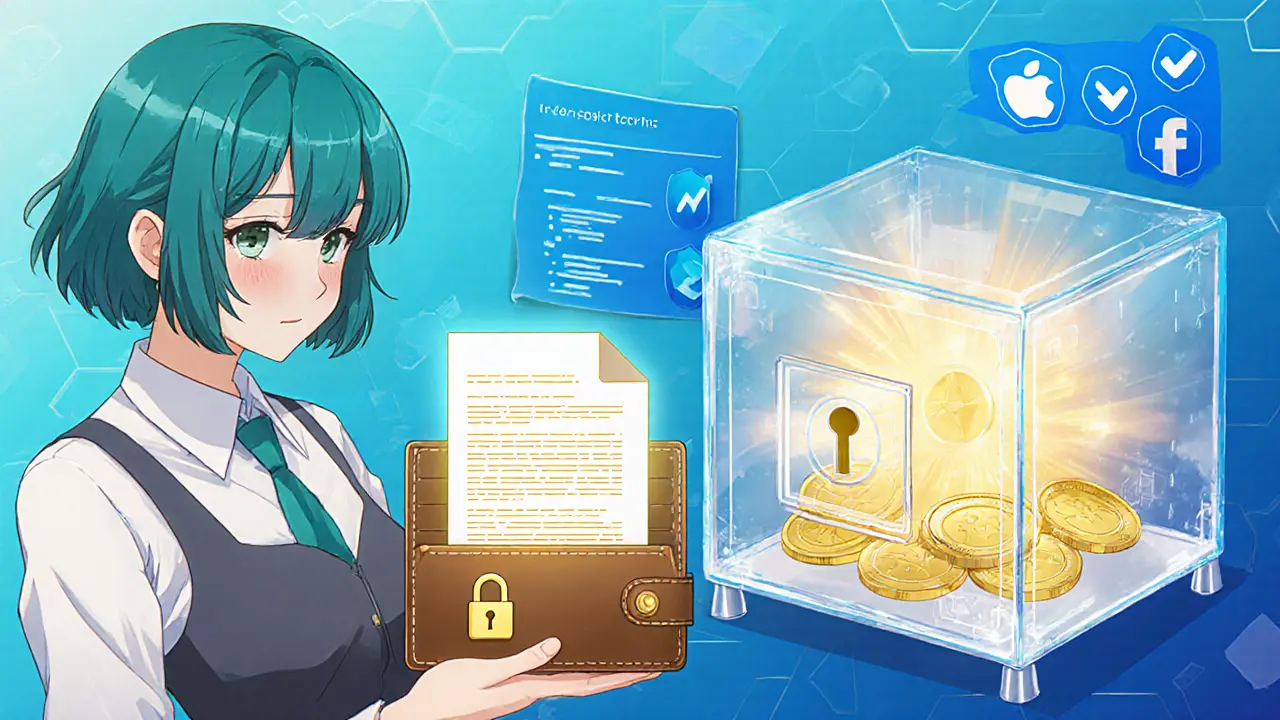
Official Sources to Check Before You Trust an Airdrop
Use these steps every time you see a new airdrop promise:
- Project website: Look for a dedicated "Airdrop" or "Announcements" page. Verify the URL matches the official domain.
- Social media verification: Check that the announcement comes from a verified account (blue checkmark) on Twitter, Telegram, or Discord.
- Smart‑contract audit: Reputable airdrops publish the contract address on Etherscan or BscScan, along with an audit report from a known firm.
- Community discussion: Scan Reddit (r/cryptocurrency) and crypto‑focused Telegram groups. Real airdrops generate conversation before the distribution date.
- Third‑party trackers: Cross‑reference with CoinGecko, Koinly, or Dropstab. If none list the airdrop, treat it with caution.
Common Red Flags in Fake Airdrop Schemes
Scammers know the excitement around free tokens, so they pepper their claims with pressure tactics. Watch out for:
| Indicator | Legitimate Airdrop | Suspicious Claim |
|---|---|---|
| Announcement source | Official blog & verified socials | Anonymous Telegram channel or meme page |
| Tokenomics detail | Exact % of total supply, supply cap | Vague “huge rewards” without numbers |
| Claim method | Connect wallet, no private keys | Send ETH to a personal address or share private key |
| Community chatter | Active threads on Reddit, Discord | Only one‑line hype posts |
If any of these warning signs appear, step away immediately.
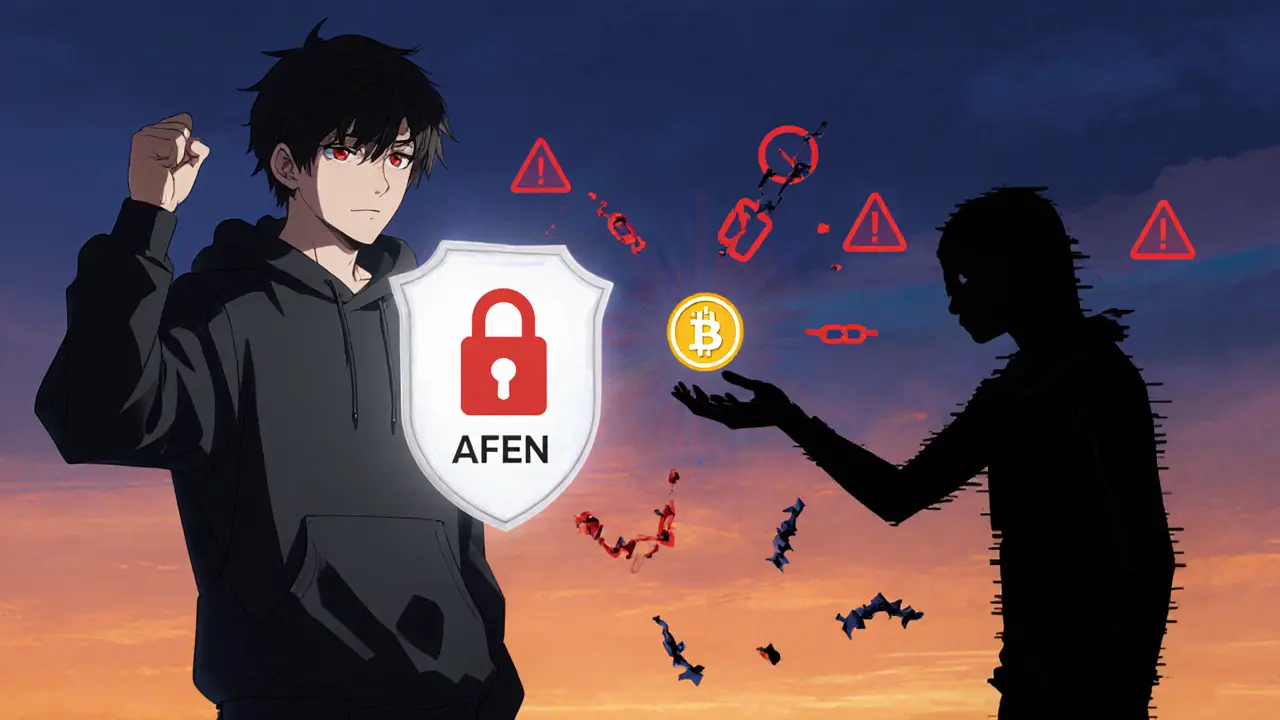
Step‑by‑Step Checklist to Protect Yourself
- Copy the URL of the alleged airdrop announcement.
- Visit the project’s official website and look for the same phrasing.
- Search the announcement text on Google and see if reputable sites (CoinGecko, Koinly) have written about it.
- Check the social media handle’s verification badge.
- Never share private keys, seed phrases, or send any crypto to claim rewards.
- If a smart‑contract address is provided, verify it on Etherscan and look for audit reports.
- Ask the community: post the claim on r/cryptocurrency and see if experts flag it.
- When in doubt, ignore the offer. Legit airdrops will re‑announce if you miss the first window.
What to Do If You’ve Already Sent Funds or Shared Keys
Unfortunately, many users who fall for a fake airdrop lose access to their wallets. Here’s a quick recovery plan:
- Immediately move any remaining funds to a new, secure wallet.
- Revoke any token approvals that may have been granted to unknown contracts via Etherscan’s "Token Approvals" tab.
- Report the scam to phishing‑[email protected] and to your exchange if you transferred assets there.
- Consider changing passwords on all related accounts and enable 2FA.
- Follow up on community forums - other victims may share a recovery script or advice.
Bottom Line
As of October 2025, the AFEN Marketplace airdrop has no verifiable backing from any major airdrop tracking platform or official AFEN source. Treat any claim as potentially fraudulent, apply the checklist above, and stay skeptical of offers that sound too good to be true.
Is there any official announcement for the AFEN Marketplace airdrop?
No. A search of the AFEN website, its verified Twitter, and major airdrop trackers shows no mention of an airdrop. The claim appears only on unverified channels.
How can I tell if a crypto airdrop is real?
Check for an official blog post, verified social media account, clear tokenomics, and a smart‑contract address that’s been audited. Cross‑reference with sites like CoinGecko, Koinly, or Dropstab.
What should I do if I already sent crypto to claim the AFEN airdrop?
Move any remaining funds to a new wallet, revoke token approvals on Etherscan, and report the address to phishing‑[email protected]. Change passwords and enable 2FA everywhere.
Are there any legitimate marketplace airdrops happening in 2025?
Yes. Magic Eden and OpenEden both announced marketplace token drops with clear tokenomics and audited contracts. Their details are listed on CoinGecko and Dropstab.
Why do scammers target airdrop hype?
Airdrops promise free tokens, so users are eager to act quickly without due diligence. Scammers exploit that urgency to steal private keys, seed phrases, or funds.
Richard Williams
October 26, 2025 AT 07:44Hey folks, if you’re feeling overwhelmed by airdrop hype, take a breath and run through a quick checklist. First, verify the source – a confirmed blog post or an official tweet with a blue check is your baseline. Next, match the tokenomics details with what the project publicly shares; vague percentages are a red flag. Finally, never hand over private keys – a legitimate claim only requires you to connect a wallet. Keep these steps in mind and you’ll stay safe while still scouting legit opportunities.
Elizabeth Mitchell
November 4, 2025 AT 13:58Honestly, the whole AFEN buzz feels like another flash‑in‑the‑pan trend. I’ve seen similar patterns before where the community builds momentum only to evaporate in a day. If you stick to the verification steps, you’ll filter out the noise without missing genuine drops. Stay relaxed and keep your crypto hygiene solid.
William Burns
November 13, 2025 AT 20:11It is incumbent upon the discerning investor to subject any purported airdrop to rigorous epistemological scrutiny. An absence of verifiable provenance on the project's canonical channels constitutes a prima facie indication of artifice. Moreover, the failure to disclose explicit tokenomic parameters contravenes the axioms of transparent distribution. One must also consider the macro‑economic implications of unverified token emissions on market equilibrium. In sum, prudence dictates abstention from participation in any uncorroborated incentive scheme.
adam pop
November 23, 2025 AT 02:24What they don’t tell you is that the “official” accounts are often hijacked by shadow operators embedded in the ecosystem. Every time a new airdrop surfaces, there’s a coordinated push to gather seed phrases under the guise of “quick claims”. The pattern repeats across multiple chains, suggesting a systematic extraction framework. Stay vigilant and treat any unsolicited request for access as a potential vector for broader surveillance.
Anastasia Alamanou
December 2, 2025 AT 08:38Colleagues, let’s deconstruct the verification matrix for any purported airdrop with a systematic approach grounded in industry best practices. First, anchor your assessment on source authentication: cross‑reference the announcement against the project's immutable website domain, ensuring the TLS certificate aligns with the officially registered entity. Second, perform tokenomics reconciliation by mapping the stated allocation percentages to the total supply disclosed in the whitepaper; any discrepancy signals data integrity concerns. Third, validate the smart contract address on block explorers, corroborating the contract verification status and auditing reports from reputable firms such as CertiK or Quantstamp. Fourth, engage in community sentiment analysis via sentiment vectors derived from Reddit, Discord, and Telegram activity logs, looking for organic discourse rather than orchestrated hype spikes. Fifth, inspect the gas‑fee economics – an anomalously high fee requirement can be indicative of a fee‑drain mechanism embedded in the claim flow. Sixth, assess the KYC/AML compliance posture; legitimate projects typically tier verification without demanding private keys. Seventh, implement a risk assessment rubric that quantifies red‑flag weightings, assigning a cumulative risk score that surpasses the predefined threshold for participation. Eighth, consider the project's governance framework – token grants aligned with on‑chain voting rights are more credible than opaque distribution models. Ninth, audit the communication channels for verification badges, ensuring the handles possess platform‑issued authenticity marks. Tenth, verify that the airdrop timeline aligns with the project's roadmap milestones to avoid temporal mismatches. Eleventh, consider any third‑party endorsements for potential conflicts of interest, especially when influencer promotions are incentivized. Twelfth, scrutinize the liquidity provisioning plan post‑distribution; a clear vesting schedule mitigates sudden dump risks. Thirteenth, monitor for any emergent phishing domains that mimic the project's branding – these are commonly deployed in parallel with fraudulent airdrop campaigns. Fourteenth, if in doubt, initiate a test claim with a custodial “burner” wallet to isolate exposure. Fifteenth, document every verification step in a shared knowledge base to foster collective due diligence within the community. Finally, synthesize the aggregated data points into a decisive recommendation: either endorse the airdrop with confidence or discard it as a probable scam. By adhering to this exhaustive checklist, you institutionalize a defense‑in‑depth posture that safeguards assets while preserving the opportunistic spirit of community rewards.
Laura Herrelop
December 11, 2025 AT 14:51When we gaze into the swirling vortex of airdrop promises, we confront a paradox: the desire for effortless gain collides with the imperative of self‑preservation. Trust, in this digital agora, becomes a commodity that must be earned, not given. If a claim slips through the cracks of verification, does it reflect our own naiveté or the system’s opacity? The answer lies in the interplay between individual vigilance and collective discourse. In practice, cross‑checking sources, interrogating tokenomics, and refusing to surrender private keys erect a barrier against manipulation. Yet we must also acknowledge the cognitive bias that fuels hype, a subtle alchemy that turns speculation into perceived certainty. Ultimately, the equilibrium rests on a shared commitment to question, to validate, and to educate.
Karla Alcantara
December 20, 2025 AT 21:04It’s heartening to see the community rally around safety, especially when new projects surface. By sharing these verification steps, we empower newcomers to navigate the space with confidence. Remember, a legitimate airdrop is an invitation, not a demand – it respects your autonomy. Celebrate the projects that get it right, and let the rest fade into the background. Together we build a culture of transparency and trust.
Jessica Smith
December 30, 2025 AT 03:18Fake airdrops are garbage and you all should stop falling for them. The guide is way too long for anyone who actually reads this nonsense.
Petrina Baldwin
January 8, 2026 AT 09:31Don't chase hype.
Ralph Nicolay
January 17, 2026 AT 15:44While your concerns about clandestine operators are noted, one must also consider that not every unverified announcement is necessarily malicious; rigorous evidence is required before ascribing intent.
sundar M
January 26, 2026 AT 21:58Yo team, love the thoroughness of the checklist – feels like a superhero’s utility belt for crypto explorers. I’ve seen too many buddies get swooped up by bogus token drops, and this kind of guidance is a lifesaver. Keep spreading the word, and let’s turn vigilance into a cultural norm. The more we share, the stronger the shield we build around our digital assets. Stay awesome, and keep those good vibes rolling.
Nick Carey
February 5, 2026 AT 04:11Honestly, this whole airdrop drama is getting old. You write a long essay, then drop a one‑liner warning – could’ve been a tweet. Anyway, if you’re into checklists, go ahead, but don’t expect me to read every line.
Sonu Singh
February 14, 2026 AT 10:24Hey guys, just a quick tip – if you see a contract address, pop it into etherscan and look for the “verified” badge. Also, don’t send any eth to a personal wallet asking for your keys – that’s a red flag. Keep your wallets on a hardware device if you can, it adds an extra layer of security. Hope this helps!