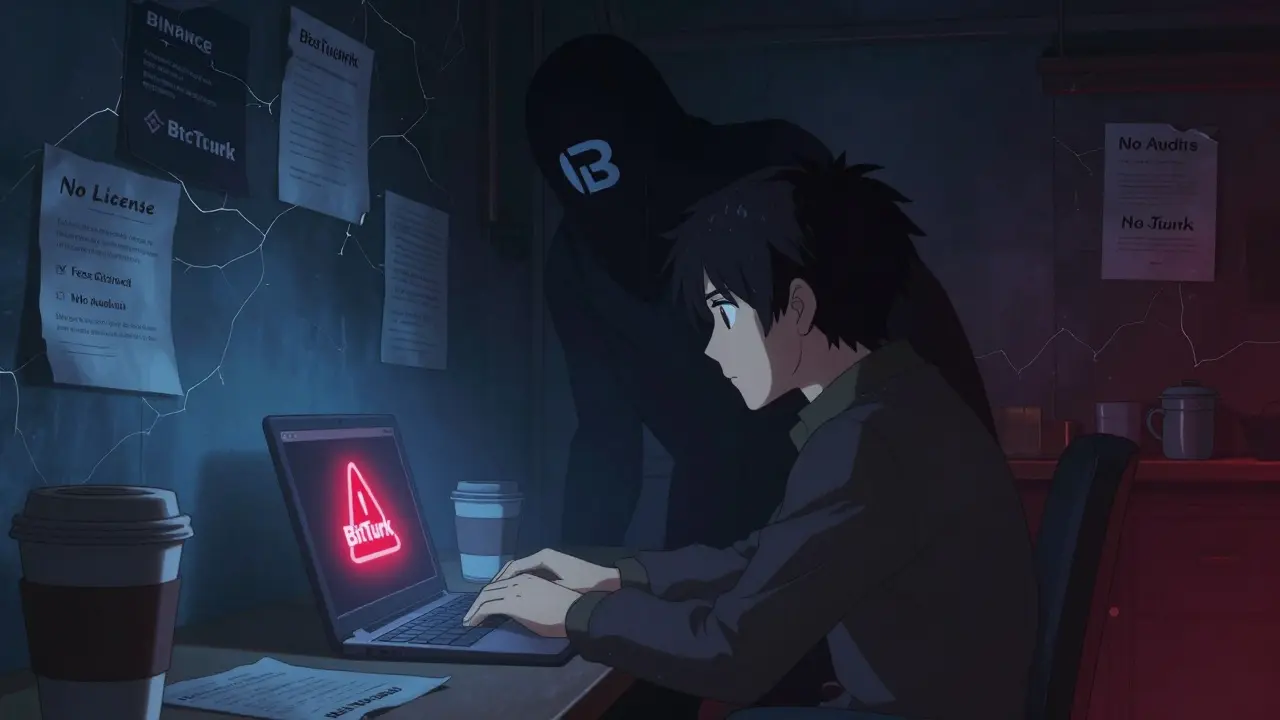
When you search for a crypto exchange in Turkey, you might stumble upon BitTurk. It sounds familiar-almost like BtcTurk, the big name everyone knows. But here’s the truth: BitTurk isn’t BtcTurk. And that difference could cost you money-or worse.
Founded in 2017, BitTurk claims to be "the first Turkey crypto money exchange." But there’s no official record backing that up. No press releases from major crypto news sites. No mention in CoinGecko or CoinMarketCap. Even the Turkish Capital Markets Board (SPK), which regulates all financial platforms in Turkey, doesn’t list BitTurk among licensed operators as of September 2025. That’s a red flag. If a crypto exchange isn’t registered where it operates, you’re trading on unregulated soil.
What BitTurk Actually Offers
BitTurk’s website says it supports Bitcoin, Ethereum, Ripple, and Chainlink. It has apps for Android, iOS, Windows, Mac, and Linux. It claims to offer 24/7 customer support and low trading fees. Sounds good, right? But when you dig deeper, the details vanish.
There’s no clear fee schedule. No minimum deposit amount listed. No withdrawal limits published. You can’t find out how much you’ll pay to trade or cash out. Compare that to Binance or Coinbase-both show exact maker/taker fees, withdrawal charges, and minimums upfront. BitTurk leaves you guessing.
Security is another mystery. The platform says it uses Google Authenticator for two-factor authentication. That’s fine. But where’s the proof of cold storage? How much of user funds are kept offline? Is there insurance against hacks? No answers. No audit reports. No third-party verification. In crypto, silence on security isn’t neutral-it’s dangerous.
Who Uses BitTurk? And Why?
Most users seem to be Turkish nationals. The interface is available in Turkish and English, but the English version feels like machine translation-clunky, confusing, full of awkward phrasing. That’s a sign it’s not built for global users. It’s built for locals who might not know the difference between a regulated exchange and a copycat.
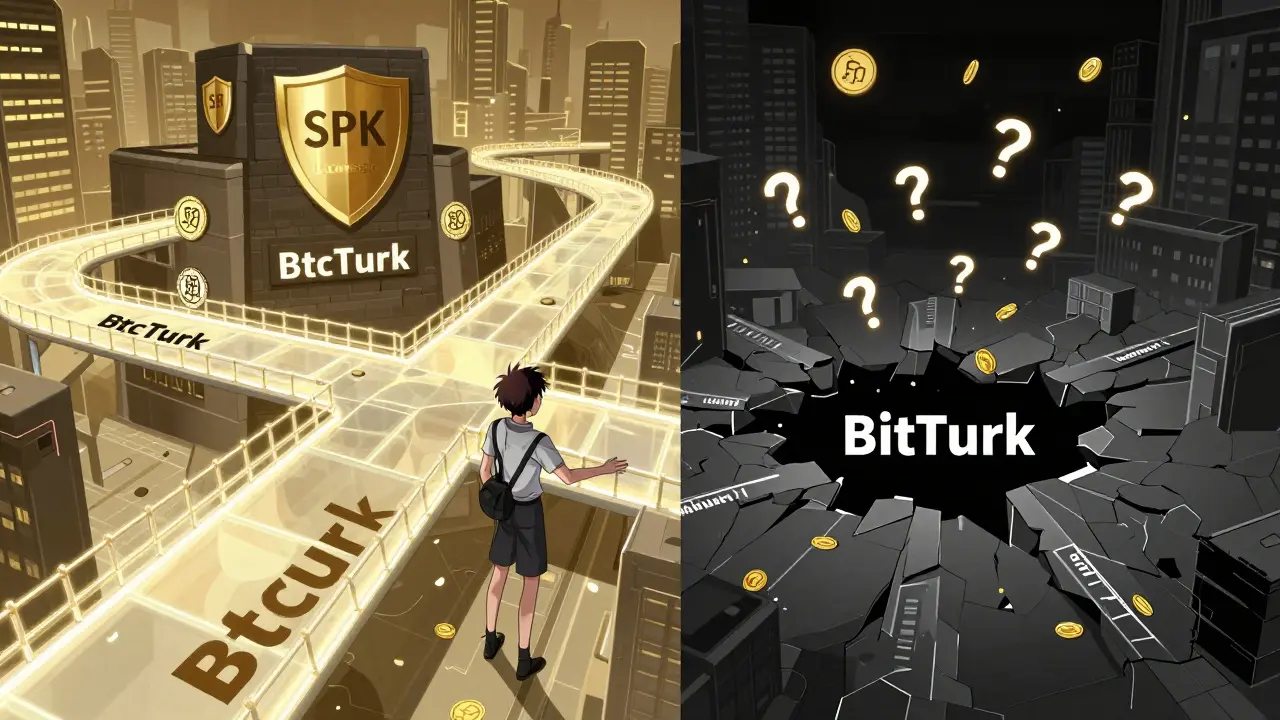
Reddit threads from August to September 2025 are full of warnings. One user, u/CryptoSafetyFirst, wrote: "Be extremely careful with any exchange using 'Turk' in the name that isn’t BtcTurk.com-many are copycats with similar domains." That’s not paranoia. That’s experience. BitTurk’s domain (bitturk.com) is intentionally close to BtcTurk’s (btcturk.com). A simple typo could send your funds to the wrong place.
Trustpilot has zero verified reviews. Revain, a blockchain-based review site, lists only one rating. Paribu.com, a Turkish crypto forum, has multiple posts from August 2025 warning users about "unregulated platforms using Turkish-sounding names." These aren’t random complaints. They’re patterns.
How BitTurk Compares to the Competition
Let’s put BitTurk side by side with what’s actually working in Turkey:
| Feature | BitTurk | BtcTurk | Binance |
|---|---|---|---|
| Regulatory Status | Unlicensed (not on SPK registry) | Licensed by SPK | Licensed globally (including Turkey) |
| Supported Cryptocurrencies | Unknown (claimed: BTC, ETH, XRP, LINK) | 100+ cryptocurrencies | 500+ cryptocurrencies |
| Trading Fees | Not disclosed | 0.1%-0.2% standard | 0.1% standard (lower with BNB) |
| Security Audits | No public audits | Third-party audits published | Regular audits + insurance fund |
| Global Access | Primarily for Turkish users | Requires Turkish ID | Available in 100+ countries |
| User Base | No verifiable data | Over 10 million users | Over 200 million users |
BitTurk doesn’t just fall short-it’s missing basic industry standards. BtcTurk, Turkey’s largest exchange, is regulated, audited, and transparent. Binance operates globally with full compliance. BitTurk? It’s a ghost. No numbers. No proof. No accountability.
The Real Risk: Regulatory Shutdown
Turkey cracked down on unlicensed crypto exchanges in 2025. The SPK now requires every platform to apply for and receive a license to operate legally. As of September 2025, BitTurk isn’t on the official list. That means it’s operating illegally. And illegal platforms don’t last long.
Delphi Digital’s October 2025 report estimated that exchanges without regulatory compliance in emerging markets have less than a 30% chance of surviving 18 months. TradingFinder.com went further: "Any Turkish exchange not listed on SPK’s registry should be considered high-risk."
That’s not speculation. That’s a prediction based on real regulatory enforcement. If BitTurk shuts down tomorrow, your funds could vanish with it. No legal recourse. No insurance. No refund.
Who Should Avoid BitTurk?
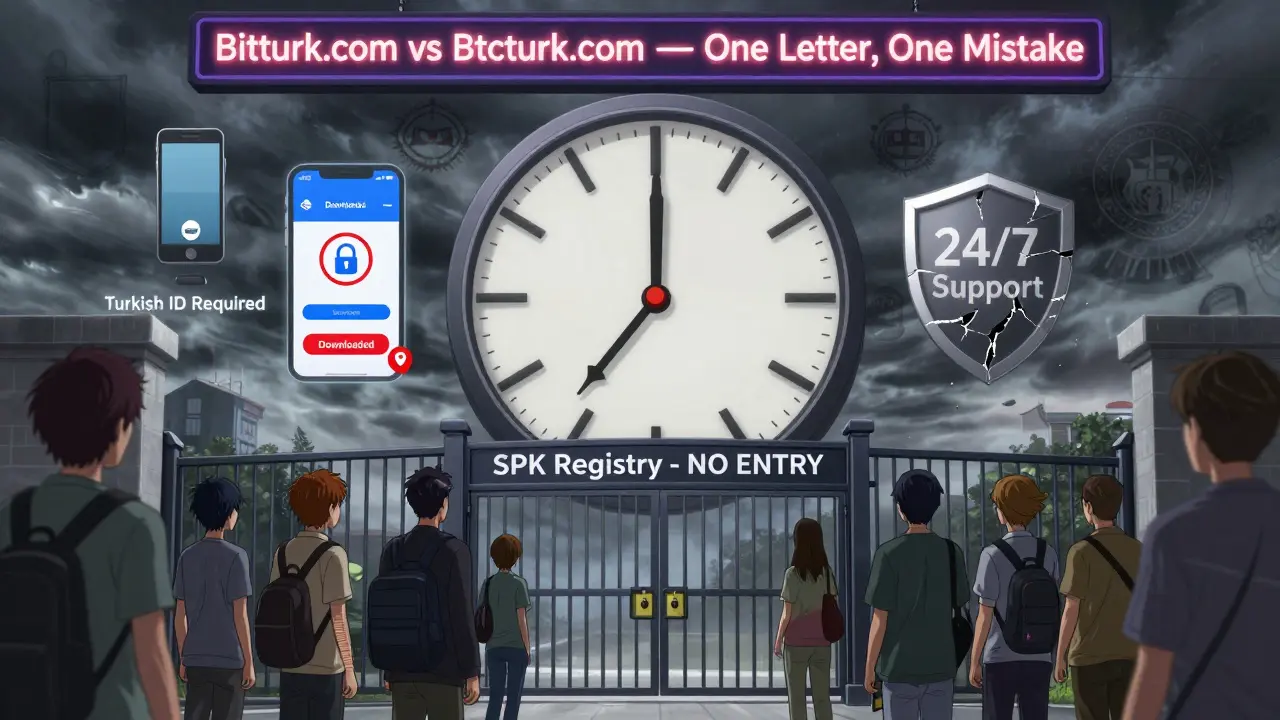
If you’re outside Turkey, don’t bother. The platform seems designed for Turkish citizens. Registration likely requires a Turkish phone number and ID. International users report being blocked during sign-up.
If you care about security, transparency, or long-term safety-walk away. There’s no evidence BitTurk protects your assets better than a random website. Even its "24/7 support" is unreliable. Forum users say responses to non-Turkish queries take days-or never come.
If you’re new to crypto and drawn in by the name "BitTurk" because you thought it was BtcTurk-you’ve been misled. That’s not your fault. But it’s your risk.
What Should You Do Instead?
Stick to regulated, transparent platforms. If you’re in Turkey, use BtcTurk. It’s licensed, audited, and has over 10 million users. If you’re outside Turkey, use Binance, Kraken, or Coinbase. All of them publish fees, security practices, and regulatory status clearly.
Don’t let a name trick you. Don’t ignore missing information. Crypto isn’t a gamble-it’s a system. And systems need rules, oversight, and proof.
BitTurk might look like a crypto exchange. But without regulation, transparency, or user trust, it’s just a website with a login page.
Is BitTurk a scam?
BitTurk isn’t officially listed as a scam by authorities like Cryptolegal.uk, but it has all the warning signs: no regulatory license, no transparency on fees or security, and a name designed to confuse users into thinking it’s BtcTurk. While it may not be a scam in the classic sense, it operates in a high-risk gray zone where funds can disappear without recourse. Treat it as unsafe.
Can I use BitTurk if I’m not from Turkey?
Most likely, no. User reports indicate that BitTurk’s registration process requires a Turkish phone number and ID verification. International users have been blocked during sign-up. Even if you bypass this, the platform’s English interface is poorly translated, and customer support doesn’t reliably respond to non-Turkish inquiries.
Why is BitTurk’s name so similar to BtcTurk?
It’s a deliberate tactic to cause confusion. BtcTurk is the largest, licensed Turkish exchange. BitTurk’s domain (bitturk.com) is just one letter off from btcturk.com. This makes it easy for users to mistype the URL and accidentally send funds to the wrong platform. Industry experts warn this is a common phishing tactic used by unregulated exchanges.
Does BitTurk have a mobile app?
Yes, BitTurk offers apps for Android, iOS, Windows, Mac, Linux, and Chromebook. But having an app doesn’t mean it’s safe. Many unregulated platforms create polished apps to appear legitimate. The real issue isn’t functionality-it’s whether your funds are protected, which there’s no evidence of.
What are the trading fees on BitTurk?
BitTurk does not publish its trading fee structure anywhere. No maker/taker fees. No withdrawal costs. No minimum deposit amounts. This lack of transparency is a major red flag. Legitimate exchanges list fees upfront so users can calculate costs. BitTurk leaves you in the dark.
Is BitTurk still operational in 2026?
As of March 2026, BitTurk’s website is still live. But its lack of regulatory compliance, absence of user reviews, and no public updates since 2023 suggest it’s running on borrowed time. With Turkey’s 2025 licensing rules in full effect, unlicensed exchanges like BitTurk face high risk of being shut down at any moment. Don’t assume it’ll still be there next month.
When it comes to crypto exchanges, your safety isn’t about how flashy the app looks. It’s about who’s watching over your money. BitTurk doesn’t have a watchman. And in this space, that’s the deadliest risk of all.
Allison Davis
March 11, 2026 AT 15:08BitTurk is a classic example of why you never trust a crypto platform that doesn’t publish its regulatory status upfront. If they’re hiding that, they’re hiding everything else too. I’ve seen too many users lose funds to these copycat sites-always check the SPK registry before depositing a single lira.
Anshita Koul
March 11, 2026 AT 19:49Let’s be real-this isn’t just about BitTurk… it’s about the entire ecosystem of crypto in emerging markets where regulation is either weak or deliberately ignored. People aren’t malicious-they’re just desperate for access. But when you trade on unregulated platforms, you’re not investing-you’re gambling with your life savings. And no, the app looking polished doesn’t change that. Trust is earned-not designed.
Transparency isn’t a feature. It’s the foundation. And BitTurk? It’s built on sand.
PIYUSH KOTANGALE
March 12, 2026 AT 02:06vishnu mr
March 13, 2026 AT 04:30Grace van Gent-Korver
March 14, 2026 AT 18:06I’m from the US but I have family in Turkey. They told me about BitTurk. I asked them why they used it. They said, ‘It looked like BtcTurk.’ That’s it. No research. Just trust because it looked right. That’s the real danger here.
Zephora Zonum
March 15, 2026 AT 10:08Lindsay Girvan
March 15, 2026 AT 12:55Douglas Anderson
March 17, 2026 AT 07:23I’ve been in crypto since 2017. I’ve seen this script play out a dozen times. Fake name. Close domain. No transparency. Then-poof. Site goes dark. Users lose everything. No recourse. No refund. This isn’t speculation-it’s history repeating.
Always verify. Always check. Always assume the worst until proven otherwise.
Tina Keller
March 17, 2026 AT 11:53There’s something haunting about how these platforms prey on linguistic closeness. BtcTurk → BitTurk. It’s not just a typo-it’s a psychological trap. We trust what looks familiar. And they know it. They bank on it. The design isn’t accidental. It’s calculated. And that’s what makes it worse than outright fraud.
It’s not just about money. It’s about how easily we let our instincts override our caution. We want to believe. So they let us believe.
And then, when the lights go out? We’re left wondering why we didn’t ask more questions.
vasantharaj Rajagopal
March 18, 2026 AT 23:13Mara Alves Mariano
March 20, 2026 AT 14:40Oh please. Like Binance is some angelic knight? They’re just bigger, richer, and better at PR. BitTurk might be sketchy-but at least it’s not owned by a hedge fund that dumps on retail traders while their bots front-run every trade. Stop acting like regulated = safe. It’s just a different flavor of exploitation.
Also, why is everyone acting like Turkish people are dumb for using this? Maybe they don’t have access to Binance because of geo-blocks. Maybe they need a local option. Maybe they’re trying to survive inflation. Your moral superiority is exhausting.
Adam Ashworth
March 20, 2026 AT 19:33Valid points. But let’s not forget: the real issue isn’t BitTurk. It’s that Turkey doesn’t have enough licensed, affordable, user-friendly exchanges for its population. If BtcTurk was easier to use or had lower fees, maybe people wouldn’t risk BitTurk. The problem isn’t just bad actors-it’s systemic underinvestment in local infrastructure.
Instead of shaming users, let’s push for better alternatives.
Tom Jewell
March 21, 2026 AT 14:41There’s a quiet tragedy here. People aren’t being reckless-they’re being resourceful. In a country with high inflation and limited banking access, crypto isn’t a luxury. It’s survival. BitTurk may be dangerous, but it exists because the alternatives are either inaccessible, too expensive, or too slow.
The real villain isn’t the user who clicks the wrong link. It’s the system that leaves them no safe choice.
We need to fix the architecture-not just point at the cracks.
karan narware
March 23, 2026 AT 00:11Oh wow, a crypto platform with no license… shocker. Next you’ll tell me water is wet and the sun rises in the east. Honestly, if you’re surprised by this, you’ve been living under a rock since 2017.
Also, why is everyone acting like this is new? Every 3 months, a new ‘Turk’-named site pops up. It’s a cottage industry. And people still fall for it. Sigh.
Michael Suttle
March 23, 2026 AT 16:44Let’s be honest-this isn’t even about BitTurk. This is part of a global satanic AI-driven plot to drain crypto wallets using fake domains. I’ve seen the documents. The Turkish government is in on it. They’re using these platforms to collect biometric data for the new digital ID system. Your funds aren’t the only thing at risk.
Also, I heard BtcTurk is owned by the CIA. CoinGecko? Owned by the NSA. You think you’re safe? You’re not.
Jenni James
March 23, 2026 AT 19:01While I appreciate the meticulous documentation presented herein, one must consider the ontological implications of regulatory legitimacy in decentralized systems. If a platform operates outside state-sanctioned frameworks, does it cease to be a ‘platform’-or does it become a more authentic expression of peer-to-peer autonomy? Perhaps the real scam is the illusion of state oversight.
Also, your tone is condescending. Have you considered that perhaps users are making informed risk assessments? Not everyone wants to be a Binance zombie.
Chelsea Boonstra
March 25, 2026 AT 13:26Wait-so you’re saying if a site looks like BtcTurk but isn’t, it’s automatically dangerous? What if someone just made a typo and landed there by accident? What if they thought it was legit? Shouldn’t we be talking about how to warn people better instead of just shaming them?
Also, why is everyone so obsessed with regulation? Isn’t crypto supposed to be decentralized? Why are we okay with SPK being the gatekeeper?
Alex Thorn
March 27, 2026 AT 01:10Thank you for writing this. So many people get sucked in by names and logos. I wish more guides like this existed in simple language. I’ve shared this with my cousin in Istanbul. She was about to deposit. Now she’s waiting. That’s one person saved.
Don’t underestimate the power of clear, calm, factual warnings. They change lives.