
When you're looking for a crypto exchange in South Korea, Coinone keeps coming up. It’s not the biggest - that’s Upbit - but it’s solid. And if you’re based in Korea and want to trade Bitcoin, Ethereum, or other coins directly with Korean Won (KRW), Coinone might be your best bet. But if you’re outside Korea, especially in the U.S., you’re out of luck. This isn’t just a minor limitation - it’s a hard wall. Let’s cut through the noise and see what Coinone actually offers in 2026, what it’s missing, and who it’s really built for.
Who Can Use Coinone? (Spoiler: Not Everyone)
Coinone doesn’t welcome everyone. It’s a Korean exchange, through and through. To open an account, you need either a South Korean resident registration number or a foreigner registration number. That means if you live in Canada, the U.S., Brazil, or anywhere outside Korea, you can’t sign up. Even if you try, the system will block you. Cryptowisser confirmed this in their 2025 review: U.S. users are explicitly barred. This isn’t a technical glitch - it’s policy. The exchange follows South Korea’s strict financial rules, which require full identity verification tied to local government IDs. So if you’re not a resident, you’re not getting in. That’s a dealbreaker for international traders, but it’s a strength for locals who want a regulated, compliant platform.Security: One of the Strongest in Korea
If you care about safety, Coinone stands out. Since launching in 2014, it’s never suffered a major hack - a rare record in crypto. Compare that to Bithumb, which had three big breaches between 2017 and 2018. Coinone keeps 98% of user funds in cold storage, verified by their 2024 security audit. They use hardware security modules (HSMs), biometric logins, mandatory two-factor authentication, and regular penetration tests by former white-hat hackers. Their ISO/IEC 27001:2013 certification isn’t just a sticker - it’s a global standard for information security. In 2021, they also passed South Korea’s mandatory ISMS certification. That’s not something every exchange bothers with. Even their insurance policy, backed by Lloyd’s of London, covers $127 million in assets. That’s real money, real protection. For Korean users, this level of security is unmatched by most local rivals.Trading Fees and Costs
Coinone charges a flat 0.2% fee for spot trades - that’s standard for Korean exchanges. But here’s the catch: if you trade more than 100 million KRW (about $75,000 USD) per month, you drop to 0.1% or even 0.0% as a maker. That’s a decent incentive for active traders. Takers pay between 0.02% and 0.1%, depending on volume. There are no deposit fees for crypto - you can send Bitcoin or Ethereum in free of charge. Withdrawals cost 1,000 KRW (roughly $0.75 USD) per transaction, regardless of the coin. That’s low, but you’re stuck with KRW only. No USD, no EUR, no JPY. If you want to cash out in dollars, you’ll need to send crypto to another exchange that supports fiat withdrawals. And forget about margin or futures trading - Coinone doesn’t offer it. That’s a downside for traders looking to leverage positions, but it also means less risk and fewer regulatory headaches.Coinone Pro and the Trading Experience
Coinone gives you two interfaces: a simple one for beginners and Coinone Pro for serious traders. The Pro version isn’t just a fancy skin - it’s a full trading terminal. You get real-time order books, multi-timeframe candlestick charts, volume heatmaps, and 24-hour price history. It’s not as advanced as TradingView, but it’s more than enough for day traders and swing traders in Korea. The interface is clean, fast, and optimized for KRW pairs. The mobile apps (iOS and Android) are updated regularly, with version 5.2 released in late 2024. The only downside? The API documentation is only in Korean. If you’re building automated trading bots, you’ll need to translate or hire someone who speaks Korean. That’s a real barrier for international developers.
Coinone Plus: Staking and DeFi Without Leaving the Platform
This is where Coinone surprises you. Instead of just being a trading hub, they built Coinone Plus - a built-in DeFi layer. You can stake directly on the exchange without moving your coins. As of October 2025, they support 27 staking assets. Three options: daily staking (5.2% average APR), lock-up staking (up to 12% APR for 90-180 days), and node staking (16.34% APR for Cosmos). Total value locked in Coinone Plus hit $85 million by September 2025. That’s 17% of the exchange’s total revenue. For users who want passive income without jumping between platforms, this is a huge win. No need to use external wallets like Keplr or Phantom. Just click, stake, and earn. It’s simple, secure, and integrated. Most exchanges charge extra for staking - Coinone doesn’t. That’s rare.Customer Support: A Mixed Bag
Here’s the ugly truth: customer support is inconsistent. On G2, users give it 4.3 out of 5 stars - praising quick live chat (8-minute average response) and easy account setup. But on TrustPilot, the average rating is 2.1 out of 5. Why? Because many users report email responses taking up to 72 hours. One user on Forex.wikibit.com said they paid taxes to withdraw funds - and still couldn’t get their money out. Another Reddit user said trading got halted 17 times in 2024 during volatility spikes. And if you’re not Korean? Forget phone support - it’s only in Korean. The support team is clearly stretched thin. If you’re a casual trader, you’ll probably be fine. If you’re trading large amounts or run into a problem, you might be stuck waiting days for an answer. It’s a trade-off for a regulated, local platform.How Coinone Compares to Upbit and Bithumb
Upbit is the giant - 52% of Korea’s crypto volume. It offers 400+ coins, lower fees (0.05%), and global banking links. But Coinone beats it on security. Bithumb has more liquidity but a history of hacks. Coinone’s edge? Simplicity and safety. It doesn’t try to be everything. It focuses on KRW, compliance, and security. If you’re trading small amounts and want peace of mind, Coinone wins. If you want the widest selection of coins and the lowest fees, Upbit is better. But Upbit’s interface is cluttered, and its staking options are less transparent. Coinone’s Coinone Plus is cleaner and more reliable.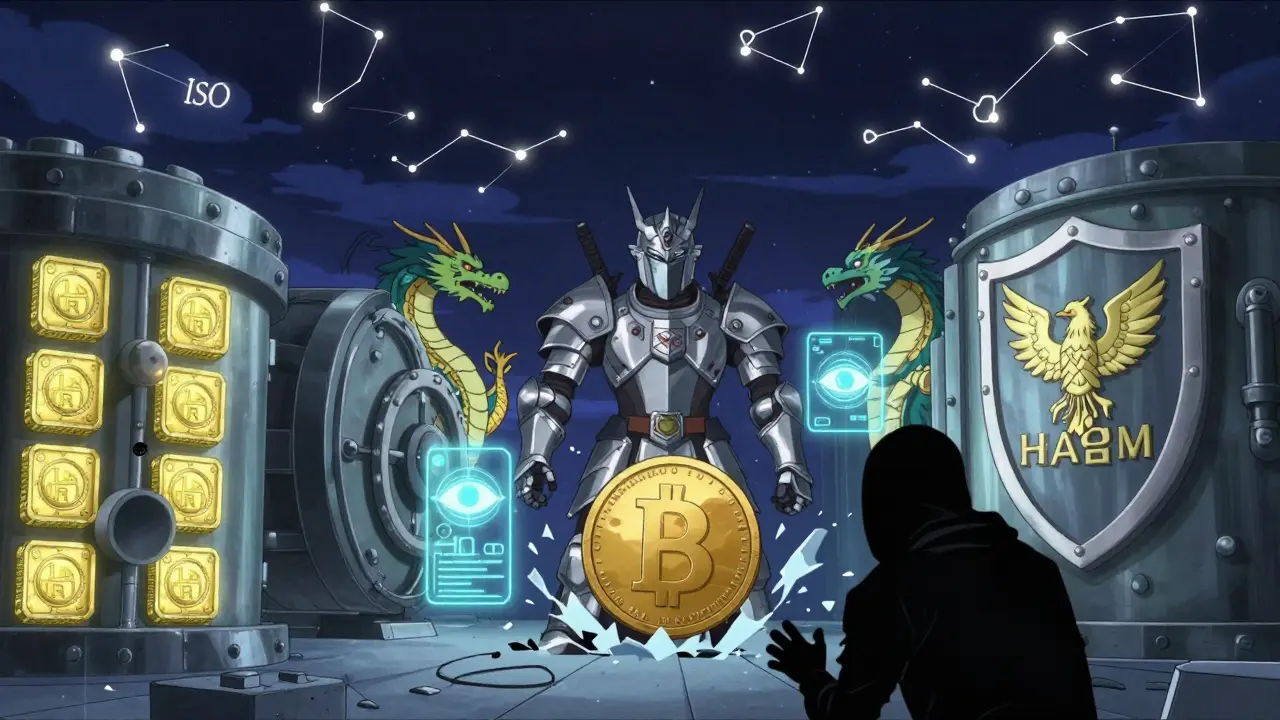
What’s Next for Coinone?
Coinone isn’t standing still. They’re planning a cross-chain bridge called Coinone Bridge for Q2 2026 - meant to move assets between Ethereum, Solana, and Cosmos. They’re also rolling out MPC wallet tech in early 2026 to speed up cold storage access from 24 hours to under 5 minutes. That’s a big deal for liquidity. But there’s a storm coming. South Korea is set to impose a 20% capital gains tax on crypto profits starting January 2026. Coinone’s CFO warned this could slash trading volume by 30-40%. If that happens, even the most secure exchange will feel the pressure. Their long-term survival depends on whether they can expand beyond Korea - and right now, they’re not trying.Final Verdict: Who Should Use Coinone?
Coinone is not for everyone. If you’re outside South Korea, skip it. You won’t get in. If you’re a U.S., European, or Canadian trader, look elsewhere. But if you’re in Korea and want a safe, regulated, no-nonsense place to trade KRW pairs - Coinone is one of the best. It’s not flashy. It doesn’t offer leverage or global fiat. But it’s secure, transparent, and has one of the cleanest staking systems in the country. For Korean residents who prioritize safety over variety, it’s a top choice. For everyone else? It’s not even an option.Can I use Coinone if I live outside South Korea?
No. Coinone only accepts users with a South Korean resident registration number or a foreigner registration number. Even if you have a Korean bank account or speak Korean, you cannot sign up unless you’re legally registered in South Korea. The platform blocks all international IPs and ID verification attempts from outside the country.
Does Coinone support USD or other fiat currencies?
No. Coinone only supports the South Korean Won (KRW) for deposits and withdrawals. You cannot deposit or withdraw USD, EUR, CAD, or any other currency directly. If you want to cash out in another currency, you’ll need to send your crypto to an international exchange that supports your local fiat.
Does Coinone offer margin or futures trading?
No. Coinone does not offer margin trading, leverage, or futures contracts. This is intentional - it reduces regulatory risk and keeps the platform focused on spot trading. If you need leverage, you’ll need to use a different exchange like Binance or Bybit.
Is Coinone safe from hacks?
Yes, as of 2026, Coinone has never suffered a major hack since its launch in 2014. It keeps 98% of assets in cold storage, uses HSMs, undergoes regular penetration tests, and holds ISO 27001 certification. Its security record is stronger than Bithumb’s and comparable to Upbit’s, making it one of the safest Korean exchanges.
What are the trading fees on Coinone?
Coinone charges 0.2% for standard spot trades. High-volume traders who move over 100 million KRW per month can get reduced fees: 0.0%-0.1% for makers and 0.02%-0.1% for takers. Deposits are free. Withdrawals cost 1,000 KRW ($0.75 USD) per transaction, regardless of the cryptocurrency.
Can I stake crypto on Coinone?
Yes. Coinone Plus lets you stake 27 cryptocurrencies directly on the platform. Options include daily staking (avg. 5.2% APR), lock-up staking (up to 12% APR for 90-180 days), and node staking (16.34% APR for Cosmos). There are no extra fees, and you don’t need to move your coins off the exchange.
Why do some users complain about slow customer support?
While live chat averages 8-minute responses, email support can take up to 72 hours. Many complaints come from users who face withdrawal issues or trading halts during volatility. The support team is overwhelmed during market spikes, and non-Korean users often struggle with language barriers. The system works fine for simple queries but falters under pressure or complex issues.
Is Coinone affected by South Korea’s new 20% crypto tax?
Yes. Starting January 2026, South Korea will tax crypto profits at 20%. Coinone’s CFO warned this could reduce trading volume by 30-40% across all Korean exchanges. While the platform itself won’t change, user activity is expected to drop significantly. This is a major risk to its future growth.
Nathan Drake
January 20, 2026 AT 11:52It's fascinating how regional financial sovereignty shapes digital infrastructure. Coinone's exclusionary model isn't just a business decision-it's a reflection of Korea's broader regulatory philosophy, where state control over financial flows is prioritized over global accessibility. This raises a deeper question: is crypto meant to be borderless, or is it becoming another instrument of national economic policy?
Melissa Contreras López
January 20, 2026 AT 21:21Wow, this is actually one of the most balanced takes I've read on a Korean exchange. The staking feature alone makes it stand out-no need to juggle wallets or risk losing coins to a rogue DeFi protocol. And the fact they’ve never been hacked? That’s not luck, that’s discipline. If you’re in Korea, this is your safe harbor.
Taylor Mills
January 20, 2026 AT 22:46Of course it’s only for Koreans. Why would a Korean company care about Americans who think crypto is a get-rich-quick scheme? We don’t even have real banking rules here. Coinone’s not broken-it’s doing its job. You want global? Use Binance. But don’t cry when they get shut down next year.
Arielle Hernandez
January 21, 2026 AT 22:25Let’s clarify something: Coinone’s 98% cold storage isn’t just a marketing claim-it’s independently audited. Their ISO 27001 certification requires quarterly reviews, and their HSMs are FIPS 140-2 Level 3 certified. Most U.S. exchanges don’t even publish audit reports. This isn’t ‘safe for Korea’-this is world-class security, period. If you’re dismissing it because it’s not global, you’re missing the point.
Ryan Depew
January 22, 2026 AT 11:000.2% fee? Bro that’s wild. Binance is 0.1% and they take your money in 50 currencies. Coinone’s like a fancy analog watch in a smartwatch world. I get the security thing, but if you’re not trading $100K/month, you’re paying a premium for a niche service. And no futures? Come on.
Kevin Pivko
January 23, 2026 AT 07:01Lol. 20% tax coming and they think people will still trade? This exchange is a dinosaur. They don’t even have a mobile app that works right. I tried to stake last week and it froze for 3 hours. Meanwhile, Kucoin lets me trade Dogecoin with a meme and still gets my money out in 2 mins. Coinone’s got a nice website. That’s it.
Jessica Boling
January 24, 2026 AT 01:02So we’re supposed to be impressed that a Korean exchange follows Korean laws? Wow. What a revelation. Next you’ll tell me the moon is made of cheese because it’s in space. I mean, sure, if you like being locked in a country-sized vault with no exit… but hey, at least your coins are safe… from everyone. Including you.
Tammy Goodwin
January 25, 2026 AT 14:04I love how this article doesn’t mention that Coinone’s customer support will ghost you if you’re not fluent in Korean. I had an issue with a withdrawal and emailed them for 11 days. Got a reply in Korean. Used Google Translate. They said ‘check your account’. I did. Nothing changed. It’s like they built a fortress and forgot to put a doorbell.
Andy Simms
January 25, 2026 AT 19:44For anyone in Korea: Coinone’s staking is the easiest way to earn yield without touching DeFi. I’ve been staking ETH and DOT since March and never had a hiccup. No slashing, no smart contract bugs, no rug pulls. Just clean, regulated passive income. And the interface? So clean you could use it blindfolded. If you’re new to crypto, start here.
Shamari Harrison
January 25, 2026 AT 23:46There’s something beautiful about an exchange that says ‘no’ to leverage, no global fiat, no futures. It’s like a quiet library in a noisy city. Most platforms are trying to be everything-gambling den, bank, casino, and tech startup all at once. Coinone just wants to help Koreans buy Bitcoin without getting robbed. Sometimes simplicity is the most radical thing you can do.
Nadia Silva
January 26, 2026 AT 11:24Canada has better crypto regulations than Korea. At least we can use Coinbase. Coinone’s model feels like a relic from 2015. Why should I care about cold storage if I can’t even access my own money? This isn’t security-it’s isolation. And don’t get me started on that 20% tax. Korea’s about to kill its own crypto scene.
Roshmi Chatterjee
January 27, 2026 AT 15:22I’m from India and I tried signing up just to see what it was like. Got blocked instantly. Honestly? I’m glad. I don’t want to deal with Korean ID laws. But I’m curious-how does Coinone handle tax reporting for users? Do they auto-generate forms? That’s something every exchange should do.
Deepu Verma
January 29, 2026 AT 12:22Bro, I used Coinone last year when I was studying in Seoul. The app is so smooth, and the staking rewards were better than my bank interest. I didn’t even know what HSMs were until I read this. But honestly? The best part was that I never worried about getting hacked. I slept better knowing my coins were locked down tight. Korea’s got the right idea.
MICHELLE REICHARD
January 31, 2026 AT 04:40Wow. A ‘safe’ exchange that doesn’t let you trade in USD? How quaint. This is what happens when you let bureaucrats run finance. You get a museum piece. Not a platform. And don’t pretend the 20% tax won’t wipe out volume-it’s already happening. People aren’t stupid. They’ll leave. And Coinone? They’ll be the last one standing in an empty room.
tim ang
January 31, 2026 AT 16:05Just wanna say-this article is actually super helpful. I’m new to crypto and was scared to pick an exchange. Now I know if I ever move to Korea, Coinone’s the one. And the staking thing? That’s like free money. I’m saving up to study abroad just so I can use it. Thanks for the clarity.
Chidimma Catherine
February 1, 2026 AT 05:30As someone from Nigeria where crypto is a lifeline for many due to banking restrictions I find Coinone's model both admirable and heartbreaking. Admired because it prioritizes security and regulatory compliance-something many African exchanges lack. Heartbreaking because it excludes those who need it most. Imagine if such a secure platform opened its doors to verified users globally with alternative identity systems. It could revolutionize access for billions. But instead it chooses borders over bridges. The irony is not lost on me.
Mike Stay
February 3, 2026 AT 02:04Let’s contextualize this. South Korea’s financial regulatory framework is among the most rigorous in the world, designed to prevent money laundering, capital flight, and speculative bubbles. Coinone’s exclusionary policy isn’t arbitrary-it’s a direct consequence of the Financial Services Commission’s mandate. Compare this to the U.S., where 80% of crypto platforms operate in a legal gray zone. Coinone doesn’t avoid regulation-it embodies it. That’s not a limitation; it’s a philosophical commitment. The fact that they’ve never been hacked speaks to the integrity of that commitment. The 20% tax? It’s a blunt instrument, yes, but it’s transparent. Unlike the U.S., where tax rules are buried in IRS memoranda and crypto platforms don’t report to anyone. If you want freedom without accountability, go to Binance. If you want security with responsibility, Coinone is the model.
HARSHA NAVALKAR
February 3, 2026 AT 12:48...I tried to sign up once. Just to see. Got blocked. Felt like I was being told I wasn't good enough. Not because I did anything wrong. Just because I was born in the wrong place. That's the real cost here. Not the fees. Not the tax. The feeling that the system was built for someone else. And I'm just watching from outside.
Mathew Finch
February 4, 2026 AT 18:46Wow. A Korean exchange that doesn't cater to Americans. Shocking. Next you'll tell me sushi isn't available in Nebraska. This is why the West is losing. We let everyone in and end up with nothing but chaos. Korea knows: rules protect people. Coinone isn't broken. The world is.