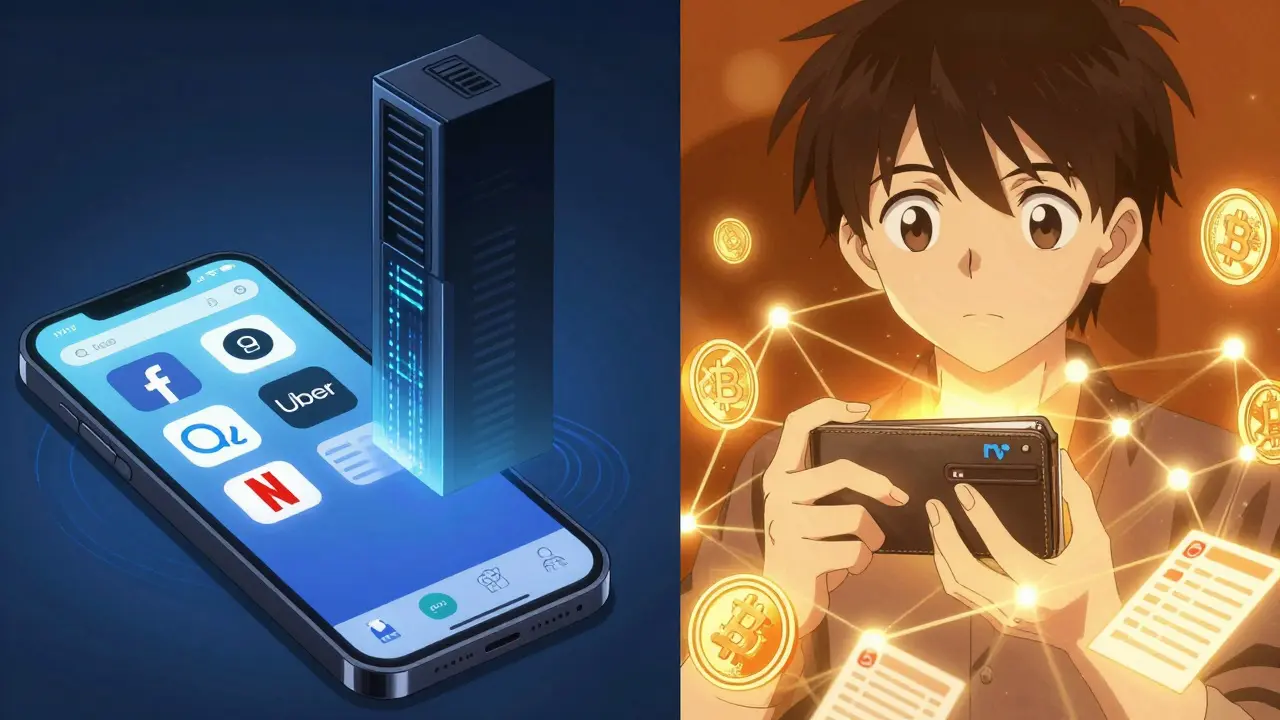
When you open your phone to check social media, play a game, or send money, you’re using an app. But not all apps work the same way. There’s a growing divide between dApp and traditional apps - and the difference isn’t just technical. It’s about who really owns your data, your money, and your digital identity.
How They’re Built: Centralized vs Distributed
Traditional apps run on servers you can’t see. Think Facebook, Uber, or Netflix. These apps rely on big companies to host everything - your login info, your messages, your payment details - on servers owned by Amazon, Google, or Microsoft. If Facebook’s server goes down, the whole app stops. If they decide to delete your account, you lose access. There’s one boss, and they control everything. A dApp flips that model. Instead of one company running it, a dApp runs on a blockchain. That means thousands of computers around the world, called nodes, keep the app alive. No single entity owns it. Ethereum, Solana, and Polygon are the most common blockchains behind dApps. The code that runs the app - called a smart contract - lives on the blockchain and can’t be changed unless the community agrees. Uniswap, for example, lets over a million token holders vote on updates. There’s no CEO, no corporate policy, no hidden terms of service.Who Controls Your Data?
Traditional apps collect your data. They track what you click, where you go, who you talk to - and often sell that information to advertisers. A 2023 Consensys survey found only 12% of traditional app users feel they truly own their data. Most users accept it as the price of free services. With a dApp, you control everything. You log in with a crypto wallet - like MetaMask - not an email and password. Your wallet holds your identity, your funds, and your digital assets. No one else can access it unless you give them your private key. That means no middleman can freeze your account, ban your content, or sell your history. A Reddit user named u/CryptoGuru99 put it simply: “I finally control my data after years of Facebook selling my information.”Security: Hacks vs Smart Contract Risks
Traditional apps are vulnerable to massive data breaches. In 2022, over 8.2 billion records were stolen worldwide, mostly from centralized databases. Twitter’s 2022 leak exposed 5.4 million accounts. Facebook had 26 hours of downtime in 2021 that cost $100 million in lost revenue. dApps don’t have centralized databases to hack. Instead, they face different risks: smart contract bugs. In 2022, flaws in dApp code led to $1.3 billion in losses. The Poly Network hack in 2021 stole $600 million - though most was later returned. Security in dApps comes from cryptography, not firewalls. Your wallet uses public-private key pairs, and services like MetaMask boast 99.998% uptime. But if you lose your seed phrase, there’s no “forgot password” button. Recovery is entirely on you.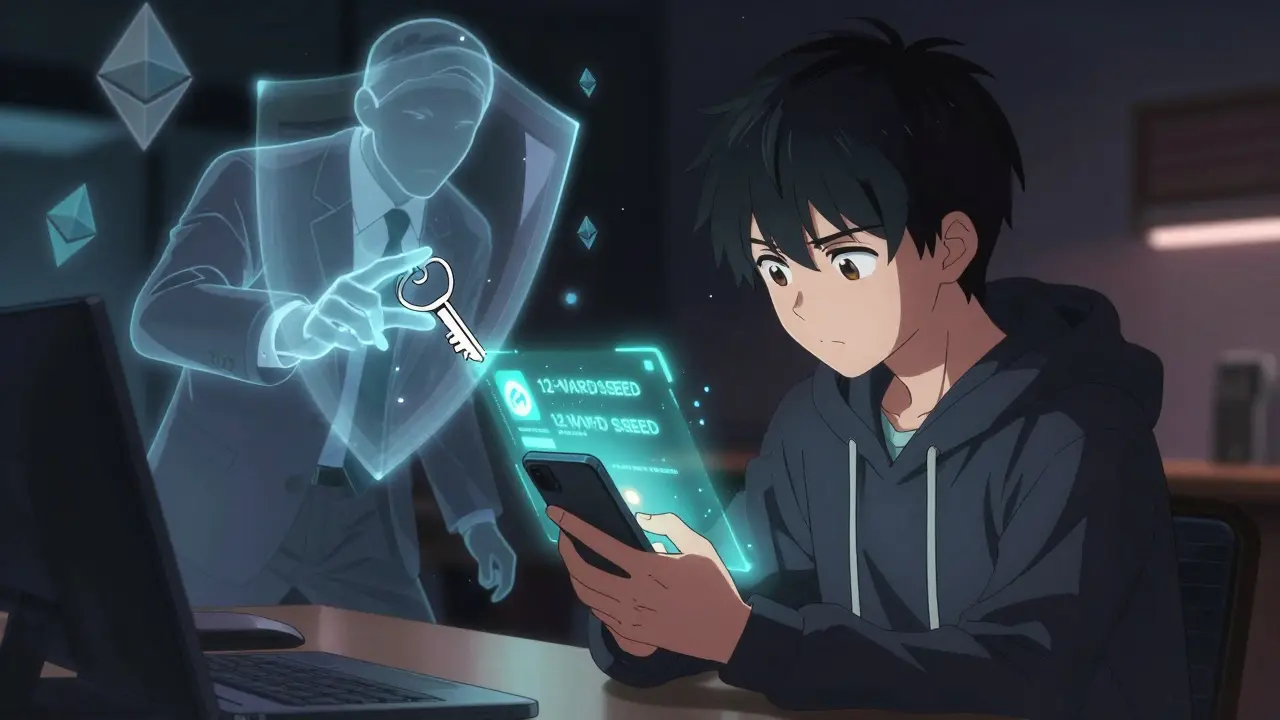
Speed and Performance: Why dApps Still Lag
If you’ve ever waited 30 seconds for a dApp transaction to confirm, you know the problem: speed. Ethereum, the most popular dApp blockchain, handles only 15-30 transactions per second. Compare that to Netflix, which processes over 1 million requests per second. Even Uber’s payment system moves faster than most dApps. That’s changing. Layer 2 solutions like Arbitrum and Polygon now handle up to 4,500 TPS, making dApps usable for more than just crypto trading. But for now, if you’re streaming video, playing a real-time game, or ordering food, traditional apps still win. dApps are better suited for things like trading tokens, lending money, or owning digital art - where trust matters more than speed.Cost and Complexity: Who Can Build and Use Them?
Building a traditional app costs $50,000 to $500,000. You need developers who know JavaScript, Python, or Swift. Most companies can afford it. Building a dApp? You need blockchain expertise. Developers must learn Solidity, understand gas fees, and test on testnets. According to Qodequay, dApp development costs $150,000 to $750,000. That’s why most dApps today are made by crypto-native teams, not big tech. For users, the barrier is even higher. Setting up a wallet, saving a 12-word seed phrase, and signing transactions feels like learning a new language. A 2023 Stakely.io study found users need 8-12 hours of onboarding just to feel comfortable. Traditional apps? You sign up in under a minute.Regulation and Compliance: The Wild West
Traditional apps live under strict rules. GDPR in Europe, CCPA in California - they force companies to protect your data. Since 2018, regulators have fined companies over $2.1 billion for violations. dApps? They’re in a gray zone. Only 18% have formal compliance frameworks, according to a 2023 CoinDesk survey. That’s why governments are rushing to catch up. The EU’s MiCA regulation, starting in December 2024, will require dApps to meet certain transparency and licensing rules. The U.S. still has no clear federal stance. This uncertainty scares off banks, insurers, and big businesses - but it also gives dApps room to grow.
Real-World Impact: Who Benefits?
In 2021, during pandemic lockdowns, Axie Infinity helped 40,000 Filipinos earn income by playing a blockchain game. They weren’t working for a company. They owned their digital creatures and sold them directly. That’s the power of dApps: turning users into stakeholders. Traditional apps scaled differently. Zoom handled 300 million daily meeting participants during the same period. It wasn’t perfect - but it worked. For most people, convenience beats control.The Future: Hybrid Apps Are Coming
The line between these two worlds is blurring. Twitter now lets users tip with Bitcoin and Ethereum. MetaMask has over 30 million monthly users. Meanwhile, traditional platforms are adding blockchain features - like NFTs for profiles or decentralized storage for backups. By 2026, Forrester predicts 35% of new apps will be hybrid: using centralized speed for everyday tasks, and blockchain for ownership, identity, or payments. You might order coffee with a traditional app - but store your loyalty points on a blockchain.Final Take: It’s Not Either/Or
dApps aren’t going to replace Instagram or Uber anytime soon. They don’t need to. Their strength isn’t in replacing what exists - it’s in creating what never could before. A world where you own your digital life, not rent it from a corporation. If you care about privacy, censorship resistance, and true ownership - dApps are worth learning. If you just want fast, simple, reliable service - traditional apps still win. The real question isn’t which is better. It’s: which one do you want to use today? And which one do you want to live in tomorrow?What’s the main difference between a dApp and a traditional app?
The biggest difference is control. Traditional apps are owned and run by a single company - like Meta or Uber - that controls your data, can ban your account, and changes rules without your input. A dApp runs on a blockchain with no central owner. It’s governed by code and community votes. You own your data and assets through a crypto wallet, not a username and password.
Are dApps more secure than traditional apps?
It depends on what you mean by secure. Traditional apps are vulnerable to massive data breaches because they store everything in one place - hackers target those servers. In 2022, over 8 billion records were stolen this way. dApps don’t have central databases, so they’re harder to hack en masse. But they have smart contracts - lines of code that can have bugs. In 2022, $1.3 billion was lost due to these coding errors. So: dApps avoid big breaches but face different risks.
Why are dApps slower than traditional apps?
dApps rely on blockchains to confirm transactions, and blockchains like Ethereum can only process 15-30 transactions per second. Traditional apps use fast cloud servers that handle over 100,000 requests per second. That’s why loading a dApp can feel laggy. But Layer 2 networks like Arbitrum and Polygon now boost speeds to 4,500 TPS, making dApps usable for more everyday tasks.
Do I need a crypto wallet to use a dApp?
Yes. To use any dApp, you need a crypto wallet like MetaMask or Coinbase Wallet. This wallet holds your private key - the secret that proves you own your digital assets. You don’t sign in with email or password. You sign transactions with your wallet. It’s more secure, but also more complex - losing your seed phrase means losing access forever.
Can I use dApps on my phone?
Absolutely. Most dApps work on mobile browsers or through wallet apps like MetaMask, which now has over 30 million monthly users. You can trade tokens, lend money, or play blockchain games on your phone. The interface looks just like a regular app - the difference is hidden under the hood, in how your data and money are managed.
Are dApps legal?
In most countries, using dApps is legal - but regulations are still being written. The EU’s MiCA law, starting in December 2024, will require some dApps to register and follow rules. The U.S. has no federal law yet, but states are acting. The key is whether the dApp involves financial assets or tokens - those face more scrutiny. Always check local laws before investing or trading.
What’s the biggest downside of dApps?
The biggest downside is usability. Setting up a wallet, managing seed phrases, paying gas fees, and understanding transaction confirmations takes time and learning. Most users need 8-12 hours to feel comfortable. Traditional apps are designed for ease - dApps still aren’t. But that’s changing fast, with new tools like account abstraction (ERC-4337) making wallets easier to use.
kavya barikar
March 23, 2026 AT 01:22Control is the real difference. Not tech. Not code. Just who holds the keys.
aravindsai pandla
March 24, 2026 AT 12:51Traditional apps offer convenience. dApps offer autonomy. One is a tool. The other is a right.
namrata singh
March 26, 2026 AT 02:48I’ve used both. The wallet setup felt like learning to drive again. But once I got it? I didn’t want to go back. It’s weird to feel that much ownership over something digital.
Andrea Zaszczynski
March 27, 2026 AT 18:46Ugh I hate how dApp users act like they’re morally superior. I use apps. I pay for services. I don’t need to be a ‘decentralized revolutionary’ to just get my coffee.
Cordany Harper
March 29, 2026 AT 06:47For folks outside the US, dApps are a lifeline. In countries with unstable banks or censorship, blockchain isn’t a trend-it’s survival. I’ve seen it firsthand in Nigeria and Kenya. It’s not about crypto hype. It’s about access.
DarShawn Owens
March 29, 2026 AT 17:18My cousin in Manila uses Axie Infinity to feed her family. She doesn’t care about Ethereum or gas fees. She cares that she can earn without a middleman. That’s the quiet revolution.
manoj kumar
March 30, 2026 AT 13:32Everyone acts like dApps are the future. Lol. 99% of people can’t even set up a wallet. You think grandma’s gonna memorize a 12-word phrase? Nah. This is just tech bro fantasy wrapped in crypto buzzwords.
vu phung
April 1, 2026 AT 02:17The real innovation isn’t decentralization-it’s composability. Smart contracts as lego blocks. You can build financial primitives that interact without intermediaries. That’s why DeFi is the next financial OS. Traditional apps are just GUIs on top of legacy systems. We’re moving to a permissionless stack.
Lorna Gornik
April 1, 2026 AT 13:53So I tried a dApp yesterday… 😅 honestly felt like I was hacking my own phone. But then I sent a tiny amount to a friend and it just… worked? No bank. No fee. No waiting. 🤯 I’m weirdly obsessed now. Also, my seed phrase is written on a napkin. Don’t judge.
Jackie Crusenberry
April 3, 2026 AT 05:16Why do we even care? It’s all just digital ghosts. You think owning an NFT makes you free? You’re still scrolling. You’re still addicted. You just traded Facebook for MetaMask. Same cage, different lock.
YANG YUE
April 3, 2026 AT 20:20It’s not about apps anymore. It’s about identity. Your wallet is your passport. Your signature is your soul. We’re not replacing Uber-we’re replacing the idea that a corporation can own your digital self. That’s not tech. That’s a revolution in human dignity.
Anna Lee
April 5, 2026 AT 11:13OMG I just got my first dApp wallet set up!! 🥳 Took me 3 days but I did it!! Now I’m trading tokens and it feels like magic!! I even sent a gift to my cousin in Mexico and she cried!! 🥹 blockchain is love!! 💖
Shayne Cokerdem
April 6, 2026 AT 03:12Yeah sure, decentralization. Meanwhile, the U.S. government is still the only one with real power. dApps are just a distraction so you don’t notice they’re still tracking you through your phone. Wake up. It’s all a scam.
Andy Green
April 8, 2026 AT 00:27Let’s be real: dApps are for people who don’t understand how capitalism works. You don’t want a CEO? Fine. But who pays for the servers? Who maintains the nodes? Who fixes the bugs? Someone always pays. Someone always controls. You’re just pretending it’s different.
Zion Banks
April 9, 2026 AT 16:25They’re not telling you the truth. The Fed and the IMF are already working on a global blockchain ID system. This ‘dApp freedom’ is a trap. They want you to think you’re free so you’ll willingly hand over your biometrics, your wallet, your life-under the guise of ‘ownership.’ Wake up. This is Phase 2 of the Great Reset.
Annette Gilbert
April 11, 2026 AT 11:00Wow. So you’re telling me the solution to corporate control… is more tech? With more complexity? More risk? More wallets? More gas fees? More ‘I lost my keys’ drama? 🤡 Congrats. You solved nothing. You just made everything harder for everyone.