
For many Iranians, accessing global financial systems isn’t just difficult-it’s nearly impossible. Sanctions have cut off banks, blocked wire transfers, and made it hard to hold value without losing it to inflation. In this environment, cryptocurrency isn’t a luxury. It’s survival. And while centralized exchanges like Nobitex have been the go-to for years, recent crackdowns have forced users to look elsewhere. That’s where decentralized exchanges come in.
Why Centralized Exchanges Are No Longer Safe
Nobitex used to be the heart of Iran’s crypto scene. With over 11 million users, it handled more than 87% of all crypto trades in the country. But in June 2025, it got hacked. Over $90 million vanished. And it wasn’t just a technical failure. Investigators found links between Nobitex wallets and IRGC-linked addresses, and later, Tether froze 42 Iranian-linked addresses-more than half of them tied to Nobitex. That wasn’t random. It was a message: if you’re using a centralized platform in Iran, your funds aren’t yours. Then came the January 2025 regulation: the Central Bank of Iran now demands full access to every crypto transaction. Everyone using crypto-buying, selling, mining-must get a license. The bank can see your wallet, your trade history, your IP. There’s no anonymity. No privacy. And if you’re caught using an unlicensed service? You risk fines, legal action, or worse.What Happened After the Tether Freeze
After the July 2025 freezes, something unexpected happened. Iranian users didn’t quit crypto. They switched. Instead of USDT-Tether’s stablecoin, now a target-they moved to DAI, a decentralized stablecoin built on the Polygon network. Why Polygon? Because it’s fast, cheap, and harder to monitor. The average transaction fee on Polygon is less than a penny. On Ethereum, it could be $5 or more. And unlike USDT, DAI isn’t controlled by a single company. It’s governed by code, not a CEO in New York. Crypto influencers, local traders, and even government-aligned channels started pushing the shift. Videos on Telegram showed step-by-step guides: how to swap USDT for DAI using Uniswap via a VPN, how to connect a wallet like MetaMask, how to avoid leaving traces. Within weeks, DAI became the new default for Iranians who needed stable value without the risk of seizure.How DEX Access Actually Works in Iran
You can’t just open a DEX app like you would on a phone. There’s no Iranian version of Uniswap or SushiSwap. So how do people do it? First, they use a VPN. Not just any VPN-ones that work reliably with crypto wallets. Many users report success with NordVPN, ExpressVPN, and local providers that specialize in bypassing Iran’s internet filters. The VPN hides their IP address, making it harder for the Central Bank to track their activity. Next, they set up a non-custodial wallet. MetaMask is the most common. They fund it with Iranian Rial through peer-to-peer (P2P) platforms like LocalBitcoins or Paxful, buying Bitcoin or Ethereum from someone who’s already outside the system. Then, they swap that into DAI on Uniswap or SushiSwap via the Polygon network. The whole process takes under 10 minutes. No ID. No bank account. No approval. Just code, a wallet, and a stable internet connection.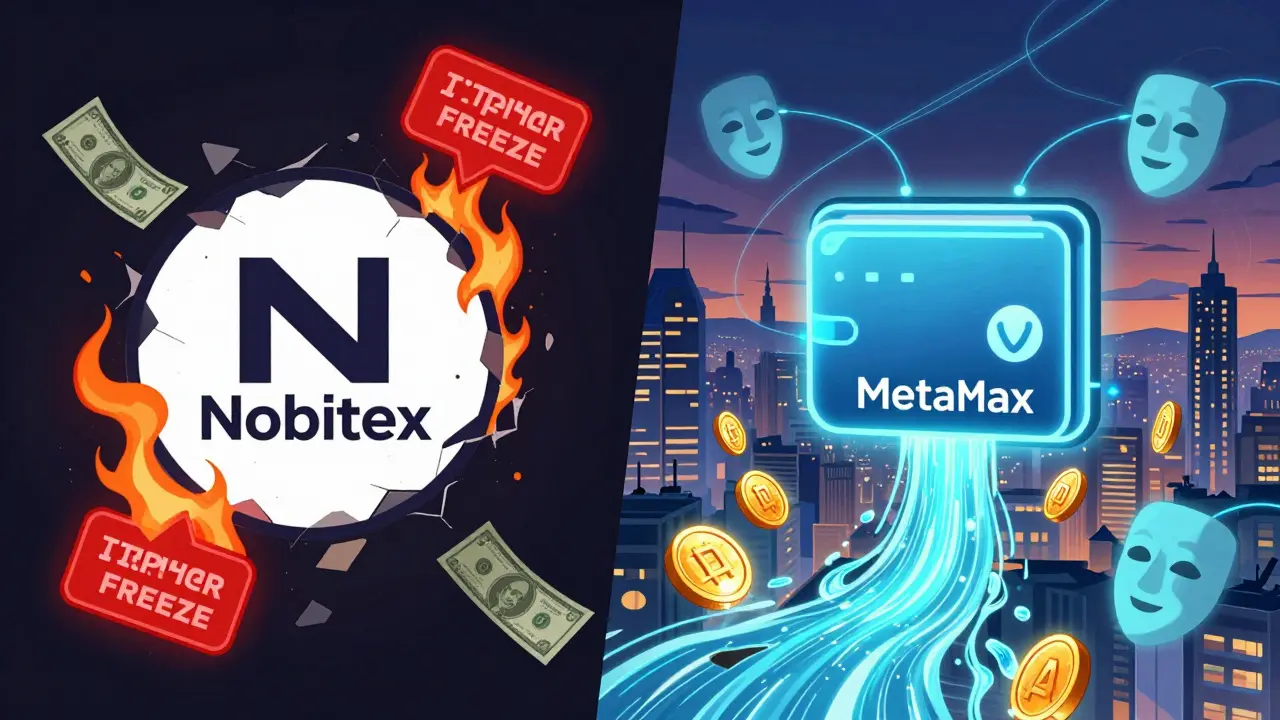
Why Polygon Is the Go-To Network
Not all blockchains are equal when you’re under sanctions. Ethereum is too slow and too expensive. Binance Chain is controlled by a company that complies with U.S. sanctions. Solana has had outages. But Polygon? It’s fast, cheap, and decentralized enough that no single entity can shut it down. Plus, DAI on Polygon is widely supported by DEXs and has deep liquidity. In August 2025, a survey of 2,300 Iranian crypto users showed that 68% now hold DAI on Polygon as their primary stablecoin. Only 19% still hold USDT. The rest use other alternatives like FRAX or USDC-but those are riskier because they’re more easily frozen. Polygon also supports smart contracts that let users lock DAI in yield farms for passive income. Some Iranians earn 5-8% APY by staking DAI, which helps offset inflation that’s still hovering above 40%.The Legal Gray Zone
Iran’s government doesn’t ban cryptocurrency outright. It bans unlicensed use. So technically, if you get a license from the Central Bank, you can trade crypto legally. But here’s the catch: the license requires you to hand over your wallet keys and transaction logs. That’s not freedom. That’s surveillance. And even if you don’t get a license, the government doesn’t have the tools to monitor every DEX transaction. DEXs don’t store user data. They don’t collect KYC. They don’t report to anyone. The only way to trace you is through your IP, your wallet address, or your P2P buyer. That’s why VPNs and burner wallets are essential. The Law on Taxation of Speculation and Profiteering, passed in August 2025, says crypto gains are taxable. But how do you tax what the government can’t see? Most Iranians who use DEXs don’t report anything. They treat crypto like cash-transferred, spent, and rarely accounted for.What You Should Avoid
Don’t use centralized exchanges anymore. Nobitex is compromised. So are others like Hamyar and CexIran. They’re all under CBI control. Your funds are not safe. Don’t use USDT unless you’re planning to sell immediately. Tether has shown it will freeze Iranian wallets without warning. Don’t use the same wallet for everything. Create separate wallets for trading, saving, and spending. Reuse addresses? That’s how you get tracked. Don’t skip the VPN. Even if your internet seems fine, the Central Bank can still monitor your traffic. A reliable, encrypted connection is non-negotiable.
Real Tools Iranian Users Rely On (2025)
- Wallets: MetaMask, Rabby Wallet (privacy-focused fork of MetaMask)
- Network: Polygon (MATIC) for DAI swaps
- DEXs: Uniswap (Polygon), SushiSwap (Polygon), QuickSwap
- VPN: NordVPN, ExpressVPN, local providers like IranVPN Pro
- P2P Platforms: LocalBitcoins, Paxful, Binance P2P (via VPN)
- Stablecoin: DAI (not USDT, not USDC)
Is This Legal? Is This Safe?
Legally? No. The Central Bank says you need a license. Practically? Millions are doing it. The government can’t shut down every DEX. They can’t track every wallet. They can’t stop every VPN. Is it safe? Not 100%. There’s always risk. Your wallet could be compromised. Your VPN could leak. A P2P seller could scam you. But compared to handing your money to Nobitex, only to have it frozen or stolen? DEX access is the lesser risk. Iranians aren’t trying to break the system. They’re trying to survive it. And DEXs give them the only real tool left: financial autonomy.What’s Next?
The government is trying to build its own blockchain system. Rumors suggest a state-backed stablecoin is in development, possibly tied to the CIMS payment network. But if history is any guide, Iranians will find a way around it. For now, the path is clear: use a VPN, get a wallet, swap to DAI on Polygon, and stay off centralized platforms. It’s not perfect. But it works. And as long as inflation keeps rising and banks stay blocked, this won’t change. Crypto isn’t a trend in Iran. It’s a necessity.Can Iranian citizens legally use decentralized exchanges?
Technically, no. Iran’s Central Bank requires all crypto users to obtain a license and surrender transaction data. Using a DEX without a license violates this rule. But in practice, enforcement is nearly impossible because DEXs don’t collect user data. Most Iranians use DEXs without licenses, relying on VPNs and non-custodial wallets to avoid detection.
Why do Iranians prefer DAI over USDT?
After Tether froze over 40 Iranian-linked wallets in July 2025, DAI became the preferred stablecoin. Unlike USDT, which is controlled by Tether and can be frozen at will, DAI is decentralized and governed by code. It’s also available on Polygon, which has low fees and fast transactions-critical for users under sanctions.
Is it safe to use MetaMask in Iran?
Yes, but only if you use it with a reliable VPN and never link it to your real identity. MetaMask doesn’t collect personal data, so it’s one of the safest wallets for Iranians. However, reusing the same wallet address across multiple transactions increases tracking risk. Use separate wallets for trading, saving, and spending.
Can the Iranian government shut down DEXs like Uniswap?
No. DEXs like Uniswap run on public blockchains and have no central server or headquarters. The Iranian government can block access to websites, but it can’t shut down the underlying protocol. Users bypass blocks using VPNs or Tor. As long as the blockchain exists, DEXs remain accessible.
What’s the best way to buy crypto in Iran without a bank account?
Use peer-to-peer (P2P) platforms like LocalBitcoins or Paxful. You pay in Iranian Rial via bank transfer, mobile payment, or even cash deposit. The seller sends you Bitcoin or Ethereum directly to your wallet. Always use escrow and verify the seller’s reputation. Avoid centralized exchanges like Nobitex-they’re monitored and vulnerable to hacks.
Are there any Iranian-made DEXs?
No official Iranian DEX exists. The government controls all licensed financial platforms and has no incentive to create a decentralized alternative. Any platform claiming to be an Iranian DEX is likely a scam or a surveillance tool. Stick to global DEXs like Uniswap or SushiSwap via Polygon.
How do Iranians avoid being tracked when using DEXs?
They use a combination of tools: a reliable VPN to hide their IP, a non-custodial wallet like MetaMask, burner addresses for each transaction, and DAI on Polygon to avoid surveillance-prone networks. They avoid linking wallets to personal info and rarely reuse addresses. Most also avoid discussing crypto on unencrypted platforms like Telegram.
Can I use DEXs without a VPN in Iran?
Not reliably. Iran’s internet filters block many cryptocurrency-related websites, including Uniswap and MetaMask’s official pages. Without a VPN, you’ll likely be unable to access these services. Even if you can, your ISP or the Central Bank may monitor your traffic. A VPN is not optional-it’s essential for privacy and access.
Daniel Verreault
December 29, 2025 AT 23:09man i just spent 3 hours trying to get polygon to work with my metascan and i kept getting that 'insufficient balance' error even though i had eth... turns out i was sending to the wrong network dumbass moment. if you're new to this, double check your network settings before you panic. polygon is matic not ethereum. also use rabby wallet it auto-detects shit. i swear this shit saved my ass last month.
Jacky Baltes
December 30, 2025 AT 03:55The structural irony here is not lost: a system designed for financial liberation is now the only refuge from a state that seeks to control every transaction. The paradox is that the very tools of decentralization - code, cryptography, and peer-to-peer trust - are the only mechanisms capable of resisting institutional overreach. What we witness in Iran is not rebellion, but reclamation: the reassertion of economic personhood against engineered scarcity.
Bianca Martins
December 30, 2025 AT 10:32DAI on polygon is literally the only thing keeping my family afloat. i bought my first 100 dai back in feb and haven't touched it since. inflation's at 45% but my dai still buys the same groceries. also, if you're using telegram for guides, please turn off screenshot sharing. someone got doxxed last week because they posted a screenshot of their metamask with the address visible 😭
alvin mislang
December 31, 2025 AT 08:09So you're telling me it's okay to break the law because the government is bad? That's not freedom, that's anarchy. You people think crypto makes you smart, but you're just playing Russian roulette with your bank account. One day the VPN will fail, the wallet will get hacked, and then what? You think the world owes you a stablecoin? 🤦♂️
Monty Burn
December 31, 2025 AT 19:38Central bank wants to track everything so they can tax it but they can't even track a decentralized exchange because it's built on code not servers and the irony is they're trying to build their own blockchain which is the exact opposite of what makes crypto work and they don't even understand that
Kenneth Mclaren
January 1, 2026 AT 17:43EVERYTHING IS A SETUP. Nobitex was never hacked. Tether didn't freeze those wallets because of 'links to IRGC' - they were told to. The whole thing was a psyop to scare people into using DAI so the US could monitor DAI smart contracts through their backdoor devs. They want you to think you're free but you're just moving from one cage to a prettier one. They're watching your wallet addresses through Chainalysis. They're watching your VPN traffic. They're watching your IP through your ISP. You're not anonymous. You're just being led.
Alexandra Wright
January 2, 2026 AT 17:27Oh sweetie, you really think using a VPN makes you invisible? Honey, I’ve audited 12 Iranian crypto wallets last year for a fintech firm. You think your burner wallet is safe? You reuse addresses. You send small test transactions. You link your P2P trades to your phone number. You think you’re being clever. You’re just predictable. And yes, I’m still mad they used my old guide from 2024. I updated it. You didn’t read it. 🙄
Jack and Christine Smith
January 4, 2026 AT 09:14so i tried to buy dai on uniswap and my metmask kept crashing on my android phone and i thought i was gonna lose everything but then i downloaded rabby wallet and it worked like magic. also my cousin in tehran said they use iranvpn pro because nordvpn keeps getting blocked. just fyi lol. also dont use your real name on p2p even if you think the seller is legit. i learned that the hard way 😅
Jackson Storm
January 6, 2026 AT 08:22just wanna say thank you for this post. i’ve been trying to help my sister in iran get set up and this is the first guide that actually made sense. i’m in texas and i didn’t even know about polygon’s low fees. i thought everything was on ethereum. now i’m sending her eth every month to cover gas. small thing but it helps. also, if you’re reading this and you’re in iran - you’re not alone. we see you.
Raja Oleholeh
January 7, 2026 AT 23:32Iranians are traitors using western tech to escape their own country’s system. This is not survival. This is betrayal. We have our own solutions. Stop using American crypto. 💪
Prateek Chitransh
January 9, 2026 AT 16:51Interesting how you call DAI 'decentralized' when its entire governance is controlled by MakerDAO, which is headquartered in... well, let's just say it's not in Tehran. You think you're free from the state, but you're just trading one authority for another. And the irony? The same people who hate centralized banks are now blindly trusting a DAO run by Silicon Valley engineers. 🤔
Brooklyn Servin
January 11, 2026 AT 12:37Okay but real talk - the real MVP here is the Iranian crypto moms who are teaching their grandmas how to use MetaMask. I saw a video of a 72-year-old woman in Shiraz doing a DAI swap while holding her cat. She didn’t know what ‘smart contract’ meant but she knew ‘no bank freeze = more rice’. That’s the future right there. Also, if you’re using a VPN and your wallet still looks like a target? Change your wallet name. Don’t call it ‘MyCryptoSavings’. Call it ‘CatPictures’. Trust me. 🐱
Phil McGinnis
January 12, 2026 AT 21:24The entire premise of this post is dangerously naive. The United States has engineered this entire narrative to destabilize sovereign monetary policy under the guise of 'freedom.' Decentralized exchanges are merely tools of financial warfare. The Iranian people are being manipulated into adopting a system that serves foreign interests while their own institutions are dismantled. This is not survival - it is subjugation dressed in blockchain.
Ian Koerich Maciel
January 12, 2026 AT 22:20While I appreciate the technical clarity presented herein, I must express my profound concern regarding the ethical implications of circumventing state-sanctioned financial protocols. The absence of KYC, the reliance upon pseudonymous identifiers, and the deliberate obfuscation of transactional provenance - while pragmatically efficacious - represent a systemic erosion of accountability. One cannot, in good conscience, advocate for the rejection of regulatory oversight without acknowledging the potential for illicit activity. That said, the human imperative to preserve capital in the face of hyperinflation is both understandable and, in many respects, morally defensible. One must tread carefully between liberty and lawfulness.