
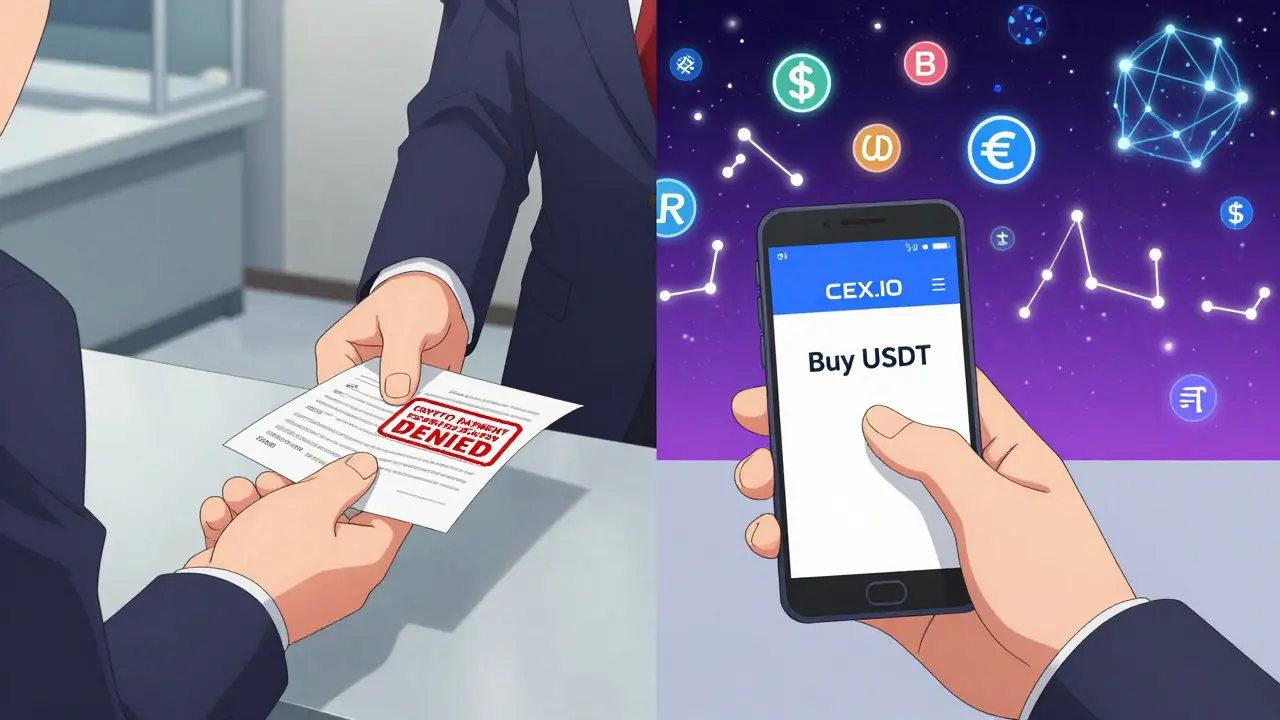
Buying cryptocurrency with real money in China isn’t as simple as it is in most other countries. The Chinese government banned banks and payment processors from handling crypto transactions back in 2021, and that ban is still in full effect in 2026. You can’t walk into a local bank and buy Bitcoin with your salary. You can’t use Alipay or WeChat Pay to top up a crypto wallet. But that doesn’t mean it’s impossible. Thousands of people in China still buy crypto every day - they just have to use different paths.
Why You Can’t Use Local Exchanges
China doesn’t allow domestic crypto exchanges. Binance, OKX, Huobi - all of them either shut down their local operations or moved their headquarters overseas years ago. The government’s stance is clear: cryptocurrencies aren’t legal tender. They’re not regulated. They’re not protected. And financial institutions can’t touch them. That means no direct bank transfers to crypto platforms. No credit card purchases through local apps. No easy on-ramps. But here’s the thing: owning crypto isn’t illegal. Trading it privately? Also not illegal. The ban targets institutions, not individuals. So if you want to buy Bitcoin, Ethereum, or USDT with yuan, you need to work around the system - not break it.How It Actually Works: The Two Main Paths
There are two reliable ways to buy crypto with fiat in China today: international exchanges with fiat on-ramps, and peer-to-peer (P2P) trading. Both have pros and cons. Let’s break them down.1. International Exchanges with Fiat Support
Some global exchanges still let users in China deposit fiat currency directly. These platforms operate outside China’s jurisdiction, so they’re not bound by its rules. The most popular ones include:- CEX.IO - Lets you deposit USD, EUR, or GBP via bank transfer, credit card, or Apple Pay. Then converts it into crypto in one click using their “Convert” tool.
- Binance - Still accepts fiat deposits from China via bank transfers in EUR or USD. Offers 426+ cryptocurrencies and 0.1% trading fees.
- MEXC - Supports SEPA bank transfers and Quick Buy (card payments). No mandatory KYC for deposits under $5,000. Taker fees as low as 0.01%.
- Bitget and Kraken - Both offer fiat on-ramps with strong security and customer support. Kraken charges 0.4% for taker trades; Bitget is 0.1%.
Here’s how to use them:
- Create an account on the exchange (use a real email and phone number).
- Complete KYC verification - upload your ID, passport, or driver’s license. Most platforms require this even if you’re in China.
- Deposit fiat currency - choose USD, EUR, or GBP. Use a bank transfer or card that works internationally. Some users use third-party payment processors like Skrill or Neteller if their bank blocks crypto-related transactions.
- Once funds arrive, go to the “Convert” or “Buy” section. Pick your crypto (like BTC or USDT), enter the amount, and complete the purchase.
Important: You must use a payment method that doesn’t trigger bank flags. Many Chinese banks now block transactions labeled as “crypto” or “digital asset.” If your payment fails, try a different card or switch to a different currency (EUR instead of USD, for example).
2. Peer-to-Peer (P2P) Trading
This is the most common way Chinese users buy crypto. P2P platforms connect buyers and sellers directly. You pay the seller in yuan via WeChat Pay or Alipay, and they send you crypto. It’s not perfect - but it’s practical.Top P2P platforms for China:
- Binance P2P - The biggest marketplace. Over 10,000 active sellers. You can buy USDT with yuan in minutes. Rates are usually 1-3% above market price.
- Paxful - Offers escrow protection and multiple payment methods, including bank transfer and gift cards.
- LocalBitcoins - Less popular now, but still active. Good for smaller trades.
How to use P2P safely:
- Only trade with sellers who have 95%+ positive feedback and at least 500 completed trades.
- Always use the platform’s escrow system. Never send money before the crypto is locked in escrow.
- Use a trusted payment method. WeChat Pay and Alipay are most common. Avoid cash or third-party apps.
- Check the price before you trade. If it’s more than 5% above the market rate, walk away.
- Take screenshots of every step - chat logs, payment receipts, transaction IDs.
Why P2P works: Chinese sellers often need yuan quickly. They’re willing to sell crypto at a slight premium to get cash fast. Buyers get access to crypto without dealing with international banks.
What You Should Avoid
Some platforms claim they “serve China” but are risky or outright scams:- Domestic exchanges - Any site with a .cn domain offering crypto trading is likely a scam or a honeypot.
- Unregulated brokers - If a platform doesn’t show its license or has no customer support, don’t deposit.
- “Guaranteed returns” schemes - No one can guarantee profits on crypto. If it sounds too good to be true, it is.
- Using Chinese bank cards on non-compliant apps - Many cards now auto-block crypto-related payments. You’ll likely get declined.
Fees and Costs You Can’t Ignore
Buying crypto in China comes with hidden costs:- Trading fees - Most exchanges charge 0.1% per trade. MEXC offers 0.01% for takers and 0% for makers - the cheapest option.
- Conversion fees - If you deposit USD and want BTC, some platforms charge 1-3% to convert currency.
- P2P premiums - Sellers often add 1-5% on top of the market price to cover risk and time.
- Withdrawal fees - Sending crypto out of the exchange? Expect 0.0005 BTC or $10-$20 for Ethereum.
Pro tip: Buy USDT (Tether) instead of Bitcoin if you’re new. It’s stable, easy to trade, and widely accepted on P2P platforms. You can convert it later to other coins.
Security: Your Biggest Risk
Since you’re operating outside official channels, you’re on your own when it comes to protection. No FDIC. No investor compensation fund. No government backup.Here’s how to stay safe:
- Enable two-factor authentication (2FA) on every account - use an authenticator app like Google Authenticator or Authy. Never rely on SMS.
- Store your crypto in a hardware wallet (Ledger or Trezor) after you buy. Don’t leave it on an exchange long-term.
- Use a VPN only if needed for access - but don’t use it to hide your location from the exchange. KYC requires real info.
- Never share your private keys. Ever.

Mobile Apps That Still Work
Most of the platforms mentioned above have full mobile apps for iOS and Android. You can buy crypto right from your phone:- CEX.IO - Simplest app for beginners. Convert fiat → crypto in 3 taps.
- Binance - Full trading suite. Great for P2P and spot trading.
- PayPal and Cash App - Not available in China directly, but some users access them via international accounts (risky and not recommended).
Stick to apps from the official app stores. Avoid downloading APK files from random websites. They’re often infected with spyware.
What’s Next? The Outlook in 2026
China’s government shows no sign of relaxing its crypto rules. The digital yuan (e-CNY) is being pushed hard - it’s the state’s answer to digital money. That means private crypto will likely stay in the shadows.But demand hasn’t dropped. Young investors still want exposure to Bitcoin. Retirees still look for inflation hedges. And businesses still need cross-border crypto payments. As long as that demand exists, the workarounds will keep evolving.
Right now, the smartest move is to use Binance P2P or CEX.IO for simplicity. If you’re more technical, MEXC offers the lowest fees. Always prioritize security over convenience. And never invest more than you can afford to lose.
Can I use my Chinese bank account to buy crypto directly?
No. Chinese banks are legally blocked from processing crypto transactions. Any attempt to deposit yuan directly into a crypto exchange will fail. You must use international payment methods like USD/EUR bank transfers or P2P platforms where you pay sellers in yuan via WeChat Pay or Alipay.
Is peer-to-peer trading safe in China?
It’s safe if you follow basic rules: use verified sellers with high ratings, always use escrow, never pay before receiving crypto, and keep screenshots. Binance P2P is the most trusted option. Avoid sellers with low feedback or who ask you to pay outside the platform.
Which crypto should I buy first in China?
Start with USDT (Tether). It’s pegged to the US dollar, so it’s stable. It’s widely accepted on P2P platforms, has low trading fees, and is easy to convert to Bitcoin or Ethereum later. Avoid altcoins until you understand the market better.
Do I need a VPN to buy crypto in China?
You don’t need a VPN to access most exchanges - they’re still reachable. But if your internet blocks a site, a VPN can help. Just don’t use it to lie about your location during KYC. Exchanges can detect real IP addresses and may freeze your account.
Are there any legal risks to buying crypto in China?
As an individual, there’s no legal risk for owning or trading crypto privately. The ban targets banks and exchanges, not users. But if you run a business that accepts crypto or promotes trading, you could face penalties. Stick to personal use, and you’re fine.
Patty Atima
March 18, 2026 AT 20:06Ernestine La Baronne Orange
March 19, 2026 AT 07:45Jessica Beadle
March 20, 2026 AT 01:53Konakuze Christopher
March 22, 2026 AT 00:39George Hutchings
March 23, 2026 AT 07:20Angelica Stovall
March 23, 2026 AT 09:23Sarah Zakareckis
March 23, 2026 AT 20:36Henrique Lyma
March 25, 2026 AT 02:46Jesse Pals
March 26, 2026 AT 17:35Ann Liu
March 27, 2026 AT 14:49Graham Smith
March 28, 2026 AT 19:50Tobias Wriedt
March 30, 2026 AT 07:13Manali Sovani
March 31, 2026 AT 01:26Steph Andrews
March 31, 2026 AT 08:15Sarah Hammon
April 2, 2026 AT 04:23Tony Weaver
April 2, 2026 AT 15:40Dionne van Diepenbeek
April 3, 2026 AT 21:05Heather James
April 5, 2026 AT 19:26sai nikhil
April 7, 2026 AT 00:41Diane Overwise
April 8, 2026 AT 14:08shreya gupta
April 9, 2026 AT 09:44john peter
April 11, 2026 AT 02:05iam jacob
April 12, 2026 AT 01:27Derek Lynch
April 12, 2026 AT 23:47S F
April 13, 2026 AT 13:52Sarah Zakareckis
April 14, 2026 AT 04:23