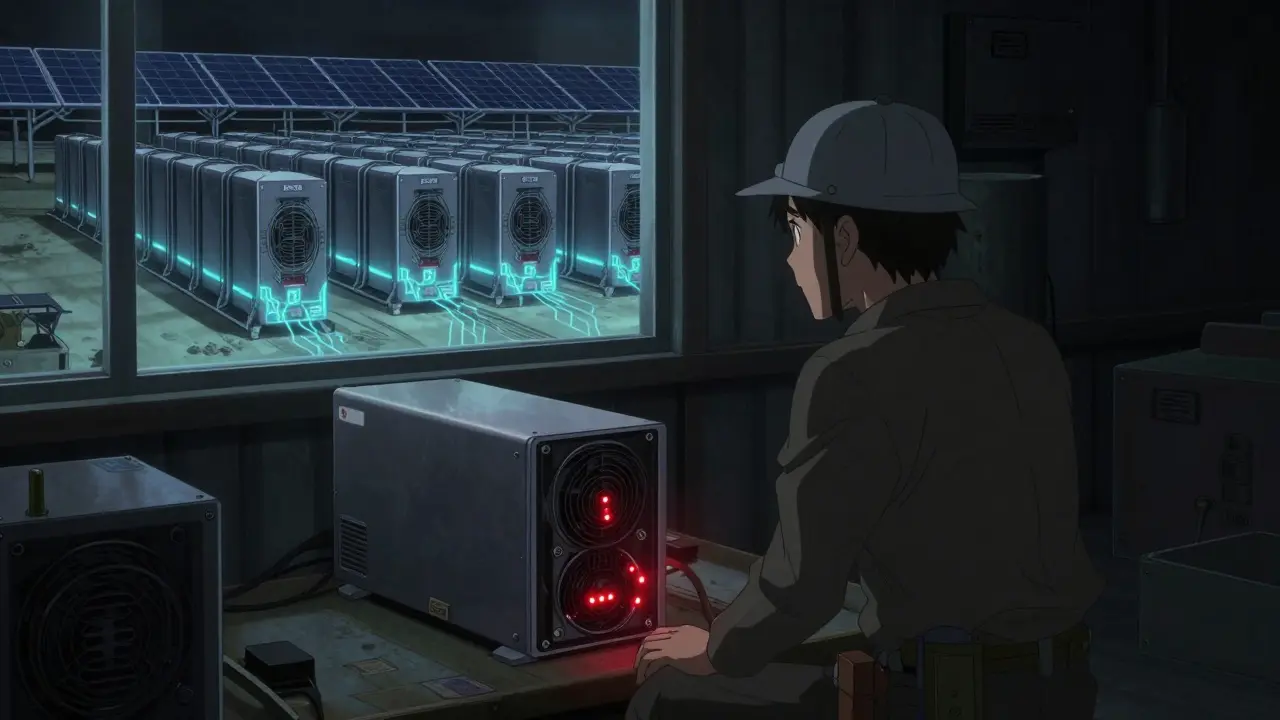
When Bitcoin’s block reward drops by half, it doesn’t just change the math-it triggers a mass exodus. Around April 2024, the mining reward fell from 6.25 BTC to 3.125 BTC per block. Overnight, miners saw their income slashed. But their electricity bills didn’t. Rent didn’t. Cooling systems didn’t. And for thousands of operations, that was the end.
Why Miner Capitulation Isn’t Just a Bump in the Road
Miner capitulation isn’t a glitch. It’s built into Bitcoin’s design. Every 210,000 blocks-roughly every four years-the reward cuts in half. This isn’t arbitrary. It’s how Bitcoin enforces scarcity. With only 1.35 million coins left to mine out of a 21 million cap, every halving makes the remaining coins harder to get. And that’s the problem for miners.
Before the 2024 halving, many miners were barely scraping by. They were running older ASICs like the Antminer S17 or even S9s, paying $0.08-$0.12 per kWh for electricity, and counting on Bitcoin’s price to keep them afloat. Then the halving hit. Revenue dropped 50%. Costs didn’t. Within weeks, small farms in Texas, Pennsylvania, and even parts of Europe started shutting down. Some just unplugged their machines and walked away.
It’s not just about being inefficient-it’s about being outgunned. Big players like Bitdeer, Marathon Digital, and Riot Platforms had already locked in long-term power deals below $0.05 per kWh. They had warehouses full of latest-gen ASICs like the Antminer S21, which delivers 200 TH/s at just 3,250W. That’s 60% more efficient than the S17. They had cash reserves to ride out the storm. Smaller miners? Not so lucky.
The Numbers Don’t Lie: What It Takes to Survive
Here’s the cold truth: after the 2024 halving, a miner needed Bitcoin to trade above $54,000 just to break even if they were running average hardware and paying $0.07 per kWh. That number isn’t theoretical. It’s based on real-world energy costs and hardware specs from mining reports by EY Switzerland and Fidelity Digital Assets.
Let’s say you’re running a 100 TH/s rig. Before halving, you earned about $5.50 per day. After? $2.75. If your electricity costs $0.08 per kWh and your rig draws 3,000W, you’re spending $5.76 a day just to power it. You’re losing $3 a day. No margin. No room to breathe. That’s not a business-it’s a charity.
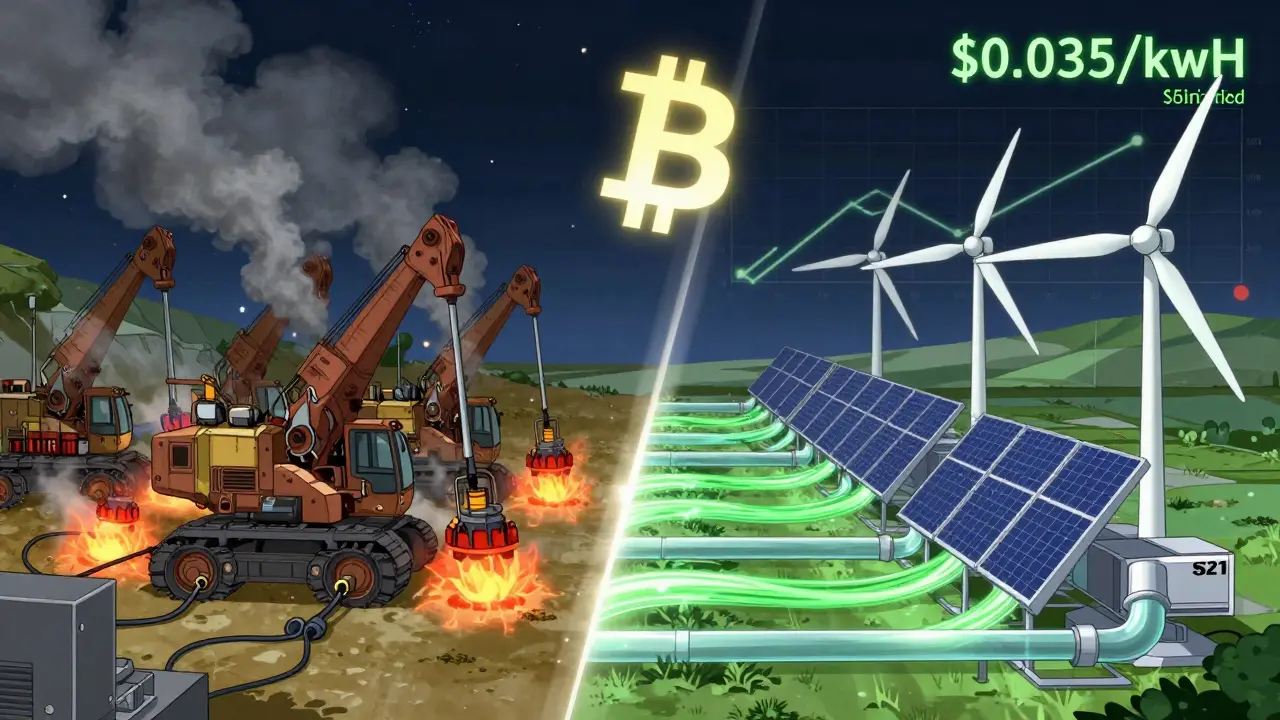
Compare that to a miner with a 200 TH/s S21 running on $0.035/kWh power. They’re spending $2.52 per day on electricity and earning $5.50. That’s a $3 profit. They’re not just surviving-they’re building.
The gap isn’t small. It’s existential. And that’s why the hash rate dropped 15-20% in the three months after the halving. It wasn’t a glitch in the network. It was a purge.
Who Got Crushed-and Who Thrived
Publicly traded miners didn’t disappear. They reported lower production numbers. Bitdeer’s output fell 31% in May 2024. Cleanspark and Bitfarms saw similar drops. But here’s the twist: they didn’t shut down. They absorbed the hit. Why? Because they had access to renewable energy-hydro in Canada, wind in Texas, solar in Arizona-and they’d already upgraded their fleets.
Meanwhile, the quiet casualties were the backyard miners. The ones who bought a few S19s on eBay, hooked them up to their home circuit, and thought they could mine Bitcoin like a side hustle. When their electricity bill jumped because of the miner, and Bitcoin didn’t spike fast enough, they unplugged. Reddit threads from May 2024 are full of posts like: “My 10 S19s just became a fancy space heater. Time to sell the rigs.”
Some tried cloud mining. Others rented out their rigs. A few moved to places like Kazakhstan or Georgia, where electricity is subsidized. But for most, it was over. And that’s exactly what Bitcoin’s design intended.
How the Network Heals Itself
Bitcoin doesn’t care if you shut down. It recalibrates. Every 2,016 blocks-about every two weeks-the network adjusts the mining difficulty. If fewer miners are competing, the difficulty drops. That makes it easier for the remaining miners to find blocks again.
After the 2024 halving, difficulty fell by 12% in the first adjustment cycle. Then another 8%. By July, the network had settled into a new equilibrium. The hash rate stabilized, and the miners who stayed in the game started seeing better returns.
This isn’t luck. It’s feedback. The system removes the weakest links and rewards those who adapt. That’s why the network is more secure after each halving. Fewer, stronger miners mean less centralization risk. The ones left are the ones who planned.
What Miners Do Next: Three Survival Strategies
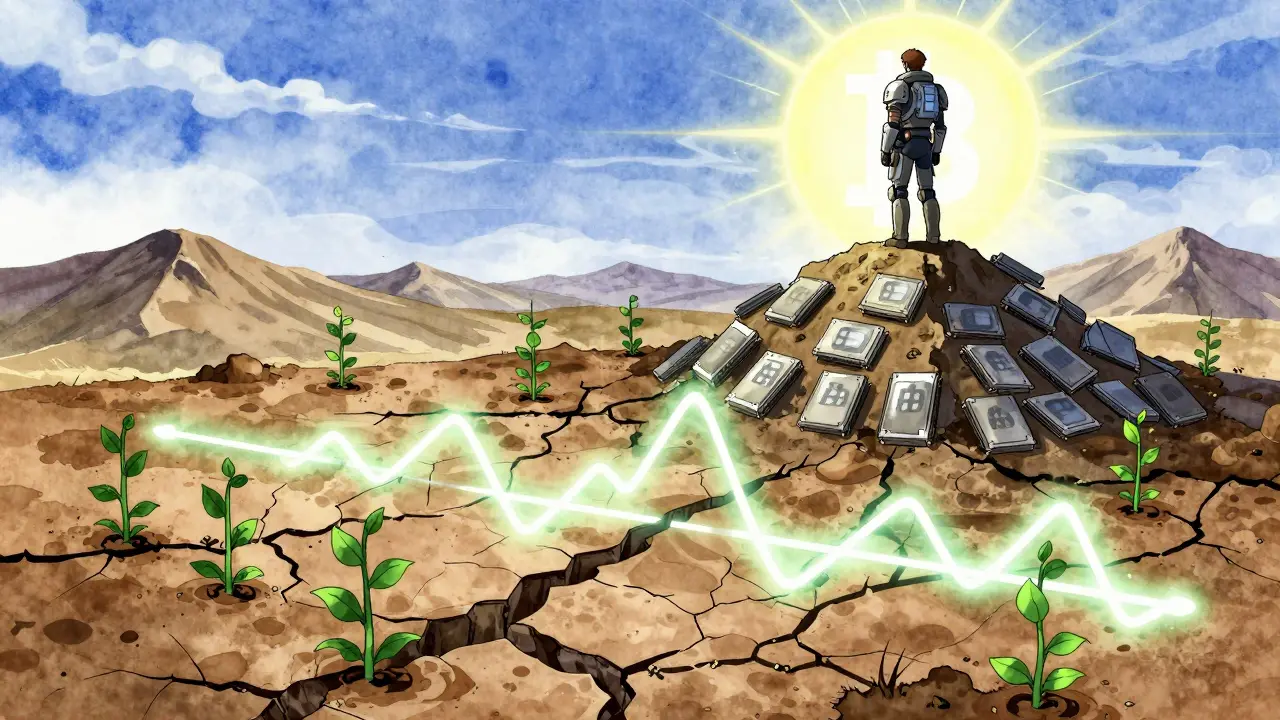
If you’re still mining after a halving, you’re not just lucky-you’re strategic. Here’s what the survivors did:
- Upgrade hardware-Old ASICs like the S17 or S9 are dead. You need something with at least 30 TH/s per kW. The S21, T21, or WhatsMiner M50S are the new baseline. No exceptions.
- Lock in cheap power-If you’re paying more than $0.05/kWh, you’re already behind. The smart ones signed direct contracts with wind farms, hydro plants, or even flared gas sites in North Dakota. Some even use solar during the day and grid at night.
- Build a cash buffer-You need 6-12 months of operating costs in reserve. No credit cards. No loans. Just cash. Because Bitcoin doesn’t always spike right after halving. Sometimes it takes 9-18 months. You have to survive the wait.
Some miners added new revenue streams too. They started staking Bitcoin on Layer 2 protocols like Lightning Network nodes. Others became infrastructure providers, renting out their cooling systems or data center space. A few even started mining other coins during downtime. But none of that works unless you’ve already solved the core problem: energy and efficiency.
The Bigger Picture: Why This Matters
Miner capitulation isn’t a failure. It’s a feature. Bitcoin’s value comes from scarcity. And scarcity only works if mining remains hard, expensive, and selective. If anyone could mine Bitcoin profitably with a laptop, the network would be flooded with spam and cheap hardware. The halving ensures only the most serious, efficient, and well-funded operators remain.
After the 2024 halving, Bitcoin’s price didn’t immediately jump. It took until November 2024 to break past $70,000. But during that lag, the network got stronger. The hash rate stabilized. The remaining miners became more centralized-not in ownership, but in efficiency. And that’s good for Bitcoin.
Looking ahead to the next halving in 2028, the bar will be even higher. Only miners with electricity below $0.03/kWh and hardware that’s 2-3 generations ahead of today’s will survive. That means more consolidation. More industrial farms. More renewables. And fewer mom-and-pop operations.
For Bitcoin holders, halvings are celebrations. For miners, they’re survival tests. And the ones who make it through? They’re not just mining coins. They’re securing the network.
What exactly is miner capitulation?
Miner capitulation is when Bitcoin miners with high operating costs or outdated equipment shut down operations after a halving event. This happens because their mining rewards are cut in half, but their electricity and maintenance costs stay the same. If they can’t cover costs, they stop mining.
How long does it take for the network to recover after a halving?
The network adjusts mining difficulty every two weeks, and it typically takes 3-6 months for the hash rate to stabilize after a halving. The difficulty drops as inefficient miners leave, making it easier for remaining miners to earn blocks again. Full recovery depends on Bitcoin’s price rising to make mining profitable again.
Can I still mine Bitcoin profitably after a halving?
Yes-but only if you have modern ASIC hardware (like the Antminer S21) and access to electricity below $0.05 per kWh. Most home miners using older equipment or paying retail power rates will lose money. Profitability requires efficiency, scale, and low-cost energy.
Why do big mining companies survive while small ones fail?
Big miners have three advantages: they buy hardware in bulk at lower prices, negotiate long-term power deals with renewable energy providers, and hold enough cash reserves to last through unprofitable periods. Small miners usually lack capital, energy access, and the latest hardware, making them vulnerable when rewards drop.
Will Bitcoin mining become too centralized after future halvings?
It’s likely. As the cost to mine rises, only large operations with access to cheap renewable energy and cutting-edge hardware will survive. This could lead to a smaller number of industrial-scale miners controlling most of the network’s hash rate. But Bitcoin’s decentralized nature is still maintained because these operators are spread across different countries and energy grids.
William Montgomery
March 13, 2026 AT 17:10Allison Davis
March 13, 2026 AT 22:19Tom Jewell
March 15, 2026 AT 10:20Sherry Kirkham
March 16, 2026 AT 10:16Sharon Tuck
March 17, 2026 AT 13:44Chelsea Boonstra
March 17, 2026 AT 16:07Howard Headlee
March 18, 2026 AT 13:53Julie Tomek
March 20, 2026 AT 07:44Craig Gregory
March 21, 2026 AT 22:31vishnu mr
March 23, 2026 AT 03:53ann neumann
March 24, 2026 AT 04:15Mara Alves Mariano
March 25, 2026 AT 08:23Adam Ashworth
March 26, 2026 AT 12:47Jennifer Pilot
March 27, 2026 AT 09:38karan narware
March 28, 2026 AT 21:00Michael Suttle
March 30, 2026 AT 20:39Jenni James
April 1, 2026 AT 05:45Alex Thorn
April 2, 2026 AT 01:22Brandon Kaufman
April 2, 2026 AT 09:24Anshita Koul
April 4, 2026 AT 05:03PIYUSH KOTANGALE
April 6, 2026 AT 02:18Grace van Gent-Korver
April 6, 2026 AT 12:38Zephora Zonum
April 8, 2026 AT 04:04Anthony Marshall
April 9, 2026 AT 18:31