
Buying Bitcoin in Skopje feels like a paradox. On paper, it is technically prohibited. In practice, thousands of people trade daily using peer-to-peer platforms that operate in a legal gray area. If you are trying to buy or sell cryptocurrency in North Macedonia, you are navigating a landscape where the rules change faster than the market prices. The official stance from the central bank clashes with the reality of active trading communities, creating an environment that experts call "underground" not because it is hidden, but because it exists outside formal banking channels.
This guide breaks down how this system works, which platforms Macedonians actually use, and what risks you face when trading without clear legal protection. You will learn why international brokers are struggling here, why local banks block transfers, and how to stay safe while the country waits for proper regulation.
The Legal Reality: Prohibited on Paper, Active in Practice
To understand why crypto trading feels underground, you have to look at the history. In 2017, the National Bank of the Republic of Macedonia (NBRM) issued a strict prohibition on cryptocurrency trading. They classified it alongside securities and derivative financial instruments traded on foreign markets. This was done to comply with early phases of the Stabilisation and Association Agreement with the European Union, which restricted certain types of foreign investments.
However, life moved on. By 2023, the NBRM softened its tone significantly. They clarified that while crypto is not regulated, it does not mean it is illegal per se. This created a confusing middle ground. Then, on February 1, 2022, the government adopted amendments to the Anti-Money Laundering and Countering the Financing of Terrorism (AML/CTF) Draft-Law. These amendments introduced legal definitions for "virtual assets," "virtual asset service providers," and "cryptocurrencies" as property.
So, are you breaking the law? Technically, the 2017 prohibition still sits in the books, but enforcement has been lax. The trend is clearly moving toward regulation rather than punishment. Most analysts expect North Macedonia to align with the EU’s MiCA (Markets in Crypto-Assets) framework by 2026 or 2027. Until then, you are operating in a zone where the government watches closely but rarely intervenes unless money laundering is suspected.
Why Banks Won’t Help You Trade
If you try to wire money from your local Macedonian bank account to Binance or Coinbase, it will likely fail. This is the core reason why "underground" or P2P trading dominates the scene. Local banks follow strict compliance rules and often block transactions labeled as crypto-related to avoid regulatory heat.
This bottleneck forces traders into two main paths:
- International Regulated Brokers: Platforms like Swissquote or Interactive Brokers allow Macedonian users to sign up. However, getting money in and out is tricky. Users report high fees and slow customer service. For example, Swissquote is ranked as the best broker in Macedonia for 2025, but many users complain about charges that eat into small profits.
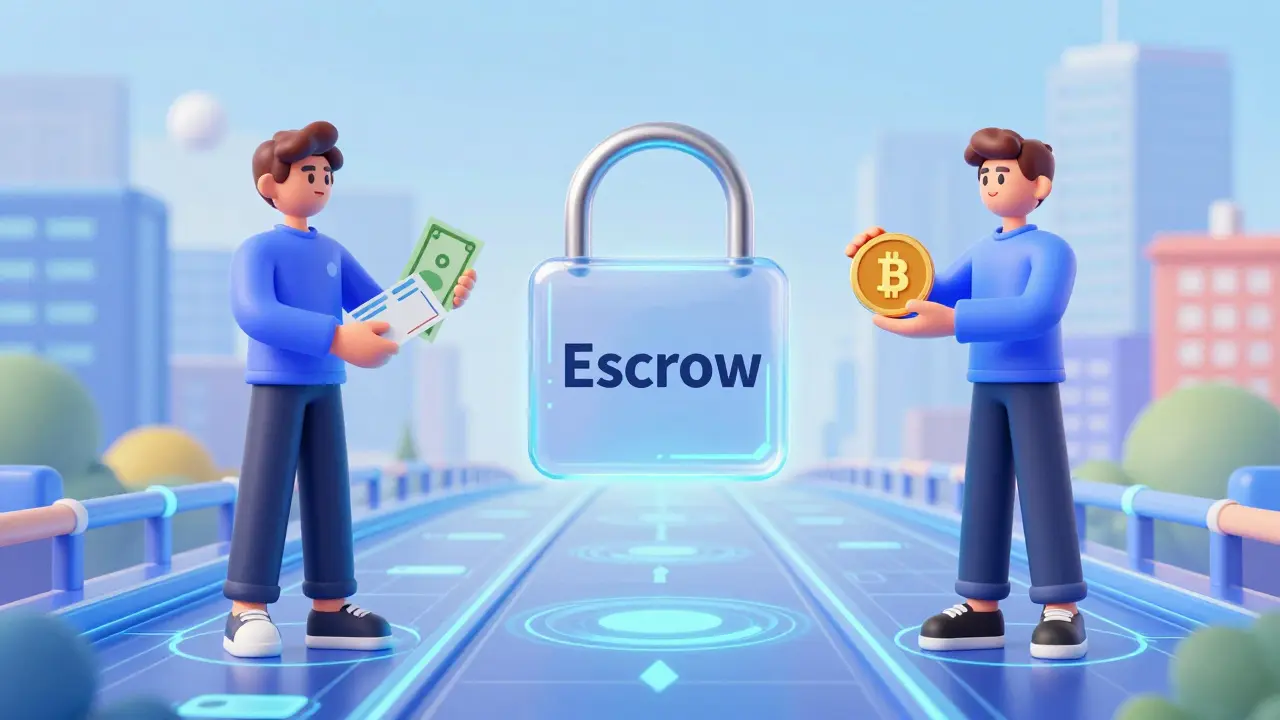
- Peer-to-Peer (P2P) Marketplaces: This is where the real action happens. Platforms connect buyers and sellers directly. One person pays via local transfer, cash, or mobile payment, and the other releases crypto from an escrow wallet. This bypasses the need for direct bank-to-exchange links.
The advantage of P2P is access. The disadvantage is risk. You are trusting a stranger on the internet, even if the platform holds the funds in escrow.
Top Platforms Used in North Macedonia
Since major exchanges like Binance have faced restrictions or blocked IP addresses in various regions, Macedonian traders rely on niche P2P platforms. Here are the ones you will see mentioned most often in local forums and Telegram groups.
| Platform | Type | Key Feature | Risk Level |
|---|---|---|---|
| Symlix | P2P Marketplace | Escrow system, live chat, supports cash trades | Medium (Depends on counterparty) |
| LocalCoinSwap | P2P Marketplace | 300+ payment methods, simple 3-step process | Medium (Depends on counterparty) |
| Swissquote | Regulated Broker | High security, wide coin selection | Low (but high fees & withdrawal issues) |
| Interactive Brokers | Regulated Broker | Low fees, professional interface | Low (Limited coins, no native wallet) |
Symlix has gained popularity because it allows filtering by location and payment type. It uses an escrow wallet, meaning the seller’s crypto is locked until the buyer confirms they sent the fiat currency. LocalCoinSwap offers a similar model with a focus on simplicity, allowing users to set up accounts in minutes. Both platforms emphasize that their support teams can resolve disputes, but this relies heavily on evidence provided by both parties.
How P2P Trading Actually Works
If you decide to use a P2P platform, you need to understand the mechanics. It is not as simple as clicking "buy." Here is the typical flow for a user in Skopje or Bitola:
- Create an Offer or Find One: You search for someone selling Bitcoin who accepts your preferred payment method (e.g., a specific local bank transfer or cash meetup).
- Initiate Trade: You click to start the trade. The seller’s crypto is immediately locked in the platform’s escrow wallet. It cannot be moved anywhere else.
- Transfer Funds: You send the agreed fiat amount to the seller’s bank account or hand over cash in person.
- Confirm Payment: You click "Paid" on the platform. The seller now sees that you claim to have sent the money.
- Release Crypto: The seller checks their bank account. If the money is there, they click "Release." The crypto moves from escrow to your wallet.
The danger lies in step 4 and 5. What if you click "Paid" but the bank transfer fails? Or what if the seller claims they never received the money? This is where reputation matters. Experienced traders build up a record of completed trades. New users should always start with small amounts to test the waters.

Safety Tips for Underground Traders
Because you are outside the full protection of traditional banking laws, you must take extra precautions. Here are practical steps to reduce your risk:
- Use Escrow Only: Never send crypto directly to a stranger without using the platform’s escrow feature. If a seller asks you to skip escrow, walk away.
- Verify Identity: Many users on forums recommend video calls before large trades. Ask to see the seller holding their ID card next to a piece of paper with today’s date. This prevents identity theft scams.
- Start Small: Do not move thousands of euros in your first transaction. Test with €50 or €100 to ensure the payment rails work and the counterparty is honest.
- Keep Records: Save every screenshot of chat logs, bank transfer receipts, and platform notifications. If a dispute arises, these are your only weapons.
- Avoid Cash Meets in Unsafe Areas: If you choose cash-in-hand trading, meet in public places like police stations or busy malls during daylight hours. Tell a friend where you are going.
A common mistake beginners make is ignoring the time window. P2P trades often have a strict timer (e.g., 15-20 minutes). If you miss the deadline, the trade cancels, and you might lose your spot in line or face penalties. Always be ready to act when the trade starts.
The Future: Regulation vs. Reality
The situation in North Macedonia is shifting. The adoption of AML/CTF laws in 2022 was just the beginning. Authorities are reportedly drafting legislation that would require licensing for Virtual Asset Service Providers (VASPs). This means platforms like Symlix or LocalCoinSwap may soon need official permits to operate locally, or they might restrict services further.
For individual traders, this could mean more friction. You might need to provide more personal data (KYC) to verify your identity. On the flip side, clearer rules could eventually allow banks to process crypto-related transactions legally, reducing the need for risky P2P workarounds.
Until that day comes, the market remains driven by demand. With approximately 42,000 active crypto users in a population of 1.8 million, the community is too large to ignore. The "underground" nature of the trade is less about crime and more about adaptation to a broken banking infrastructure.
Is cryptocurrency illegal in North Macedonia?
It is complicated. The National Bank of the Republic of Macedonia (NBRM) issued a prohibition in 2017, but later clarified that unregulated does not mean illegal. As of 2026, there is no explicit criminal penalty for simply owning or trading crypto between individuals, but banks are restricted from facilitating it directly. The legal status is evolving toward formal regulation under EU-aligned frameworks.
Can I use Binance in North Macedonia?
Access to major global exchanges like Binance can be unstable or restricted depending on current enforcement actions. Many Macedonian users turn to P2P platforms like Symlix or LocalCoinSwap because they offer more reliable access to local payment methods and fewer geographic blocks.
What happens if my P2P trade goes wrong?
If you use a platform with escrow, you can open a dispute through their resolution center. The support team will review chat logs and bank statements. If you do not have proof of payment, you will likely lose the funds. Always keep detailed records and communicate within the platform’s chat system.
Do I have to pay taxes on crypto gains?
Tax laws regarding cryptocurrency are unclear in North Macedonia due to the lack of specific regulations. However, general tax principles may apply to capital gains. It is advisable to consult with a local accountant or tax advisor to understand your obligations, especially as new AML/CTF laws begin to define virtual assets as property.
Which broker is best for Macedonian residents?
Swissquote is often cited as the top regulated broker for Macedonian users in 2025 due to its reliability and security. However, it comes with higher fees. Interactive Brokers is another option for those who prefer lower fees but accept a more complex interface and limited crypto options.