
When you’re new to crypto, the last thing you want is a platform that feels like a maze. That’s why Websea crypto exchange caught attention - it promises simplicity, social features, and big welcome bonuses for beginners. But does it deliver, or is it just flashy packaging for a shaky foundation? After digging into its features, security, user feedback, and real trading conditions, here’s what you need to know before putting money on Websea.
What Is Websea, Really?
Websea is a crypto exchange launched in 2023, based in Singapore. It’s not another Binance or Coinbase. It’s built for Gen Z and younger users who want to trade crypto but also like games, social feeds, and easy-to-use apps. Think of it as TikTok meets trading: clean interface, rewards for signing up, and tools like Copy Trade that let you copy what experienced traders do.
It offers spot trading, futures, P2P buying/selling, and an ‘Earn’ section where you can stake your coins for interest. Its native token, WBS, trades around $1.55 and has a daily volume of roughly $72 million. That sounds impressive - until you realize Binance moves over $1.5 billion in spot volume every day. Websea’s numbers are small. Very small.
It’s not trying to be the biggest. It’s trying to be the friendliest. But in crypto, friendliness doesn’t pay the bills. Liquidity does.
How Easy Is It to Get Started?
Signing up takes less than five minutes. You give your email, set a password, and verify your phone. Then comes KYC - uploading a photo ID and a selfie. Most users report approval within 2-4 hours. That’s faster than most exchanges.
The mobile app (only available via their website - no App Store or Google Play listing) is slick. Bright colors, big buttons, no clutter. Even if you’ve never traded before, you’ll find spot trading and P2P without reading a manual. The ‘Smart Selection’ feature automatically switches your network connection to reduce lag - a nice touch if you’re on shaky Wi-Fi.
They give new users up to 999 WBS tokens just for joining. That’s worth about $1,500 at current prices. But here’s the catch: you can’t withdraw them until you’ve traded at least 10,000 USDT. That’s not a bonus - it’s a trap disguised as one. You’re being asked to trade your way out of a reward you didn’t earn.
Security: Does Websea Protect Your Money?
Websea checks some basic security boxes: two-factor authentication (2FA), biometric login, and encryption. No red flags there. But in today’s crypto world, that’s not enough.
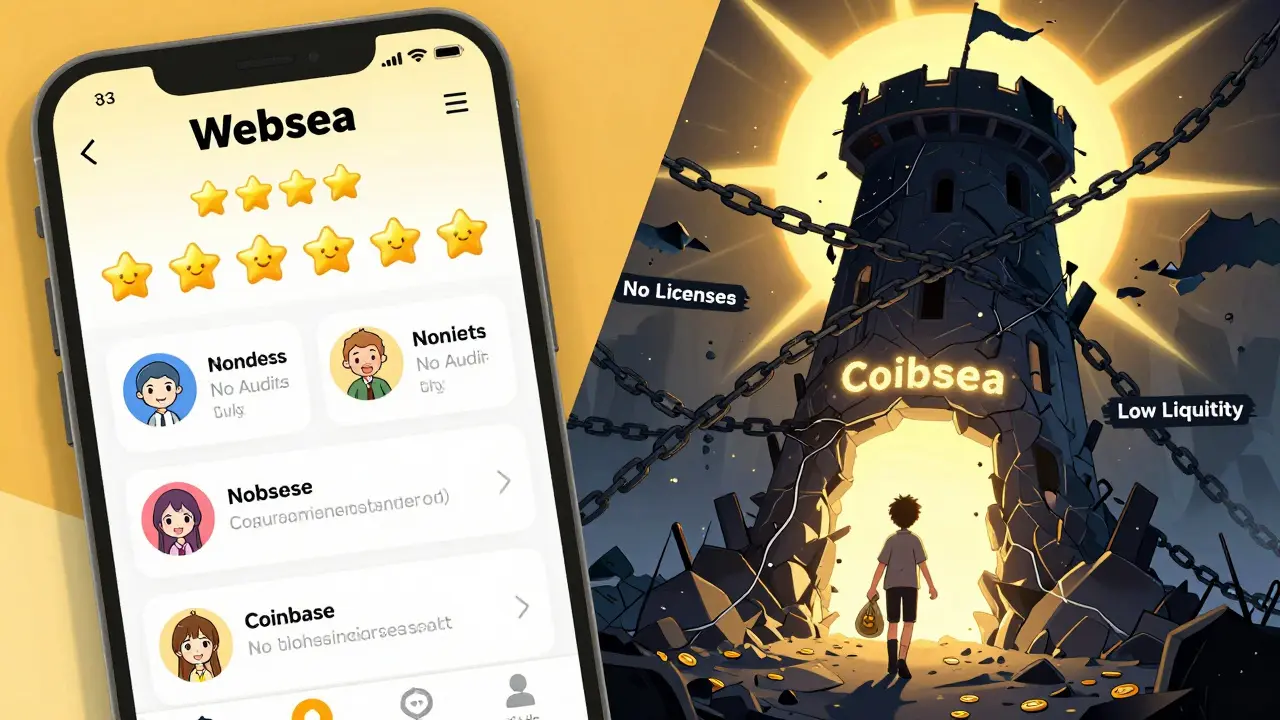
Top exchanges like Kraken and Bitstamp publish regular proof-of-reserves reports - third-party audits that prove they actually hold the coins users deposit. Websea doesn’t. Not even once. That’s a major red flag. After FTX collapsed in 2022, users learned: if you can’t see the money, you don’t own it.
There are no public security audit reports from firms like CertiK or PeckShield. No details on cold storage percentages. No transparency on who holds the keys. That’s not negligence - it’s a risk. And for a platform targeting young users who don’t know better, that’s dangerous.
They also don’t have licenses in the U.S., EU, or UK. Only Singapore registration. That means if you’re in Canada, the U.S., or Australia, you’re using a platform with no legal obligation to protect you under your local laws.
Trading Experience: Fast, But Thin
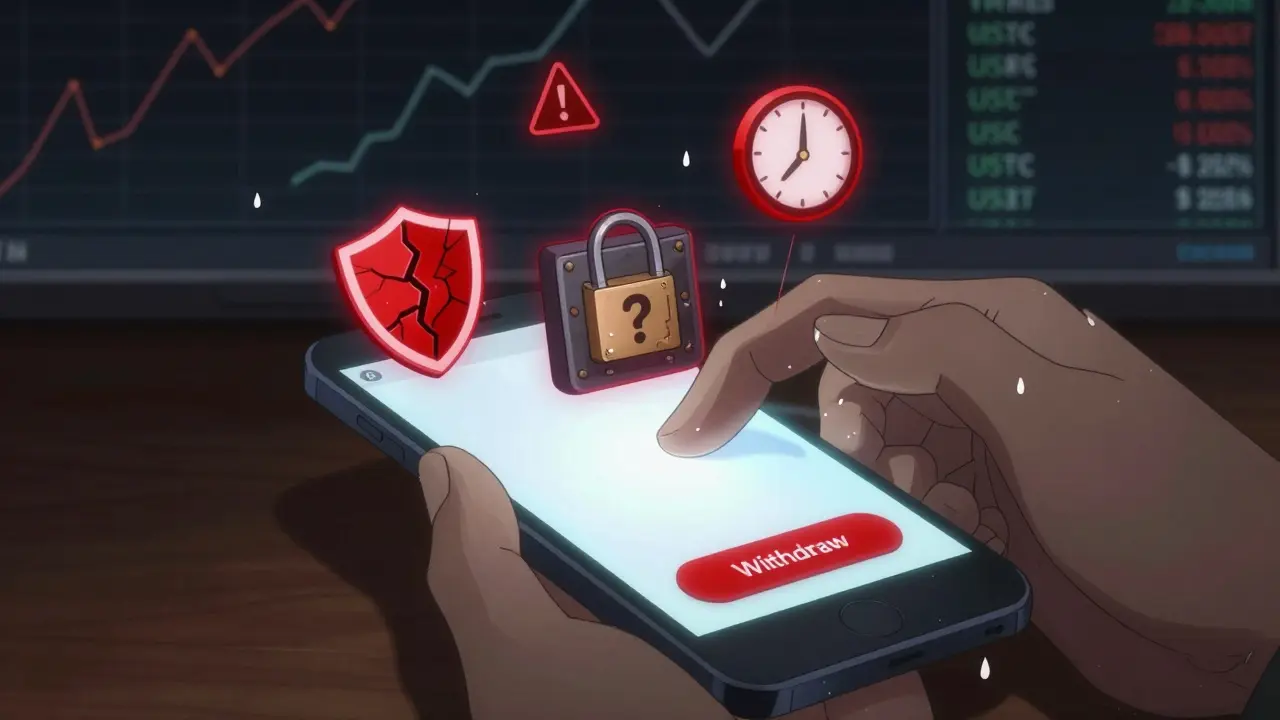
Spot trading on Websea is smooth. The charts load quickly, and the order book is easy to read. But depth? Barely there. For BTC/USDT, the best bid might be $60,000 and the best ask $60,050. On Binance, you’ll see hundreds of orders at every price level. On Websea? You’ll see three.
What does that mean? Slippage. If you try to buy $5,000 worth of ETH, your order might fill at 5% worse than the price you saw. That’s not a glitch - it’s a design flaw. Low liquidity means high cost for larger trades.
The Copy Trade feature works, but the traders you’re copying are often new too. There’s no performance history, no win rate stats. You’re blindly following someone who might be running a pump-and-dump.
Customer Support and Community
Support is email-only. No live chat. No phone. Responses take 12-48 hours. That’s unacceptable for a trading platform. If your funds are stuck, you can’t wait two days.
Withdrawals? Users report delays of 12-24 hours, sometimes longer. That’s not normal. Even smaller exchanges like KuCoin process withdrawals in under 10 minutes. Websea’s delays suggest internal bottlenecks - or worse, liquidity shortages.
There’s no official Discord. No subreddit. Just a few Telegram groups. The biggest has 4,200 members. Compare that to Binance’s 3 million. Community = trust. Websea doesn’t have either.
Who Is Websea Actually For?
Websea isn’t for experienced traders. It’s not for people holding large amounts of crypto. It’s not for anyone who cares about regulatory safety.
It’s for one group: beginners under 25 who want to dip their toes in crypto without feeling overwhelmed. If you’re 18, have $200 to play with, and want to learn trading through gamified features - Websea might be okay.
But if you’re serious about crypto? Use a real exchange. Use one with proof-of-reserves. Use one with global licenses. Use one with deep liquidity and fast withdrawals.
Websea feels like a beta app that got too much hype. It’s fun. It’s shiny. But it’s not built to last.
Alternatives to Consider
If Websea feels too risky, here are safer options with similar beginner-friendly features:
- Coinbase: Licensed in 47 U.S. states, simple interface, educational resources, and insured custodial wallets.
- Bybit: Strong P2P, copy trading, low fees, and higher liquidity than Websea.
- eToro: Social trading, regulated in Europe and Australia, lets you copy real traders with track records.
All of these have been around for years. All have audit reports. All have real customer support.
Websea? It’s a gamble. And in crypto, you shouldn’t gamble with your money.
Final Verdict: Proceed With Extreme Caution
Websea crypto exchange is not a scam - not yet. But it’s dangerously close to one.
It has a clean app, fun rewards, and a youth-focused vibe. But it lacks the core pillars of trust: transparency, liquidity, regulation, and security proof.
If you’re young, have a small budget, and treat this like a game - fine. Use Websea. But never deposit more than you’re willing to lose. And never keep your coins there long-term.
For anything serious - saving, investing, trading larger sums - walk away. There are better, safer, and more reliable exchanges out there. You don’t need to risk your money on a platform that doesn’t want to prove it’s real.
Is Websea a scam?
No, Websea is not confirmed as a scam, but it operates with high risk. It lacks proof-of-reserves, third-party security audits, and regulatory licenses outside Singapore. These are major red flags in today’s crypto market. While it’s not a Ponzi scheme, it’s not trustworthy enough for serious users.
Can I withdraw my crypto from Websea?
Yes, you can withdraw crypto, but users report delays of 12 to 24 hours - sometimes longer. This is slower than industry standards and suggests possible liquidity issues. Withdrawals are only available for crypto, not fiat. You must use P2P to convert to local currency.
Is Websea available in the United States?
No, Websea does not have licenses to operate in the U.S. and blocks users from American IP addresses. If you’re in the U.S., using Websea violates regulatory rules and puts your funds at legal risk. Avoid it entirely if you’re in the U.S., Canada, EU, or UK.
What is the WBS token used for?
WBS is Websea’s native token. It can be used to pay reduced trading fees, access exclusive promotions, and participate in platform events. But its value is tied entirely to Websea’s success - and since Websea has low liquidity and no audits, WBS is highly speculative. Don’t treat it like Bitcoin or Ethereum.
Does Websea offer customer support by phone?
No, Websea does not offer phone support. Support is available only via email and an online help center. Response times are slow - often 24 to 48 hours. This is a major weakness for a trading platform where time matters.
Is Websea better than Binance for beginners?
Websea is easier to use on the surface, but Binance is far safer and more reliable. Binance has 24/7 support, proof-of-reserves, global licenses, and over 100 million users. Websea has a prettier app and a welcome bonus - but none of the trust. For beginners, safety matters more than looks.
Raju Bhagat
January 31, 2026 AT 04:09Pamela Mainama
February 1, 2026 AT 09:17Elizabeth Jones
February 1, 2026 AT 09:54Andrea Demontis
February 2, 2026 AT 19:21Nickole Fennell
February 3, 2026 AT 02:23Rachel Stone
February 3, 2026 AT 19:16Elle M
February 5, 2026 AT 08:26Crystal Underwood
February 6, 2026 AT 17:40Jack Petty
February 7, 2026 AT 14:19Richard Kemp
February 8, 2026 AT 02:13Raymond Pute
February 10, 2026 AT 00:42Brianne Hurley
February 10, 2026 AT 16:11laurence watson
February 10, 2026 AT 22:03Edward Drawde
February 11, 2026 AT 08:24Rico Romano
February 12, 2026 AT 06:24