Running a community on a blockchain is a lot harder than it looks. You can't just send a Slack message and expect a thousand anonymous token holders to agree on a treasury spend. Without a structured system, decentralized organizations quickly devolve into chaos or, worse, complete paralysis. This is where DAO governance tools come into play. They act as the digital connective tissue that turns a collection of wallets into a functioning entity capable of managing millions of dollars and executing complex strategic pivots.
Whether you are launching a small social club or managing a massive DeFi protocol, your choice of platform dictates how your members interact, how securely your funds are held, and how quickly you can actually get things done. In 2026, the industry has moved away from "one size fits all" solutions toward modular architectures. This means you can now pick and choose your voting style, your permission levels, and your treasury management separately.
Key Takeaways for Choosing a Platform
- Modular Frameworks: Aragon OSx is the go-to for protocol teams needing granular, programmable permissions.
- Delegate-Centric UX: Tally is best for large-scale token voting and professional delegation workflows.
- Community-First: DAOhaus excels for early-stage groups focusing on membership and easy exit patterns.
- Treasury-First: Gnosis Safe with Zodiac is the ideal path for teams starting with a multisig and moving toward decentralization.
The Modular Powerhouse: Aragon OSx
If you imagine a DAO as a piece of software, Aragon OSx is the operating system. Unlike older versions that were monolithic, OSx uses a plugin architecture. This is a game-changer because it separates core permissions from the actual governance rules. If you decide that token voting isn't working and you want to switch to a reputation-based system, you don't have to redeploy your entire organization; you just swap the plugin.
For those managing complex protocols, the granular permission system is the real draw. You can set up allowlists, scope specific roles, and implement time delays to prevent "governance attacks" where a whale suddenly buys up tokens to push through a malicious proposal. It's particularly strong for multichain vote aggregation, allowing a DAO to coordinate actions across different networks without fragmented voting power.
Scaling with Professionalism: Tally
When a DAO grows to thousands of members, voting becomes a logistical nightmare. Tally solves this by providing a production-grade interface for Governor-style DAOs. If your project uses the OpenZeppelin Governor standard, Tally is essentially the gold standard for the user experience. It handles the entire lifecycle of a proposal: from the initial drafting and discussion to the actual on-chain execution.
The real value here is in delegation. Most token holders don't have the time to read every 20-page proposal. Tally makes it easy for them to delegate their voting power to trusted experts. For the DAO admins, the analytics dashboard provides a clear view of voter history and treasury status, reducing the friction that usually leads to failed proposals due to low turnout or technical errors.

Membership and Simplicity: DAOhaus
Not every DAO needs a complex corporate structure. Some are just groups of people wanting to pool resources. DAOhaus, built on the Moloch v3 framework, focuses on membership and the "ragequit" mechanism. In simple terms, if a member disagrees with a proposal, they can leave the DAO and take their share of the treasury with them. This creates a natural check against majority tyranny.
DAOhaus uses ERC20-based shares and loot tokens, which allows for very flexible membership tiers. It's an excellent choice for early-stage communities because it de-risks the coordination process. By integrating with the Zodiac pattern, it can still connect to high-security treasuries while keeping the voting process straightforward and accessible.
The Treasury-First Path: Gnosis Safe and Zodiac
Many projects don't start as full DAOs; they start as a small team with a shared wallet. Gnosis Safe (now often just called Safe) is the industry standard for multisig smart accounts. On its own, it's just a secure vault. However, when you add Zodiac modules, it transforms into a governance engine.
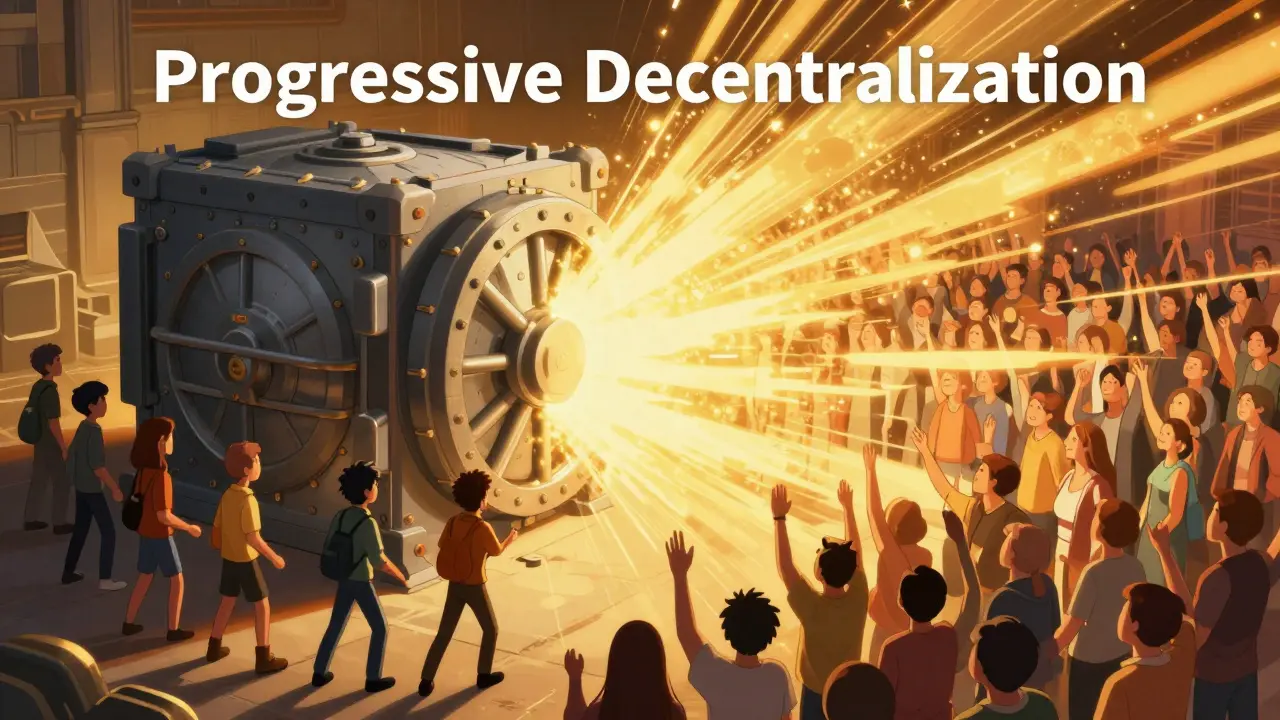
Zodiac allows a Safe treasury to be controlled by other mechanisms. For example, you can use the Reality module to connect a snapshot vote (off-chain) to the on-chain treasury. This is known as progressive decentralization. You start with a 3-of-5 multisig for speed and security, and as the project matures, you gradually hand over control to the token holders using Zodiac's bridge and governor modules.
| Platform | Primary Focus | Voting Mechanism | Integration Complexity | Best For |
|---|---|---|---|---|
| Aragon OSx | Modular Governance | Plugin-based (Flexible) | Moderate | Protocol DAOs |
| Tally | Governance UX | Governor-standard | Low to Moderate | Large Token-Voting DAOs |
| DAOhaus | Community/Membership | Membership Tokens | Moderate | Early-stage Communities |
| Safe + Zodiac | Treasury Security | Governor/Reality Modules | Moderate to Advanced | Progressive Decentralization |
Practical Implementation: Which One Should You Pick?
Choosing a tool isn't about which one has the most features; it's about matching the tool to your organizational maturity. If you are a team of five developers launching a beta product, don't start with a full-blown token governance system. You'll spend more time managing the tool than building the product. Start with a Safe multisig.
Once you have a community of stakeholders, you can layer in Zodiac modules to allow for non-binding polls. When you finally launch a governance token and need to manage thousands of voters, that's when you move toward Tally or Aragon OSx. The biggest mistake teams make is over-engineering their governance too early, which leads to "governance fatigue" where members stop voting because the process is too cumbersome.
Consider these three questions before deploying:
- Do we need immediate execution? (Multisig/Safe is better)
- Do we need a formal delegate system for thousands of users? (Tally is the winner)
- Do we need to change our governance rules frequently without migrating assets? (Aragon OSx is the only real choice)
Other Notable Mentions in the Ecosystem
Beyond the "Big Four," the landscape is filled with specialized tools. For those focused on high-frequency coordination, platforms like Boardroom have become hubs for hundreds of communities to track proposals. Others, like Dework, focus on the operational side-essentially "Jira for DAOs"-connecting governance decisions to actual task execution.
We also see the rise of specialized venture clubs using Unique Venture Clubs for investment-focused DAOs, or Colony for more complex, hierarchical labor coordination. The trend is clear: the industry is moving toward a stack of tools rather than a single platform. You might use Tally for voting, Safe for the treasury, and Dework for project management, all tied together by a modular framework.
What is the difference between on-chain and off-chain governance?
On-chain governance means the vote is recorded on the blockchain, and the result automatically triggers a smart contract execution (like sending funds). Off-chain governance (often using tools like Snapshot) means the vote is recorded off-chain to save gas costs, and a trusted party or a multisig manually executes the result on-chain. Tally focuses on on-chain, while many DAOhaus and Safe setups use a hybrid approach.
Can I move from one DAO platform to another?
It depends on the architecture. Because Aragon OSx is modular, you can swap plugins easily. If you are moving from a simple multisig to a more complex system, tools like Zodiac make this transition smoother by acting as a bridge. However, moving your entire community and token history between entirely different frameworks often requires a migration of your treasury to a new smart contract.
How much does it cost to run a DAO on these platforms?
Most of these platforms are open-source and don't charge a monthly SaaS fee for the basic infrastructure. Your primary costs will be gas fees (network costs) for every proposal created and every vote cast. For large DAOs, this can be expensive, which is why many use Layer 2 solutions or off-chain voting combined with a Safe multisig to keep costs down.
What is "Ragequitting" in DAOhaus?
Ragequitting is a core feature of the Moloch framework used by DAOhaus. It allows a member to leave the DAO and withdraw their proportional share of the treasury if they strongly disagree with a passed proposal. This prevents a majority from "stealing" the minority's funds through a vote they don't support.
Is a multisig enough for governance?
For a small team, yes. A multisig (like Gnosis Safe) is highly secure and efficient. But it's not "governance" in the decentralized sense-it's just a shared account. As you grow, a multisig becomes a bottleneck. Adding a governance layer via Zodiac or moving to a platform like Tally allows you to distribute power to your community.
Ian Chait
April 17, 2026 AT 15:43Just typical technocrat propaganda. You think these "modular" frameworks aren't just another way for the shadow cabal to launder assets via obscure plugins? Safe and Zodiac are basically honey-pots for the globalists to monitor treasury flows. Most people don't realize the smart contract audit trail is just a digital leash. Its all a psyop to get us away from real hard assets and into these virtual cages they call DAOs. Total garbage logic if you think a "plugin" solves the trust problem when the developers probably have backdoors built into the base layer. Wake up and stop trusting the code blindly.
Sandeep Bhoir
April 18, 2026 AT 16:36Imagine thinking a plugin can fix a fundamental lack of trust in a community. Cute.
Mark Pfeifer
April 18, 2026 AT 18:43The distinction between on-chain and off-chain is critical, but I suspect the gas costs on Layer 1 still make Tally impractical for the average user despite the UX improvements.
Keri Pommerenk
April 19, 2026 AT 06:53totally agree with the bit about over-engineering early on... starting with a safe is such a lifesaver for small teams
Abhinav Chaubey
April 20, 2026 AT 04:58It is absolutely pathetic that people still debate these tools when Indian developers are the ones actually writing the backend for half of these protocols. We provide the intellectual labor while the West just builds the fancy UI. You can use Aragon or Tally all you want, but the actual efficiency comes from the engineering talent in Bengaluru and Hyderabad. This guide barely scratches the surface of the technical reality. Honestly, most of you just follow the hype without understanding the underlying Solidity logic. We are the ones driving the 2026 landscape, not some modular framework a US company pitched to VCs.
siddharth narula
April 21, 2026 AT 19:03One must ponder if the pursuit of decentralization is merely a mask for a deeper desire to evade moral accountability. 🧐 The "ragequit" mechanism in DAOhaus is a fascinating study in the fragility of human commitment. It suggests that our bonds are only as strong as our financial interests. Is this not a tragic reflection of the modern soul? We seek utopia in code because we have failed to find it in our own hearts. ⚖️
Sean Douglas
April 23, 2026 AT 07:33This whole guide is a complete disaster of an aesthetic! Why is the table so clinical? It's absolutely soul-crushing to see the vibrant chaos of Web3 reduced to a sterile spreadsheet. I'm practically weeping at the thought of a "professional delegation workflow"-it sounds like a corporate nightmare wrapped in a blockchain blanket! It's just so dreadfully bland that I can't even breathe. Give me some passion, some flair, some absolute madness in the governance!
Vicky Duffala
April 23, 2026 AT 14:09Let's look at this as a chance to evolve how we relate to each other! 🌟 Using a stack of tools is actually a beautiful metaphor for how we grow-starting small with a Safe and expanding as our collective consciousness grows. It's all about that journey of empowerment! ✨
Adam Mann
April 24, 2026 AT 19:32I really think that for people who are just getting started, the idea of a "modular framework" can be a bit intimidating at first glance, but if you just take a deep breath and realize that it's basically like building with Legos, it becomes much more approachable for everyone regardless of their technical background, and I've seen so many communities flourish just by taking that first step with a simple multisig and then slowly growing into something more complex as they find their rhythm and discover what their members actually value in a governance structure over time.
nikki krinkin
April 26, 2026 AT 17:15Safe with Zodiac seems like the most grounded approach for most groups.
Kim Smith
April 27, 2026 AT 20:56its funny how we think we can solve human greed with a smart contrct lol like the ragequit thing is just a fancy way of saying i dont like you anymore take my money and go... we r just trying to automate trust because weve forgotten how to trust people in the real world and honestly maybe that's the real problem with the whole crypto thing anyway if you really think about it long enough while staring at the ceiling at 3am
Tracy Sperandio
April 28, 2026 AT 08:50The sheer audacity of some of these platforms to call themselves "simple" is laughable! If you want real power, you go with a customized Aragon setup or don't even bother. This is about reclaiming the narrative of ownership! Get your assets moving or get out of the way!
Ankit Sindhu
April 29, 2026 AT 00:32I'd suggest focusing on the community's emotional health before picking the tool. A great platform can't fix a toxic culture.
nathan jones
April 30, 2026 AT 19:54Safe is the way.
Robert Preston
May 1, 2026 AT 11:39You have to be careful with the Reality module. If the oracle is compromised or the bridge has a lag, your on-chain treasury is effectively frozen until a manual override happens, which is a huge risk for high-velocity funds.
Alex Long
May 2, 2026 AT 18:54Too long. Just use a multisig and stop pretending it's a revolution.
Evan Iacoboni
May 3, 2026 AT 21:24Does the modularity of OSx affect the gas costs for the end-user voting process compared to the Governor standard used by Tally?
Nishant Goyal
May 3, 2026 AT 23:18Good overview. Helps a lot.
Gaurav Undirwade
May 4, 2026 AT 17:24It is an utter travesty that some would consider a multisig to be "enough." True governance requires a rigorous adherence to moral and procedural standards that a simple 3-of-5 signature scheme cannot possibly provide. One must cultivate a spirit of discipline and selfless service, not merely a shared password.
Andrew Southgate
May 6, 2026 AT 09:01I've spent a lot of time helping new projects navigate this, and the biggest piece of advice I can give is to never underestimate the power of a good documentation site; you can have the best Tally setup in the world, but if your members can't find the proposal link or don't understand the delegation process, your voter turnout will be abysmal, so really focus on the education side of things alongside the technical deployment because that's where the real magic happens and where you actually build a sustainable community that feels invested in the long-term vision of the protocol.
Mike Kempenich
May 7, 2026 AT 08:07Tally really does make the delegation part feel intuitive, which is huge for getting non-technical holders involved.
Adedamola Oyebo
May 7, 2026 AT 20:44Zodiac modules are a game-changer!!! Especially for bridging off-chain signals!!!
Kaitlyn Wu
May 9, 2026 AT 16:20We need to ensure that the move toward modularity doesn't just create new silos of complexity that only a few "experts" understand.