
Poloniex launched in 2014 as one of the earliest crypto-only exchanges, and for years, it was a go-to for traders chasing new altcoins. But today, in 2026, the landscape has changed. Big players like Binance and Crypto.com offer more coins, lower fees, and better tools. So is Poloniex still worth your time? The answer isn’t simple. It depends on what you need.
What Poloniex Actually Offers
Poloniex doesn’t handle fiat money. No USD, EUR, CAD - nothing. You can’t deposit cash. You need to already own crypto to trade here. That means if you’re new, you’ll have to buy Bitcoin or Ethereum elsewhere - like Coinbase or a Simplex-powered partner - then send it over.
Once you’re in, you get access to over 100 cryptocurrencies. Poloniex has always been strong on altcoins. It listed tokens like XRP, ADA, and DOT early, before most exchanges even considered them. If you’re into trading lesser-known coins, Poloniex still has a solid selection. Spot trading, margin trading up to 5x, and futures with up to 100x leverage are all available. You can place limit, market, and stop orders. The interface is clean. No clutter. No overwhelming dashboards. It’s like a basic trading terminal that doesn’t try to be everything.
For API users, Poloniex still stands out. Institutional traders get high-rate limits and low latency. That’s rare on smaller exchanges. If you run bots or automate trades, Poloniex’s API is one of the more reliable ones left in the mid-tier space.
How Poloniex Compares to the Big Players
Let’s be real: Binance crushes Poloniex in almost every category. Binance supports over 250 coins. It has staking, lending, NFTs, a debit card, and a native token (BNB) that cuts fees. Poloniex has none of that. No NFT marketplace. No staking rewards beyond basic yield. No way to spend crypto directly.
Fees are another gap. Poloniex charges 0.25% per trade for makers and takers. Binance charges 0.1% - and that’s before you factor in BNB discounts. On high-volume trades, that difference adds up fast. If you’re trading $10,000 a day, Poloniex costs you $25 daily. Binance? $10. That’s $5,500 a year just in trading fees.
Poloniex does have one edge: simplicity. If you hate scrolling through dozens of tabs, confusing charts, and endless promotional banners, Poloniex feels like a breath of fresh air. It’s minimal. It doesn’t try to sell you a lifestyle. It just lets you trade.
The Big Problem: You Can’t Use It in North America
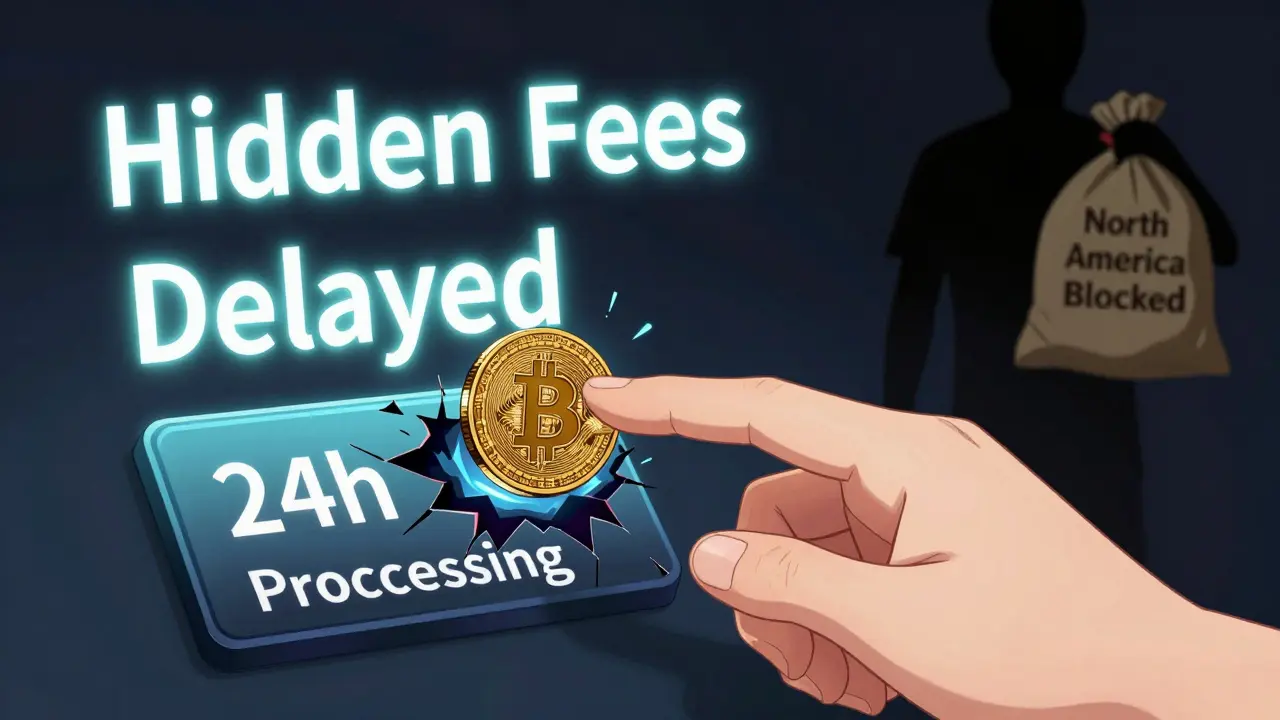
Here’s the catch: if you live in the U.S., Canada, or any part of North America, you can’t open an account on Poloniex. Period. The platform blocked all North American users years ago due to regulatory pressure. That’s not a temporary glitch. It’s policy. So if you’re in Halifax, Toronto, New York, or Texas - Poloniex is off-limits.
This restriction isn’t just inconvenient. It’s a red flag. Why would a legitimate exchange cut off such a large market? It suggests ongoing compliance issues. And that’s not something you want to ignore when your money’s on the line.
Hidden Fees and Withdrawal Woes
Poloniex doesn’t charge withdrawal fees for most coins - that’s good. But here’s where things get messy.
Users report hidden costs popping up during withdrawals. One trader from South Africa said they received 0.8 BTC, but when they tried to withdraw, they were asked to pay an extra R300 ($15) in “processing fees” that weren’t mentioned anywhere on the site. Another user described the platform as “deceitful,” claiming fees only appear after you’ve made a trade.
These aren’t isolated complaints. Multiple reviews on G2 and Reddit mention surprise charges, delayed withdrawals, and poor customer support. Some users waited over a week to get funds out. Others never got their money back.
Poloniex claims it processes withdrawals within 24 hours. But real user experiences tell a different story. If you need quick access to your crypto - say, during a market crash - Poloniex might not be reliable.
How to Buy Crypto on Poloniex (If You Can)
Since you can’t deposit fiat, Poloniex partnered with Simplex to let users buy crypto with credit cards. It sounds convenient - until you see the fees.
Simplex charges either $10 or 3.5% of the transaction - whichever is higher. So if you buy $200 in ETH, you pay $7. If you buy $500, you pay $17.50. That’s way above market average. Most exchanges charge 1-2% for card purchases. Coinbase? Around 3.99%. But at least Coinbase is legal and regulated in North America. Poloniex isn’t.
This partnership feels like a workaround for a platform that’s already too restricted. If you’re going to pay premium fees, why not use a service that actually serves your region?
Security and Trust
Poloniex uses two-factor authentication (2FA) for logins and withdrawals. It stores most funds in cold storage. It’s not the most advanced security setup out there - Binance has its SAFU fund, Crypto.com has insurance - but it’s not reckless either.
There’s no public proof of reserves. That’s a problem. Top exchanges like Kraken and Bitstamp regularly publish on-chain audits. Poloniex doesn’t. That means you’re trusting them to say they’re solvent. No transparency. No third-party verification.
It’s also worth noting: Poloniex was hacked in 2018. Over $14 million in crypto was stolen. The exchange covered the losses. That’s rare. Most platforms don’t refund users. But that was years ago. Since then, they’ve improved. Still, a history of breaches doesn’t inspire confidence.
Who Should Use Poloniex Today?
Let’s cut through the noise. Poloniex isn’t for everyone.
Use Poloniex if:
- You’re outside North America and can legally access it
- You trade mostly altcoins and want a clean, no-frills interface
- You’re an API trader who values low latency and high rate limits
- You’re comfortable with the risk of withdrawal delays and unclear fees
Avoid Poloniex if:
- You live in the U.S., Canada, or any North American country
- You want low fees, especially on trading or card purchases
- You need fast, reliable withdrawals
- You want staking, NFTs, or a full crypto ecosystem
If you’re looking for alternatives, Binance, Kraken, and Crypto.com all offer better features, lower fees, and legal access in North America. Poloniex’s charm lies in its simplicity - but simplicity alone isn’t enough anymore.
Final Verdict
Poloniex is a relic with a loyal niche. It’s not dead. But it’s not growing. It’s clinging to a small group of traders who value its clean design and early altcoin listings. For everyone else - especially those in North America - it’s not worth the risk.
There are better options out there. Safer. Cheaper. More reliable. Poloniex might have been the best choice in 2017. In 2026? It’s a gamble.
Can I use Poloniex if I live in Canada?
No. Poloniex completely blocks users from North America, including Canada and the United States. You cannot create an account or trade on the platform if you’re located there. Attempting to bypass this restriction with a VPN is against their terms and may result in account suspension or fund loss.
Does Poloniex have low trading fees?
Poloniex charges 0.25% for both makers and takers. That’s higher than top exchanges like Binance (0.1%) and Kraken (0.16%). If you trade frequently, this adds up. Binance also lets you reduce fees further by using its BNB token. Poloniex has no such discount system.
Can I stake crypto on Poloniex?
Yes, Poloniex offers staking for a limited number of coins, including Ethereum, Cardano, and Solana. But the rewards are basic - usually under 5% APY. Compare that to Binance or Crypto.com, which offer over 8% on many assets. Poloniex’s staking is functional, but not competitive.
Is Poloniex safe to use?
Poloniex has basic security: 2FA, cold storage, and a history of covering past hacks. But it lacks transparency. There’s no public proof of reserves, no insurance fund, and no third-party audits. Plus, users report withdrawal delays and hidden fees. It’s not a scam, but it’s not the safest option either.
What cryptocurrencies does Poloniex support?
Poloniex supports over 100 cryptocurrencies, with a focus on altcoins like XRP, ADA, DOT, and LTC. It’s strong on early listings but lacks newer assets like Solana’s newer tokens or meme coins. Binance supports over 250, including NFTs and DeFi tokens Poloniex doesn’t offer.
Can I deposit USD or CAD on Poloniex?
No. Poloniex doesn’t accept any fiat currency, including USD or CAD. You must buy crypto elsewhere and transfer it to Poloniex. The only way to buy with a card is through Simplex, which charges high fees (3.5% or $10, whichever is higher).
John Fuller
February 27, 2026 AT 19:45bella gonzales
March 1, 2026 AT 17:30Dana Sikand
March 2, 2026 AT 02:14McKenna Becker
March 3, 2026 AT 02:32Samantha Stultz
March 4, 2026 AT 13:05Fiona Monroe
March 5, 2026 AT 01:56Molley Spencer
March 5, 2026 AT 02:44Amita Pandey
March 5, 2026 AT 22:16Paul Reinhart
March 7, 2026 AT 00:43Lucy Simmonds
March 7, 2026 AT 01:40Robert Conmy
March 8, 2026 AT 15:47Lilly Markou
March 8, 2026 AT 16:35precious Ncube
March 10, 2026 AT 08:46Jan Czuchaj
March 11, 2026 AT 19:52Maggie House
March 12, 2026 AT 22:53