You want the stability of a dollar but the freedom of Bitcoin. That is exactly what Sovryn Dollar (DLLR) tries to deliver. It is not your typical stablecoin backed by bank reserves or corporate treasuries. Instead, it is fully backed by Bitcoin, running on a smart contract platform called Rootstock. If you are tired of trusting centralized companies with your money, DLLR offers a different path. It combines transparency, censorship resistance, and the security of Bitcoin into one digital asset.
But how does it actually work? Why would you choose DLLR over USDT or USDC? And what risks come with this new approach? Let’s break down the mechanics, the benefits, and the realities of using Sovryn Dollar in today’s crypto landscape.
How Sovryn Dollar Works: The Aggregator Model
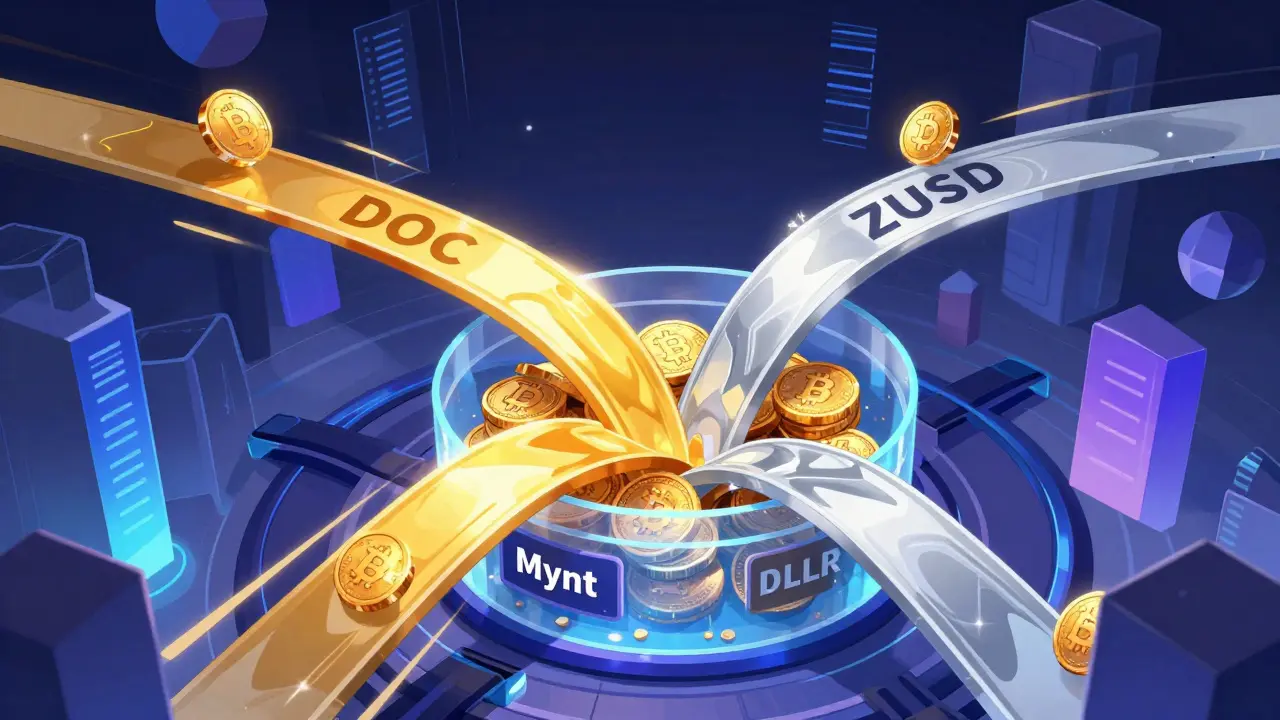
Most stablecoins rely on a single mechanism to keep their price steady. USDT holds fiat dollars in banks. DAI uses a mix of crypto assets and now largely USDC. DLLR takes a different route. It acts as an aggregator. Think of it as a basket that holds other Bitcoin-backed stablecoins. Currently, the two main ingredients are Dollar on Chain (DOC) and ZUSD.
DOC comes from the Money on Chain protocol. It allows users to redeem tokens for Bitcoin directly under certain conditions. ZUSD is minted through Sovryn’s Zero protocol, which works like Liquity on Ethereum but uses Bitcoin (via RBTC) as collateral. By bundling these together, DLLR spreads risk across different systems. If one system faces stress, the other might hold up better. This aggregation happens inside a smart contract called Mynt. You deposit DOC or ZUSD into Mynt, and it mints DLLR for you at a 1:1 ratio. When you want out, you burn DLLR and get the underlying stablecoins back.
This design means DLLR is overcollateralized. The total value of Bitcoin backing the constituent stablecoins exceeds the value of DLLR in circulation. This buffer protects against market volatility. However, it also adds complexity. You are not just holding one token; you are relying on multiple protocols working together seamlessly.
Why Rootstock Matters for DLLR
DLLR lives on Rootstock (RSK), a Bitcoin sidechain. Rootstock is unique because it brings Ethereum-style smart contracts to the Bitcoin network. It uses RBTC, a token pegged 1:1 to BTC, as its native currency for transaction fees. This setup gives developers the flexibility of Solidity coding while staying connected to Bitcoin’s security model.
For DLLR, this means low transaction costs compared to Ethereum mainnet. You can swap, lend, or mint DLLR without paying high gas fees. But there is a catch. Rootstock relies on a federated bridge to maintain the BTC-RBTC peg. A group of functionaries controls the multi-signature wallets that hold the underlying Bitcoin. If this federation fails or acts maliciously, the peg could break. While this is a theoretical risk, it is something every DLLR user should understand. Unlike fully trustless Layer 2 solutions, Rootstock requires some level of trust in its operators.
DLLR vs. Centralized Stablecoins: Trust vs. Convenience
Let’s compare DLLR with the giants: Tether (USDT) and USD Coin (USDC). These centralized stablecoins dominate the market. They offer deep liquidity, easy access via exchanges, and instant conversions to fiat. DLLR cannot match them on convenience yet. Its daily trading volume is much lower, often in the tens of thousands rather than billions.
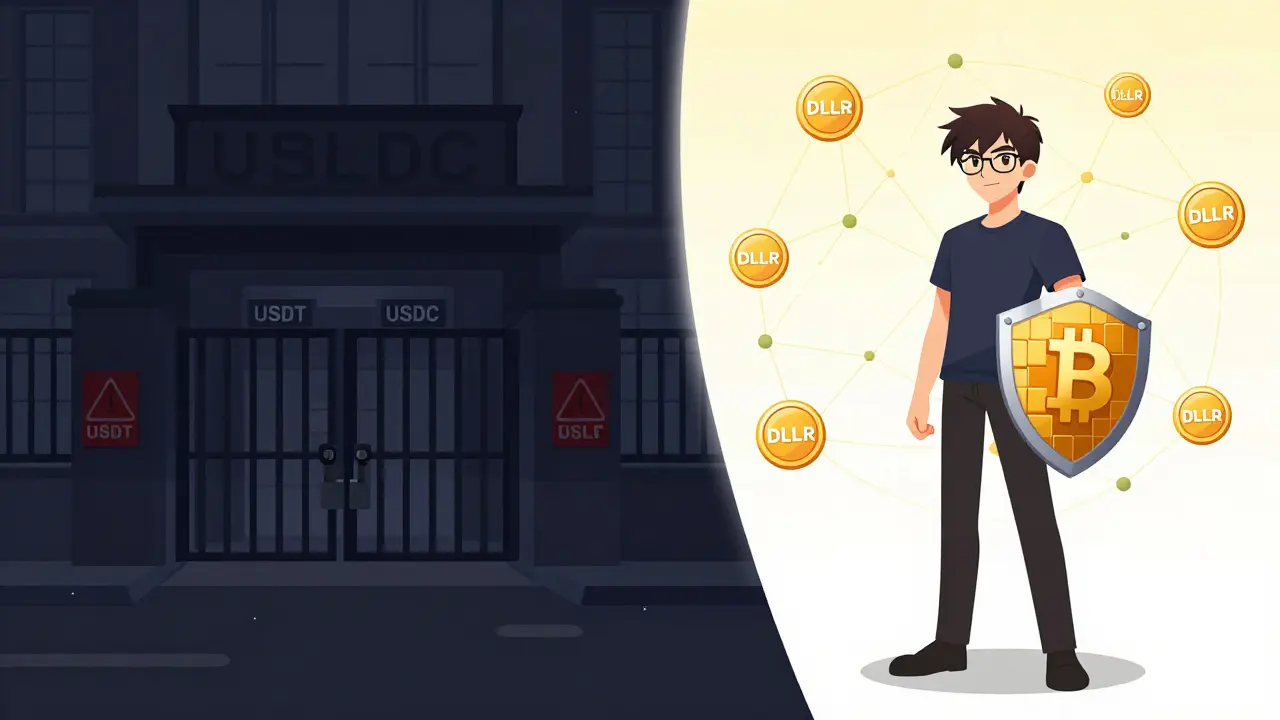
However, DLLR wins on transparency and control. With USDT or USDC, you trust that the company behind them holds enough reserves. History shows us that audits can be delayed, and reserves can include questionable assets. DLLR puts all collateral on-chain. Anyone can verify the Bitcoin backing at any time. More importantly, no central entity can freeze your DLLR balance. In a world where governments increasingly monitor financial transactions, this censorship resistance is a powerful feature.
| Feature | Sovryn Dollar (DLLR) | Tether (USDT) | USD Coin (USDC) |
|---|---|---|---|
| Collateral Type | Bitcoin (Overcollateralized) | Fiat Reserves & Commercial Paper | Fiat Reserves & Treasury Bills |
| Censorship Resistance | High (Non-custodial) | Low (Can freeze addresses) | Low (Can freeze addresses) |
| Liquidity | Low (Niche markets) | Very High | Very High |
| Transaction Fees | Low (Rootstock) | Variable (Depends on chain) | Variable (Depends on chain) |
| Trust Model | Code & Bitcoin | Company Issuer | Company Issuer |
Risks You Need to Know Before Using DLLR
No financial product is risk-free, and DLLR has specific vulnerabilities you must consider. First, there is smart contract risk. DLLR depends on three layers of code: the constituent protocols (Zero and Money on Chain), the Mynt aggregator, and the Rootstock platform itself. While Sovryn has undergone audits, bugs can still exist. A flaw in any layer could lead to loss of funds.
Second, peg stability is not guaranteed. Because DLLR has lower liquidity, large trades can cause temporary deviations from the $1 peg. In extreme market crashes, if Bitcoin drops sharply, liquidations in the underlying protocols could strain the system. Although overcollateralization provides a buffer, black swan events remain a threat.
Third, exit liquidity is limited. If you need to convert large amounts of DLLR back to fiat quickly, you may struggle to find buyers on centralized exchanges. Most users will have to redeem DLLR for DOC or ZUSD, then unwind those positions for Bitcoin, and finally sell Bitcoin for cash. This process takes time and effort, unlike selling USDC on Binance.
Who Should Use Sovryn Dollar?
DLLR is not for everyone. If you just want to buy coffee online or trade quickly on major exchanges, stick with USDT or USDC. They are simpler and more widely accepted. But if you fall into one of these groups, DLLR might make sense:
- Bitcoin Maximalists: You believe Bitcoin should be the primary store of value and prefer avoiding fiat-backed assets entirely.
- Censorship-Averse Users: You live in regions with strict capital controls or fear government freezing of assets.
- DeFi Experimenters: You enjoy exploring niche ecosystems like Rootstock and want to earn yield or participate in governance.
- Long-Term Holders: You want to hedge against USD inflation without exposing your portfolio to equity market risks associated with traditional stablecoin issuers.
For these users, DLLR offers a compelling alternative. It aligns with the ethos of decentralization while providing a stable unit of account within the Sovryn ecosystem.
Getting Started with DLLR: A Practical Guide
If you decide to try DLLR, here is how you do it. First, acquire Bitcoin on a reputable exchange. Next, bridge your BTC to Rootstock to receive RBTC. You can use the official Rootstock bridge or Sovryn’s FastBTC relay for faster transfers. Then, connect a wallet like MetaMask (configured for Rootstock) to the Sovryn dApp.
Once connected, you can mint DLLR by depositing DOC or ZUSD into the Mynt contract. Alternatively, you can swap RBTC for DLLR directly on Sovryn’s automated market maker (AMM). Keep in mind that transaction fees on Rootstock are usually fractions of a cent, making small transactions viable. Always double-check addresses and amounts before confirming transactions. The learning curve is steeper than buying USDC, but guides and community support are available on Discord and Telegram.
The Future of DLLR and Bitcoin DeFi
Sovryn aims to make DLLR the default stablecoin for Bitcoin-based DeFi. Their roadmap includes expanding the basket of constituent stablecoins, increasing liquidity through incentives, and improving cross-chain interoperability. If Rootstock gains more adoption, DLLR could become a significant player in the stablecoin space. However, success depends on overcoming current limitations: low liquidity, complex user experience, and reliance on a federated bridge.
As regulatory scrutiny on centralized stablecoins increases, non-custodial alternatives like DLLR may gain attention. But until they solve the usability and liquidity hurdles, they will remain niche tools for dedicated crypto enthusiasts. For now, DLLR stands as a bold experiment in bringing true decentralization to stable money.
Is Sovryn Dollar (DLLR) safe to use?
DLLR carries higher technical risks than centralized stablecoins. It relies on smart contracts, multiple protocols, and the Rootstock federated bridge. While audits and overcollateralization provide safety buffers, bugs or extreme market crashes could lead to losses. Only invest what you can afford to lose.
Can I buy DLLR on Coinbase or Binance?
As of mid-2026, DLLR is not widely listed on major centralized exchanges like Coinbase or Binance. It is primarily traded on smaller platforms like MEXC or directly via Decentralized Exchanges (DEXs) on the Rootstock network. Check current listings on CoinGecko for the latest availability.
What backs the value of DLLR?
DLLR is backed 100% by Bitcoin. Specifically, it aggregates other Bitcoin-backed stablecoins like DOC and ZUSD, which themselves are overcollateralized with RBTC (Rootstock Bitcoin). This means the total Bitcoin collateral exceeds the value of DLLR in circulation.
How does DLLR differ from DAI?
DAI is primarily backed by Ethereum-based assets and increasingly by USDC. DLLR is exclusively backed by Bitcoin via the Rootstock network. Additionally, DLLR uses an aggregator model combining multiple stablecoins, whereas DAI operates as a single protocol. DLLR runs on Rootstock, offering lower fees but less liquidity than DAI on Ethereum.
Is DLLR regulated?
DLLR operates in a regulatory gray area. Since it is decentralized and has no central issuer, it may not fit neatly into existing e-money regulations like MiCA in Europe. However, users accessing it via centralized exchanges or fiat ramps may still face local compliance requirements. Always consult legal advice regarding your jurisdiction.