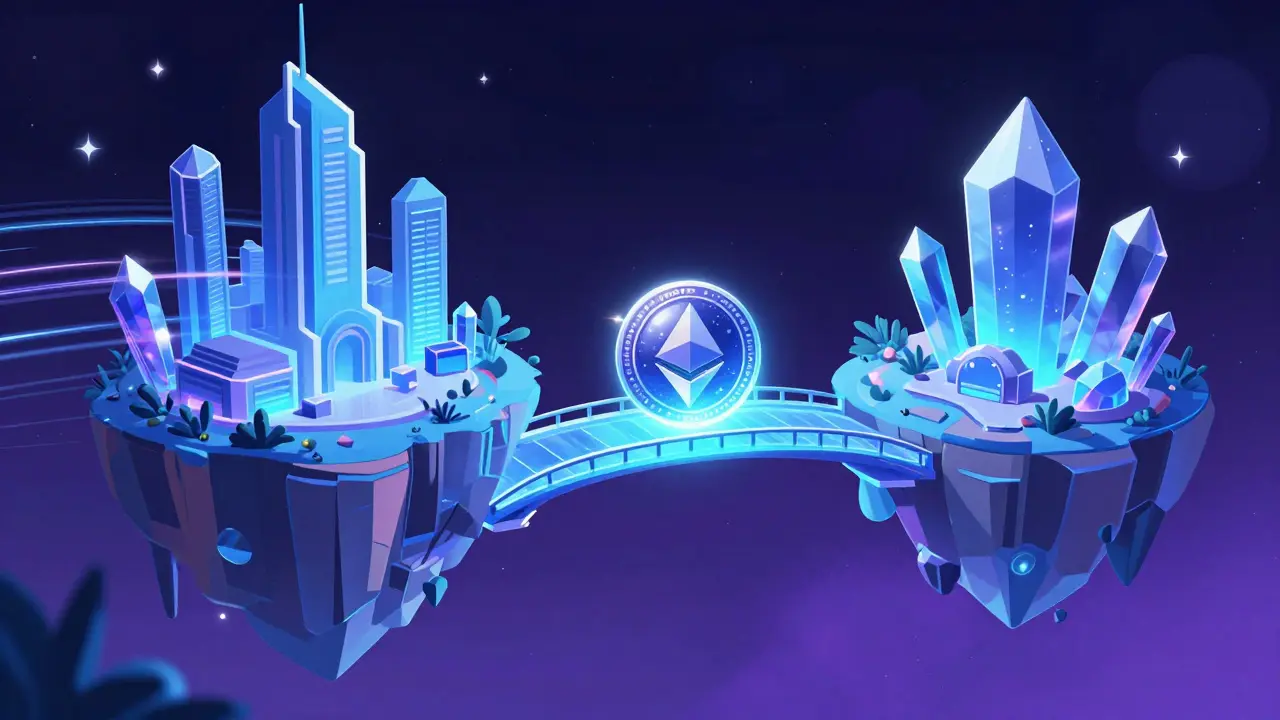
Imagine wanting to use a specific tool on a high-speed highway, but your car is only allowed on the local side streets. In the crypto world, this is exactly why "wrapping" exists. Wrapped Sonic (WS) is a cryptocurrency token that represents the native asset of the Sonic blockchain but is designed to be used on other networks, like Ethereum. By using a secure bridge, users can move their value between different ecosystems without having to sell their original assets.
But to understand the token, you first have to understand the engine behind it. Sonic is an EVM layer-1 blockchain platform built for speed and developer growth. While many blockchains struggle with congestion, Sonic is designed to handle over 10,000 transactions per second (TPS) with confirmation times that happen in less than a second. For a regular user, this means no more waiting minutes for a payment to clear or paying exorbitant gas fees during peak traffic.
How Wrapping Actually Works
You might wonder why we need a "wrapped" version of a coin. Most blockchains are like walled gardens; they don't naturally talk to each other. If you have native Sonic tokens on the Sonic chain, you can't just send them to an Ethereum wallet. That's where the Sonic Gateway is a decentralized bridge that locks native tokens in a smart contract and mints an equivalent amount of Wrapped Sonic (WS) on a compatible network comes in.
Think of it like a coat check at a museum. You give the attendant your heavy coat (your native Sonic coins), and they give you a numbered ticket (the WS token). The ticket represents your coat and has the same value, but it's much easier to carry around while you explore the galleries. When you're ready to leave, you hand back the ticket and get your original coat back.
The Developer Edge: Fee Monetization
What makes the Sonic ecosystem interesting isn't just the speed, but how it treats the people building on it. Most blockchains take all the network fees and give them to validators. Sonic flips this script with its Fee Monetization (FeeM) program . This system allows developers to keep up to 90% of the fees their specific applications generate.
This is a huge shift. It's similar to how a YouTuber earns a share of the ad revenue from their videos. Instead of just hoping for a grant or venture capital, a developer can actually make a living based on how much traffic and engagement their app gets. This creates a powerful incentive for high-quality apps to migrate to the Sonic network, which theoretically increases the utility and demand for the Wrapped Sonic token.

Market Reality and Price Performance
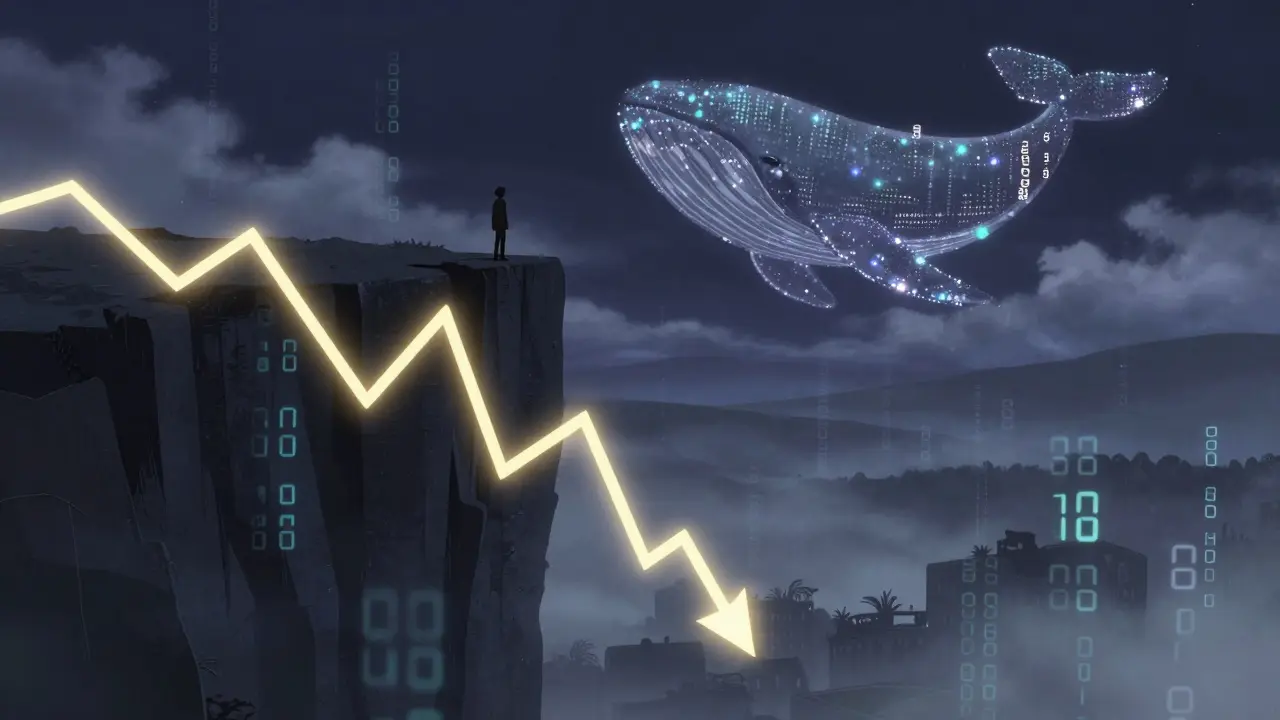
Looking at the numbers, Wrapped Sonic has had a wild ride. If you look at the charts, the token hit an all-time high of $1.01 back in December 2024. Since then, it has seen a massive drop-roughly 95.7%-with recent prices floating between $0.04 and $0.07. This kind of volatility is common in new projects, often reflecting a burst of early speculation followed by a harsh market correction.
As of April 2026, the token's market position is modest, ranking around #7,952. While the total supply is approximately 329.15 million tokens, the liquidity is a bit thin. On platforms like CoinMarketCap, the liquidity-to-market cap ratio is around 9.50%. For a casual investor, this is a red flag: low liquidity means that if a "whale" (a big holder) sells a large amount of WS, the price could crash significantly because there aren't enough buyers to absorb the shock.
| Attribute | Value/Detail |
|---|---|
| Network Type | EVM Layer-1 (Wrapped version) |
| Max Throughput | 10,000+ TPS |
| Total Supply | ~329.15 Million WS |
| All-Time High | $1.01 (Dec 21, 2024) |
| Liquidity Ratio | 9.50% |
| Contract Address | 0x039e...94aD38 |
Where to Buy and How to Trade
If you're looking to get your hands on some WS, it's available on several major exchanges. You'll find it on Binance and Bybit , among others. When trading, you have two main choices:
- Market Orders: You buy the token instantly at whatever the current price is. This is fast but risky in volatile markets.
- Limit Orders: You set a specific price (e.g., "Only buy if it hits $0.042"). This gives you more control and helps avoid overpaying during a price spike.
To verify your holdings or track the token's movement, the best tool is sonicscan.org , the native explorer for the network. This allows you to see the exact movement of tokens and confirm that the contract is behaving as expected.
Risks to Keep in Mind
No crypto asset is without risk, and Wrapped Sonic has a few specific ones. First, there is "bridge risk." Because WS relies on the Sonic Gateway, you are trusting that the bridge's smart contracts are secure. If a bridge is hacked, the "ticket" (WS) might become worthless because the "coat" (native Sonic) was stolen from the vault.
Second, the massive price drop from $1.01 to under $0.10 suggests a lack of sustained confidence. While the technology-like sub-second confirmations and FeeM-is impressive, technology alone doesn't guarantee a price increase. The token needs actual users and a thriving ecosystem of apps to move from a speculative asset to a functional utility.
What is the difference between Sonic and Wrapped Sonic?
Sonic is the native currency of the Sonic layer-1 blockchain. Wrapped Sonic (WS) is a version of that token that has been "bridged" to another network (like Ethereum). This allows you to use the value of your Sonic tokens in other decentralized finance (DeFi) apps without leaving the other network.
Is Wrapped Sonic a safe investment?
Like all cryptocurrencies, it carries high risk. WS has shown extreme volatility, dropping over 95% from its peak. Additionally, it has relatively low liquidity (9.50%), meaning large trades can cause significant price swings. Always do your own research and only invest what you can afford to lose.
How fast is the Sonic blockchain?
The Sonic blockchain is built for high performance, capable of processing over 10,000 transactions per second (TPS) with sub-second confirmation times, making it significantly faster than older generation blockchains.
What is Fee Monetization (FeeM)?
FeeM is a program where developers on the Sonic network can earn up to 90% of the transaction fees generated by their applications. This rewards builders based on the actual traffic and usage of their apps, similar to an ad-revenue model in Web2.
Where can I check the Wrapped Sonic contract?
The official contract and token movements can be verified using the native explorer at sonicscan.org. The specific contract address starts with 0x039e and ends with 94aD38.
James Bone
April 9, 2026 AT 06:22The 95% drop is the only part of this that matters. Everything else is just marketing fluff to distract from the fact that most of these L1s are ghost towns. People love to talk about TPS but nobody talks about the actual value accrual when the liquidity is this pathetic. It's a classic pump and dump cycle wrapped in a "developer friendly" bow. Purely speculative garbage until proven otherwise.
Lela Singh
April 10, 2026 AT 09:45This is a sparkling breakdown! 🚀 The FeeM program sounds like a total game-changer for indie devs!
daniella davis
April 11, 2026 AT 17:26Omg please... as if anyone actually cares about another "high speed" chain. Like, we get it, you're fast. But the price action is just embarrassingly bad lol. I cant even imagine holdin this right now, such a mess. Totally basic analysis btw.
Aaliyah BROTHERS
April 13, 2026 AT 14:39WAKE UP PEOPLE!!! These "bridges" are just traps set by the globalist elites to steal your hard-earned assets!!! They want us moving money into these fake ecosystems so they can flip a switch and vanish with everything!!!! Absolute madness!!! GOD BLESS AMERICA!!!!
Heather Warren
April 13, 2026 AT 19:11The explanation of the bridge as a coat check is very helpful. I think it simplifies a complex concept for new users. It's a great way to visualize how the asset is locked and represented on another chain.
Kieran Smith
April 15, 2026 AT 04:50wow this is cool. i didnt know about the fee thing for devs. do u think more apps will move there soon? feels like a good start!
Surender Kumar
April 15, 2026 AT 16:52pretty chill project if u ignore the price swings. just vibing with the tech for now lol
Omotola Balogun
April 16, 2026 AT 09:54The liquidity ratio is actually the most critical part of this whole thing. If the depth isn't there, the 10,000 TPS is completely irelevent because you can't exit a position without slippage eating your entire profit. It's basic market microstructre that many beginners overlook.
Rob Mitchell
April 17, 2026 AT 04:03Limit orders are definitely the way to go here given the volatility.
william manes
April 19, 2026 AT 03:16L lamine. This coin is a joke 🤡. USA only 🇺🇸
Tyler Webb
April 20, 2026 AT 06:09It's definitely scary seeing a 95% drop, but I hope the team can stabilize it. (^_^)
Kelly Cantrell
April 20, 2026 AT 06:58Who's really running these gateways? Probably some shadow entity trying to track every single movement of our wealth. I'm not trusting a bridge that could be a backdoor for the surveillance state.
Agnessa Dale
April 22, 2026 AT 00:40I believe in the tech! Things always go down before they go way up!
Lane Montgomery
April 23, 2026 AT 01:59Where's your wallet address? I'll check it.
logan bates
April 23, 2026 AT 02:38American tech is still the gold standard, everything else is just trying to copy us.
7stargee Emmanuel Obani
April 23, 2026 AT 08:39Trash project. No use case. 🙄
Terrance Hausmann
April 24, 2026 AT 10:17I think we should all try to be patient with these new projects because the learning curve for blockchain is steep for most people and it takes time for the right developers to find the right tools to build something truly transformative for society as a whole. If we can just keep a positive dialogue going, maybe we can actually help this ecosystem grow organically instead of just flaming it in the comments section.
Will Dixon
April 25, 2026 AT 09:03just keep learnin and growin guys. dont let the dip get u down
Carroll Foster
April 25, 2026 AT 22:30Oh sure, because another EVM clone is exactly what the world needed for its hyper-scalability. I'm sure the "revolutionary" FeeM will definitely stop the inevitable bleed of liquidity into a more stable asset. Truly groundbreaking stuff here. 🙄
ssjuul z
April 27, 2026 AT 16:46Let's get this community growing! We can make it happen if we support the builders! (^_^)v
Rima Dinar
April 28, 2026 AT 10:44I really think that if you take a step back and look at the long-term vision of the Sonic blockchain, the current price is just a temporary setback because the infrastructure for 10,000 TPS is actually quite rare in the current market and once the developers realize how much they can earn through the Fee Monetization program, the migration of apps will happen so rapidly that the liquidity issues will be solved by a flood of new users and investors who are tired of paying high gas fees on Ethereum.
Adam Auksel
April 29, 2026 AT 21:13Great guide! For anyone new, remember to start slow and always use the explorer to verify your transactions. Keep exploring! 🌟