
It sounds like a contradiction. The government of Bangladesh is a South Asian nation with strict financial controls and a complete regulatory ban on cryptocurrency activities has outlawed digital assets. Yet, millions of people are using them. How does that happen? It happens because when traditional systems fail to meet basic needs, people find workarounds. In Bangladesh, those needs are sending money home and protecting savings from inflation.
In 2025, despite the official prohibition, Bangladesh maintained roughly 3.1 million verified cryptocurrency users. This isn't a small group of tech enthusiasts playing with Bitcoin. This is a massive segment of the population relying on digital finance for survival. The country ranks 35th globally in crypto adoption according to CoinLedger data from May 2025. That ranking places it ahead of many nations with fully legal crypto markets. Why? Because necessity drives innovation faster than regulation can suppress it.
The Remittance Engine Driving Adoption
To understand why crypto thrives here, you have to look at the economy. Bangladesh relies heavily on remittances. Millions of workers live abroad, sending money back to families in Dhaka, Chittagong, and rural villages. Traditional banking channels for these transfers are slow, expensive, and often capped by foreign exchange controls.
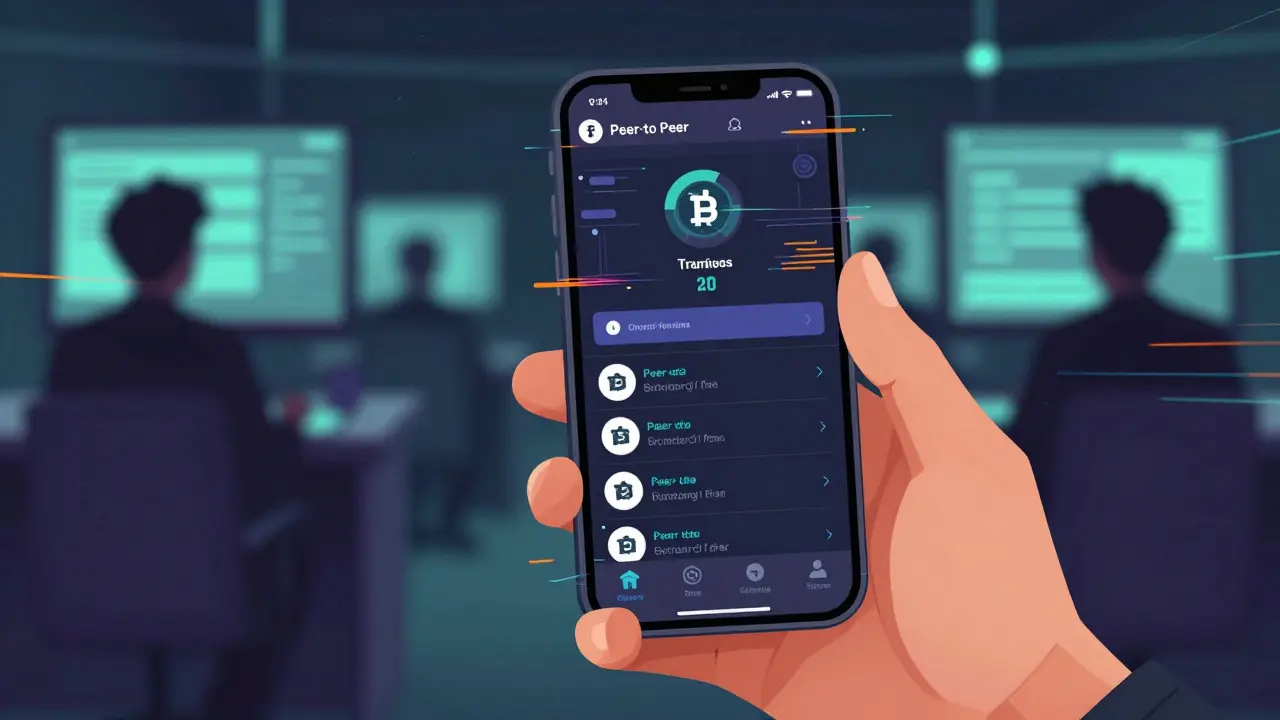
Cryptocurrency offers a different path. Specifically, stablecoins are cryptocurrencies pegged to stable assets like the US dollar to minimize price volatility. These tokens allow users to send value across borders instantly with minimal fees. A worker in Dubai can send USDT (Tether) or USDC to a family member in Bangladesh within seconds. The recipient then sells the token for Bangladeshi Taka through peer-to-peer networks. This bypasses the high commissions and delays of traditional wire transfers.
| Method | Speed | Cost | Accessibility | Regulatory Status |
|---|---|---|---|---|
| Traditional Bank Wire | 2-5 Days | High ($20-$50+) | Requires Bank Account | Legal & Monitored |
| Hawala (Informal) | Hours | Variable (Hidden Fees) | Trust-Based Network | Illegal / Unregulated |
| Crypto Stablecoins | Seconds/Minutes | Low ($1-$5) | Smartphone + Internet | Banned but Used |
This table shows why users choose crypto. Even though it is banned, the speed and cost benefits are too significant to ignore. For a family living on a tight budget, saving $20 on a monthly transfer adds up to hundreds of dollars a year. That is real money for food, education, and healthcare.
How People Access Crypto Under the Ban
If banks block crypto transactions and exchanges are illegal, how do 3.1 million people trade? They use decentralized methods. The primary channel is Peer-to-Peer (P2P) trading platforms. Services like Binance P2P or local Telegram groups connect buyers directly with sellers. No central bank approves the transaction; it happens between two individuals.
Users also rely on Virtual Private Networks (VPNs) to access international exchanges that might be blocked locally. While the government attempts to restrict internet traffic related to crypto keywords, the technical arms race favors the users. New proxies and encrypted connections emerge as quickly as blocks are put in place.
Another key factor is the rise of non-custodial wallets. Instead of keeping funds on an exchange where they could be frozen, savvy users store their assets in self-custody wallets like MetaMask or Trust Wallet. This gives them full control over their private keys. If the government shuts down an exchange, the user still owns their coins. This decentralization is the core feature that makes bans difficult to enforce completely.
Regional Context: South Asia’s Crypto Wave
Bangladesh does not exist in a vacuum. Its neighbors are experiencing similar trends. India leads global crypto adoption with an index of 1.000 in 2025. Pakistan follows closely with an index of 0.619 and added 5.4 million new users last year. These countries share common economic pressures: currency devaluation, inflation, and a large freelance workforce earning in USD.
When you look at the Asia-Pacific region, it led global crypto growth with 69% expansion in 2025. Bangladesh fits this pattern. The drive for financial inclusion and cross-border payment solutions transcends national borders. Even Cambodia, with its complex regulatory mix, maintains 740,000 users through hybrid wallets like Bakong. This regional momentum suggests that Bangladesh's isolationist policy is fighting a losing battle against market forces.

Risks and Realities for Users
Using crypto in a banned environment is not without danger. Users face several risks:
- Scams and Fraud: Without legal recourse, if a P2P seller disappears with your money, you have no one to call. There is no consumer protection agency for crypto disputes in Bangladesh.
- Bank Account Freezes: Banks monitor accounts for suspicious activity. If your account receives frequent deposits from unknown sources linked to crypto cash-outs, the bank may freeze your funds pending investigation.
- Legal Uncertainty: While mass arrests of individual traders are rare, the legal framework remains hostile. Future regulations could impose harsher penalties or stricter internet censorship.
- Price Volatility: While stablecoins mitigate this, users who hold Bitcoin or Ethereum face the risk of sudden value drops. In a stressful economic environment, losing savings to market swings is devastating.
Despite these risks, the utility argument wins out. For many, the alternative-having no way to receive remittances efficiently-is worse than the risk of using crypto.
The Future of Crypto in Bangladesh
Will the ban lift? Probably not soon. The central bank views crypto as a threat to monetary sovereignty and capital flight. However, enforcement may evolve. We might see a shift from outright bans to heavy taxation or regulated sandbox environments, similar to what other emerging markets are exploring.
The persistence of 3.1 million verified users proves that demand exists. As blockchain technology becomes more integrated into everyday apps-like social media payments or gaming-the line between "crypto" and "regular money" will blur further. Younger generations, growing up with smartphones and global connectivity, are less likely to view crypto as illegal and more likely to see it as a standard tool for global commerce.
Bangladesh serves as a case study for the world. It shows that regulations cannot easily stop financial innovation when that innovation solves critical human problems. Whether the government chooses to fight this tide or harness it will determine the future financial landscape of the nation.
Is it illegal to own cryptocurrency in Bangladesh?
Yes. The Bangladesh Bank has issued circulars prohibiting banks and financial institutions from facilitating cryptocurrency transactions. While owning crypto itself is not explicitly criminalized in all contexts, buying, selling, or using it through formal banking channels is strictly forbidden. Engaging in crypto activities carries legal and financial risks.
How do people in Bangladesh buy Bitcoin?
Most users utilize Peer-to-Peer (P2P) platforms like Binance P2P. They connect with local sellers who accept bank transfers or mobile financial services (like bKash or Nagad) in exchange for crypto. To avoid detection, users often use smaller transaction amounts and multiple intermediaries. Some also use VPNs to access international exchanges.
Why is crypto adoption high despite the ban?
The primary driver is remittances. Workers abroad need fast, low-cost ways to send money home. Traditional banks charge high fees and take days. Stablecoins offer near-instant transfers for pennies. Additionally, inflation and currency devaluation push people to seek stores of value outside the local banking system.
What are the biggest risks for crypto users in Bangladesh?
The main risks include bank account freezes due to suspicious transaction patterns, falling victim to P2P scams with no legal recourse, and potential legal action if authorities crack down on specific exchanges or individuals. There is also the risk of losing funds due to poor security practices, as there is no insurance for crypto assets.
Does Bangladesh rank high in global crypto adoption?
Yes. In 2025, Bangladesh ranked 35th globally in crypto adoption according to CoinLedger, with approximately 3.1 million verified users. This places it among notable adopters alongside countries with more favorable regulatory environments, highlighting the strength of grassroots demand.
Manish Prajapat
June 11, 2026 AT 06:58The remittance angle is the real story here. Traditional banking fees are a tax on poverty, and when you save $20 a month, that's a year of groceries for some families. It makes sense why people ignore the ban.
Mark Brunschwiler
June 13, 2026 AT 00:10People are stupid for risking their bank accounts. The government knows what it is doing. You think they let this happen by accident? No way. They are watching every single transaction through blockchain analysis tools that are getting better every day. Soon everyone will be caught.
Filbert Reeves
June 14, 2026 AT 13:03its not just about money its about control. the west wants to destroy local currencies with stablecoins so they can have total economic dominance. bangladesh is just a pawn in this global chess game. the banks are scared because they cant print usdt. its a coup really.
Nick Rice
June 16, 2026 AT 05:04You need to understand that financial sovereignty is non-negotiable for any developing nation. Allowing unregulated foreign currency flows destabilizes the entire monetary policy framework. We must respect the central bank's authority even if it feels inconvenient.
Amit Thakur
June 17, 2026 AT 13:53Look at the liquidity pools on DEXs. The slippage on small trades is negligible now. If you are using CEX P2P you are leaving a trail. Smart users are moving to self-custody and using atomic swaps to avoid KYC entirely. The tech has evolved past the bans.
Eric Scheinberg
June 19, 2026 AT 08:07The regulatory landscape is shifting rapidly. We must consider the implications of capital flight on national infrastructure development. When citizens bypass state-sanctioned channels, the fiscal capacity to fund public services diminishes significantly over time.
pankaj chawla
June 20, 2026 AT 18:56I agree with the point about necessity. In India we see similar trends with UPI but crypto is different because it is borderless. People will always find a way to send money home faster than the bank allows.
Jessica Lane
June 22, 2026 AT 00:05It is fascinating how technology bridges gaps that legislation tries to widen. The human desire for efficiency and security drives adoption regardless of legal barriers. This trend will likely continue until regulations adapt to reality rather than fighting it.
Charles Pawlikowski
June 23, 2026 AT 07:11These countries should focus on building their own economies instead of relying on digital magic beans. Crypto is a scam designed to steal from hardworking people who dont understand finance. Stay away from it folks!!
Andrea Burd
June 24, 2026 AT 16:56Boring article. Everyone knows this already. The real question is when the rug pull happens. These platforms are all centralized anyway despite what they claim. Just waiting for the crash.
Akeem Whittaker
June 25, 2026 AT 03:17Let me break down the risk profile for you. While the utility is clear, the lack of consumer protection is a massive blind spot. If a P2P seller ghosts you, there is no chargeback mechanism. Users need to educate themselves on escrow protocols before engaging.
John Doe
June 25, 2026 AT 17:37The irony is palpable. A nation banned from participating in the global financial system creates its own parallel economy out of sheer desperation. It is both tragic and inspiring to watch people innovate under such pressure.
Skm Shubham
June 26, 2026 AT 16:40This data is flawed. CoinLedger counts verified users which includes bots and wash trading. The actual active user base is probably half of that. Stop hyping up these numbers. The market is saturated with fake volume.
Rob Aronson
June 27, 2026 AT 03:03From a compliance perspective, this is a nightmare scenario for traditional institutions. 📉 The AML/KYC frameworks are completely inadequate for decentralized peer-to-peer transactions. We need new standards for cross-border digital asset verification. 🛡️
Kwon Bill
June 28, 2026 AT 17:50In South Korea, we faced similar issues before regulation clarified. Now we have strict reporting rules but it is legal. Bangladesh needs a sandbox approach like Singapore or Dubai. Total prohibition only pushes activity underground where it is harder to monitor.
Danna Charris
June 30, 2026 AT 02:45Precisely. The elite understand that stability comes from regulated markets, not speculative tokens. This behavior undermines long-term economic health.
Fede Faith
July 1, 2026 AT 17:00Here is the thing: education is key. Most users don't know how to secure their private keys. I recommend starting with hardware wallets and learning about seed phrases. Don't keep your life savings on an exchange app.
Josh Dodson
July 2, 2026 AT 19:14thats right! its all about community support too. join some discord servers and learn from others. dont do it alone. safety first bro!
Suman Patil
July 3, 2026 AT 14:26We should look at this as a cultural shift towards digital sovereignty. In India, the debate is ongoing but adoption is skyrocketing. It is inevitable. Let's embrace the change and push for sensible regulations rather than bans.
Kumaran sowkarpet
July 4, 2026 AT 10:16As someone from Chennai, i see many friends using crypto for freelance payments. Banks take weeks to release funds. Crypto is instant. Its not illegal to earn money online. Government should help not hinder. :)
Mauricio Contreras Loredo
July 4, 2026 AT 11:29Oh sure, let's just trust the invisible hand of the market while ignoring the fact that these 'stablecoins' are backed by questionable reserves. But hey, at least it's fast! Nothing says security like sending your rent money to a server in Delaware.
sreeja boora
July 5, 2026 AT 04:23The integrity of our national currency must be preserved. Allowing foreign-backed digital assets to circulate freely is a direct threat to our economic independence. We cannot allow external entities to dictate our monetary value.
Grace Newman
July 5, 2026 AT 20:38Have you considered that the very existence of these 'workarounds' is part of a larger surveillance strategy? By forcing transactions onto blockchain ledgers, authorities create an immutable record of every citizen's financial movements. Privacy is dead.