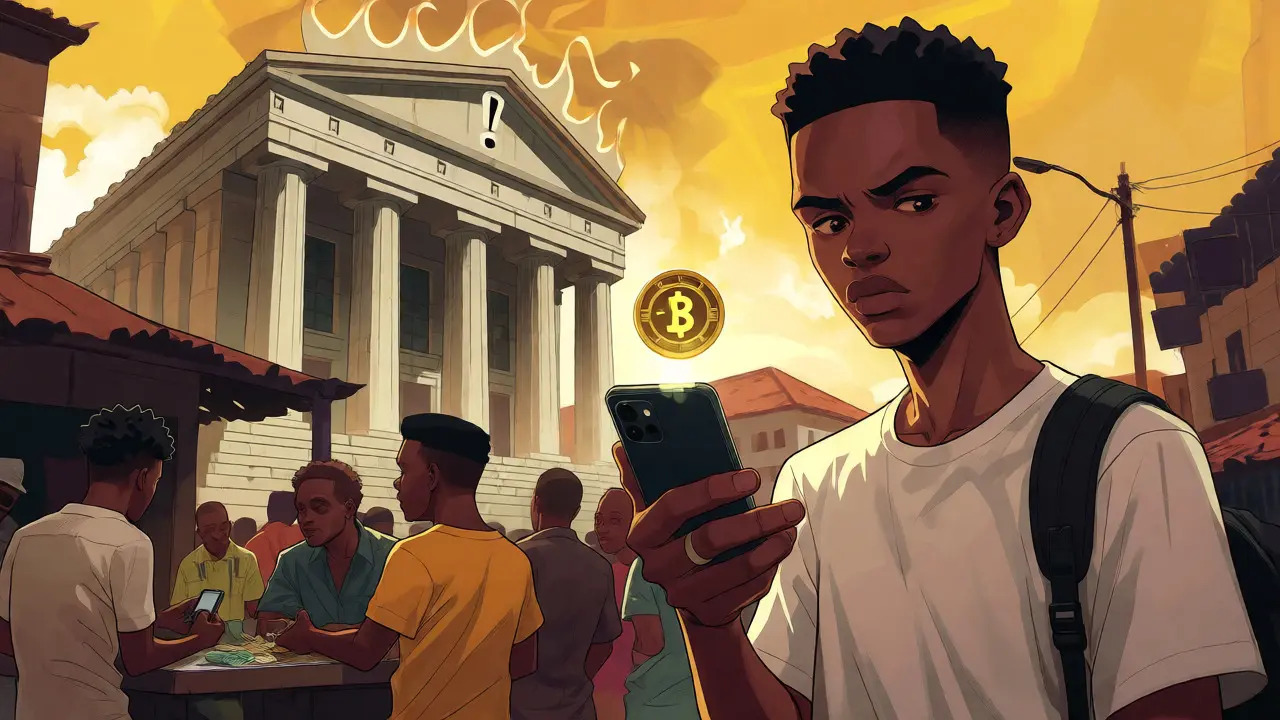
Imagine trying to buy a coffee with Bitcoin in Lagos, only to find your bank account frozen because you touched the wrong digital coin. For years, this was the reality for millions of Nigerians. The Central Bank of Nigeria (CBN) spent nearly a decade fighting a war against cryptocurrency, issuing bans that failed to stop adoption and instead pushed trading underground. But something shifted. By 2025, the CBN wasn't just tolerating crypto; it had helped build a regulatory framework that welcomed it. How did we get from total prohibition to structured accommodation? And what does this mean for investors today?
The Early Warning Signs (2017-2020)
Nigeria’s relationship with digital money started with caution, not hostility. In January 2017, the CBN issued its first circular on virtual currencies. It didn’t ban Bitcoin outright. Instead, it told banks to be careful. The message was clear: don’t hold crypto, don’t trade it, but if your customers do, make sure they aren’t laundering money. This was the era of "benign neglect." The government watched as peer-to-peer (P2P) markets grew, driven by a young population frustrated with naira inflation and limited access to dollar-denominated assets.
During this period, the Securities and Exchange Commission (SEC) began to take notice. While the CBN focused on banking risks, the SEC looked at investment potential. In September 2020, the SEC released a statement classifying certain digital assets as securities. This created a weird dual-regulatory environment where one agency warned about banks touching crypto, while another hinted that crypto might need investor protection laws. It was messy, but it showed that regulators were starting to realize they couldn't ignore the market forever.
The Hard Line: The 2021 Banking Ban
If 2017 was a warning, February 2021 was a hammer blow. The CBN issued a directive prohibiting all deposit money banks and non-bank financial institutions from dealing in cryptocurrencies or facilitating payments for them. Banks were ordered to identify and close accounts of individuals and entities involved in crypto transactions. This wasn't just a suggestion; it was an operational mandate.
The impact was immediate and severe. Major exchanges like Binance and local platforms lost their primary fiat on-ramps. You could no longer easily move naira into crypto via bank transfer. So, what happened? Did crypto die? No. It went dark. Trading migrated entirely to P2P networks. Platforms like Paxful and LocalBitcoins saw massive volume spikes as users found creative ways to send money outside the traditional banking rails. The ban didn't stop adoption; it made it more expensive and less transparent. It also fueled resentment, especially during the #EndSARS protests later that year, when protesters used crypto to fund activities after their bank accounts were targeted.

The Great Reversal: Why the CBN Changed Course
By 2023, the cracks in the prohibition strategy were undeniable. The CBN realized that banning bank access hadn't stopped crypto; it had just removed the visibility needed for oversight. If banks couldn't touch crypto, they couldn't track it. This meant missed opportunities for tax revenue and increased risks for unregulated shadow markets. Furthermore, global pressure mounted. Countries like El Salvador and the UAE were positioning themselves as crypto hubs, and Nigeria risked falling behind in fintech innovation.
The turning point came in December 2023 with the release of the Virtual Asset Service Provider (VASP) Guidelines. This document marked a 180-degree turn. Suddenly, banks were allowed to offer services to licensed crypto businesses. The key word here is "licensed." The CBN wasn't opening the floodgates; it was building a toll booth. To operate legally, crypto firms now had to register with the SEC and comply with strict Anti-Money Laundering (AML) and Know Your Customer (KYC) standards.
The New Regulatory Landscape: SEC Takes the Wheel
Under the current framework, the Investments and Securities Act 2025 formally recognizes digital assets as securities. This shifts the primary regulatory burden from the CBN to the SEC. The SEC now enforces its Digital Assets Rules, which cover everything from custody solutions to marketing disclosures. This isn't just about keeping bad actors out; it's about bringing institutional capital in. Global funds are hesitant to invest in jurisdictions with unclear laws. By providing clarity, Nigeria aims to attract foreign direct investment into its tech sector.
The collaboration between the CBN and SEC is critical here. The CBN maintains control over the banking infrastructure-the pipes through which money flows-while the SEC regulates the asset class itself. This separation of powers mirrors models seen in mature markets like the US, though adapted for Nigeria’s unique economic context. The goal is to integrate crypto into the formal economy rather than leaving it on the fringes.
| Era | Key Directive | Bank Access | Market Impact |
|---|---|---|---|
| 2017-2020 | Circular on Virtual Currency Operations | Restricted but tolerated | Growth of P2P markets; early adoption |
| 2021-2023 | Ban on bank facilitation | Prohibited | Shadow market growth; exchange exits (e.g., OKX) |
| 2024-Present | VASP Guidelines & ISA 2025 | Permitted for licensed entities | Institutionalization; compliance focus; return of major players |

Market Fallout and Corporate Retreats
The transition wasn't smooth. During the restrictive period, several global giants pulled out. OKX suspended operations in July 2024, citing "changes in local laws," urging users to withdraw funds quickly. Binance faced legal hurdles, with executives detained in disputes over untraceable funds. These exits highlighted the risks of operating in a jurisdiction with volatile regulatory stances.
However, the new regulations have created a different kind of risk: compliance cost. Small startups can no longer afford to operate without full KYC infrastructure. This has led to consolidation, with larger, well-capitalized firms acquiring smaller ones to secure licenses. For the average Nigerian user, this means fewer anonymous options but safer, insured platforms. The days of sending $50 to a stranger on Telegram with zero recourse are ending.
What This Means for Investors and Users
If you're holding crypto in Nigeria today, the landscape is clearer but stricter. You must use licensed VASPs. Unlicensed exchanges may still operate, but they cannot partner with banks, making fiat off-ramping difficult. Expect higher fees as compliance costs are passed down to consumers. Also, watch the naira. The government still views crypto volatility as a threat to monetary stability, so expect interventions if the naira swings too wildly due to crypto-related demand.
The removal of Nigeria from the Financial Action Task Force (FATF) Gray List remains a key incentive for strict enforcement. International banks are more willing to correspond with Nigerian institutions that demonstrate robust AML controls. This opens doors for cross-border remittances using stablecoins, potentially reducing the high costs of traditional SWIFT transfers.
Is cryptocurrency banned in Nigeria?
No, cryptocurrency is not banned. As of 2025, it is legal and regulated. The Central Bank of Nigeria allows banks to serve licensed Virtual Asset Service Providers (VASPs), provided they comply with SEC regulations.
Who regulates cryptocurrency in Nigeria?
The Securities and Exchange Commission (SEC) is the primary regulator for digital assets, classifying them as securities under the Investments and Securities Act 2025. The Central Bank of Nigeria (CBN) oversees the banking sector's interaction with these assets.
Can I use my bank account to buy crypto?
Yes, but only through licensed VASPs. Direct transfers to unlicensed exchanges may still face restrictions or closures depending on the specific bank's internal risk policies, but the general ban on bank facilitation has been lifted for compliant entities.
Why did Binance leave Nigeria temporarily?
Binance faced regulatory scrutiny and legal disputes regarding untraceable funds and compliance gaps during the restrictive period. Following the introduction of clearer VASP guidelines, many global exchanges are reassessing their re-entry strategies based on licensing requirements.
What is a VASP in Nigeria?
A Virtual Asset Service Provider (VASP) is any business that facilitates cryptocurrency transactions, including exchanges, custodians, and wallet providers. Under the new rules, VASPs must obtain a license from the SEC to operate legally.