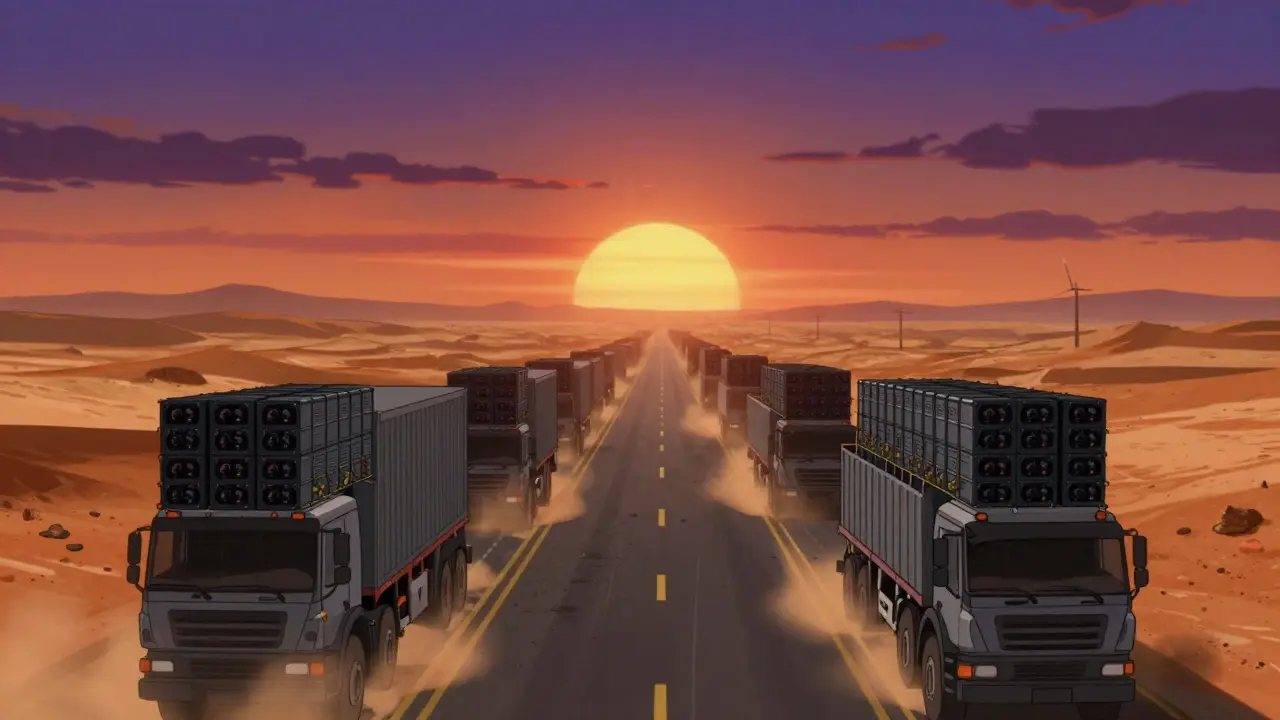
Imagine moving an entire industrial city overnight. Not people, but machines. Massive, humming racks of servers that consume as much electricity as a small town. That is exactly what happened between 2020 and 2021. The Chinese government decided to shut down cryptocurrency mining within its borders. This wasn't just a suggestion; it was a hard stop. Overnight, the world’s largest concentration of Bitcoin mining operations had to find a new home.
This event, often called the "Great Mining Migration," changed the map of digital finance forever. Before the crackdown, China controlled more than three-quarters of the global mining power. By mid-2021, that number plummeted to under half. But where did all those machines go? They didn't disappear. They packed up their Application-Specific Integrated Circuit (ASIC) chips, loaded them onto trucks and ships, and moved across borders. Today, the landscape looks completely different. Let's look at where they landed and why.
The Push: Why China Said No
To understand the move, you have to understand the motive. For years, China was the heart of Bitcoin mining. It had cheap coal power, a massive manufacturing base for mining hardware, and a culture that embraced early tech risks. But by 2021, the priorities shifted. The central government viewed cryptocurrency not as innovation, but as a threat to financial stability and energy goals.
The ban wasn't sudden chaos; it was a systematic squeeze. Provincial governments in Inner Mongolia and Sichuan started cracking down first, citing energy waste. Then, the central government stepped in with finality. They cut off bank accounts, severed internet access to mining pools, and physically disconnected power lines. For a miner, this meant one thing: if you stayed, your business died. If you left, you might survive. Given that Bitcoin mining requires only two things-electricity and internet-the decision to leave was logical, even if the logistics were a nightmare.
Kazakhstan: The First Stop
When thousands of miners looked for a place close enough to ship equipment quickly but far enough to escape Beijing’s reach, Kazakhstan was the obvious choice. It shares a border with China, making transport cheaper and faster. More importantly, it had power to spare.
Kazakhstan saw its share of global mining hash rate skyrocket from roughly 1.4% in late 2019 to over 8% by spring 2021. By October 2021, it briefly became the second-largest mining nation on Earth. The country’s grid was built around heavy industry and coal, providing the steady, high-voltage current that ASIC miners crave. For displaced Chinese operators, setting up shop in cities like Almaty or Shymkent felt like stepping into a parallel universe where the rules were loose and the plugs were ready.
However, this rapid influx caused problems. The local grid wasn't designed for this sudden load. In winter 2021, when demand for heating spiked, the grid buckled. Power outages hit residential areas, forcing the Kazakh government to temporarily restrict mining operations. This taught the industry a harsh lesson: you can’t just dump massive industrial loads onto a fragile infrastructure without consequences. Still, many miners stayed, adapting to curtailment programs where they voluntarily reduce power usage during peak times to keep the lights on for locals.
Texas: The American Magnet
If Kazakhstan was the quick fix, Texas was the strategic long-term play. While Central Asia offered proximity, the United States offered regulatory clarity and market depth. Specifically, Texas emerged as the epicenter of American mining growth. Why Texas? Three reasons: deregulation, abundant energy, and political support.
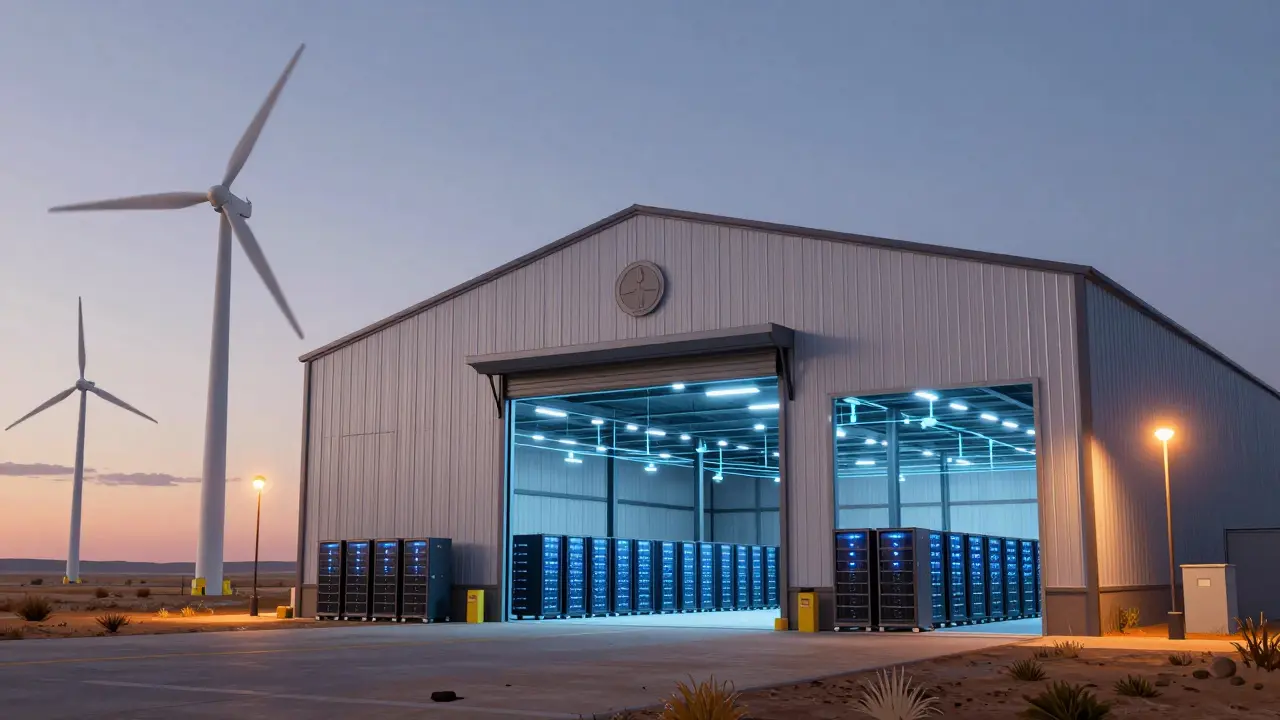
Texas operates ERCOT, an independent electric grid separate from the rest of the U.S. This independence allows for faster approval of large-scale power projects. More crucially, Texas has some of the cheapest wind energy in the world. During windy nights, supply exceeds demand, and prices can drop to zero-or even negative. Miners love this. They can sign contracts to absorb excess renewable energy that would otherwise be wasted, stabilizing the grid while running their machines at near-zero marginal cost.
By 2021, Texas accounted for nearly half of all new mining capacity installed in the U.S. Companies like Riot Platforms and Core Scientific built massive facilities there. Unlike the makeshift setups in Kazakhstan, these were professional, warehouse-sized operations integrated into the state’s energy economy. The narrative shifted from "miners wasting energy" to "miners helping balance the grid." When the 2021 winter storm hit Texas, many mining farms actually turned off their rigs to free up power for hospitals and homes, proving their value as flexible grid assets.
Other Key Destinations
While Kazakhstan and Texas grabbed the headlines, other regions also absorbed significant capacity. The migration was diverse, reflecting the global search for optimal conditions.
- Russia: With vast hydroelectric resources in Siberia and relatively low industrial electricity rates, Russia remained a strong contender. Its share hovered around 6-7%, offering a stable alternative for miners who could navigate complex bureaucratic requirements.
- Iran: Iran has a history of fluctuating policies. At times, the government encourages mining to earn foreign currency; at others, it bans it to save domestic power. Its share peaked around 4-5%, driven by subsidized electricity, though instability keeps many international firms cautious.
- Pakistan: Similar to Kazakhstan, Pakistan offered cheap hydroelectric power in northern provinces. However, like its neighbor, it faced grid strain, leading to periodic disconnects of unauthorized mining operations.
- Canada: Known for clean hydroelectric power and a stable legal environment, Canada attracted miners focused on sustainability credentials. Quebec and British Columbia became hubs for eco-conscious mining operations.
The Impact on Decentralization
Critics of Bitcoin often point to its environmental footprint and geographic concentration. The Chinese exodus addressed the latter concern significantly. Before 2021, if Beijing wanted to censor transactions or halt the network, it theoretically could have influenced over 75% of the validation power. That level of centralization is a security risk for any decentralized system.
Today, no single country dominates the hash rate to that extent. The power is spread across North America, Central Asia, Eastern Europe, and beyond. This fragmentation makes the network more resilient. A policy change in one region no longer threatens the entire ecosystem. Instead, it causes a ripple effect, redistributing work to other jurisdictions. This is the essence of decentralization in action: the network adapts, survives, and continues regardless of local politics.
| Region | Share in Sept 2020 | Share in Mid-2021 | Key Driver |
|---|---|---|---|
| China | ~75% | <5% | Regulatory Ban |
| Kazakhstan | ~1.4% | ~8-10% | Proximity & Coal Power |
| United States | ~7% | ~15-20% | Deregulation & Wind Energy |
| Russia | ~10% | ~6-7% | Hydro Resources |
| Rest of World | ~7% | ~20-25% | Diversification |

Challenges of the New Normal
The relocation wasn't smooth sailing. Moving hundreds of tons of sensitive electronic equipment across borders involves customs delays, shipping costs, and technical hurdles. Many older machines broke during transit. Others arrived to find that local voltage standards differed, requiring expensive transformers.
Furthermore, the "wild west" era of mining is ending. Countries like Kazakhstan and the U.S. are now implementing stricter regulations. They want the tax revenue and economic activity but refuse to tolerate grid instability. Miners must now prove their environmental impact is managed and their energy consumption is predictable. This raises the barrier to entry, favoring large, well-capitalized companies over individual hobbyists.
Energy costs remain the primary variable. In Texas, miners compete with data centers and traditional industries. In Central Asia, they compete with residential needs. The dynamic nature of this competition means mining locations may continue to shift. As renewable energy technology improves and storage becomes cheaper, we may see mining follow solar and wind farms to remote areas, connected via high-voltage transmission lines.
What Comes Next?
The Great Mining Migration proved that Bitcoin infrastructure is highly mobile. It is not tied to land or labor in the traditional sense. It follows capital and electricity. As the world transitions toward greener energy sources, mining will likely follow suit. We are already seeing trends toward stranded energy utilization-using gas flare energy in oil fields or excess hydro in rainy seasons.
For investors and observers, the key takeaway is resilience. The network survived the loss of its biggest hub. It adapted to new hosts. It became more distributed. The next chapter won't be about finding one new China, but about integrating mining into the global energy matrix as a flexible, responsive asset. The miners didn't just relocate; they evolved.
Did China completely ban Bitcoin mining?
Yes, effectively. Since 2021, the Chinese government has classified cryptocurrency mining as an illegal business activity. While small-scale, hidden operations may still exist, the organized industrial mining sector has been eradicated from mainland China due to strict enforcement, power cuts, and lack of banking support.
Why did so many miners choose Texas?
Texas offers a unique combination of deregulated energy markets, abundant wind power, and political friendliness towards crypto businesses. The ERCOT grid allows miners to act as flexible loads, absorbing excess renewable energy during peak production times, which lowers their operational costs and supports grid stability.
How did Kazakhstan handle the influx of miners?
Kazakhstan initially welcomed miners, causing its hash rate share to surge. However, the sudden demand strained the national grid, leading to blackouts. The government responded by imposing restrictions and requiring miners to register and adhere to curtailment protocols, reducing their power usage during peak demand periods.
Is Bitcoin mining more decentralized now?
Yes. Before the Chinese ban, one country controlled over 75% of the network's computing power. Now, the hash rate is distributed across multiple continents, including North America, Central Asia, and Eastern Europe. This geographic diversity reduces the risk of single-point failure or censorship.
Can miners move easily between countries?
Relatively yes. Bitcoin mining hardware (ASICs) is modular and portable. While logistics involve shipping costs and customs procedures, the core requirement is electricity and internet. This mobility allows miners to chase lower energy prices and favorable regulations globally, unlike traditional factories that are fixed to specific locations.