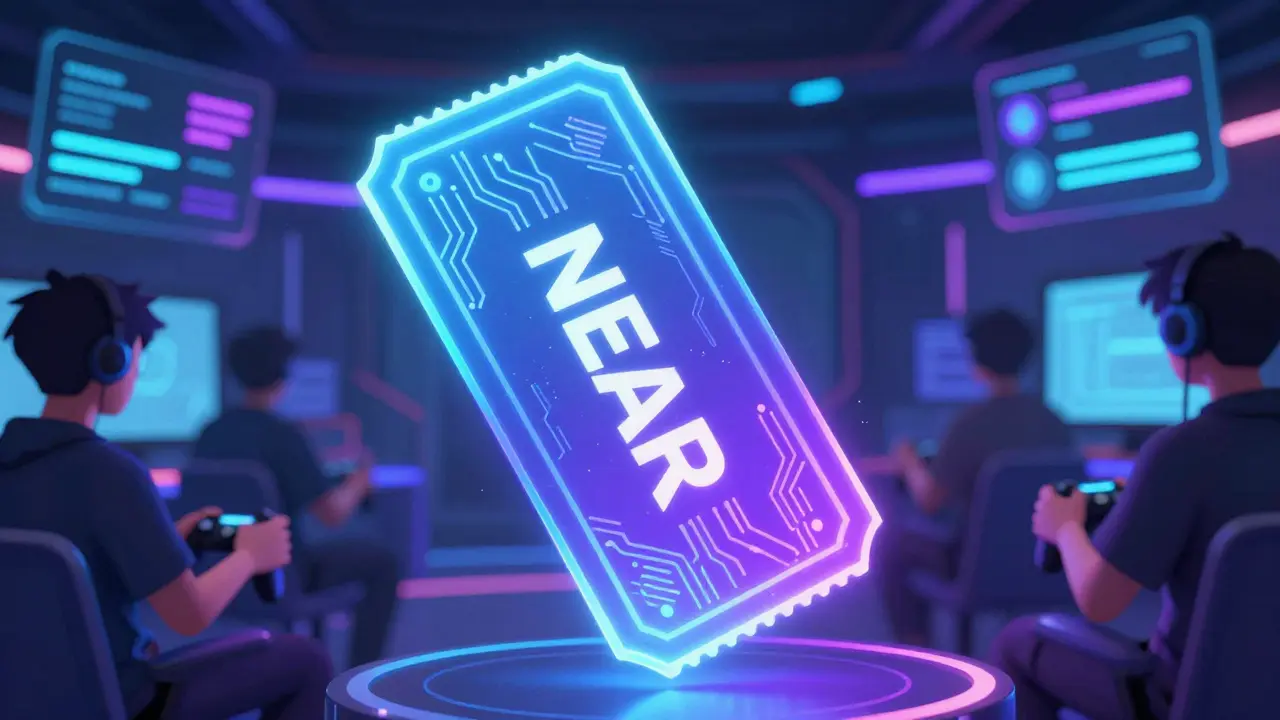
It looks like you are too late. If you clicked this hoping to claim free FEAR Play2Earn NFT tickets, the window has closed. The specific campaign that distributed these digital assets ended years ago. But understanding what happened with the FEAR NFT Games airdrop is still valuable. It serves as a textbook example of how blockchain gaming projects use token distributions to build communities, and it highlights the critical difference between hype and sustainable mechanics in the crypto space.
You might be searching for this because you saw an old tweet, a archived forum post, or perhaps a scam site pretending the airdrop is still active. Let’s clear up the confusion. We will look at exactly what the FEAR airdrop was, how the distribution worked, why it ended, and what you should watch out for if you are hunting for similar opportunities today.
What Was the FEAR Play2Earn NFT Ticket?
To understand the airdrop, you first need to know what the asset actually was. The FEAR Play2Earn NFT ticket was not just a random image on a blockchain. It functioned as a key within the FEAR NFT Games ecosystem. Think of it like a concert ticket, but instead of getting you into a stadium, it granted access to gameplay features and potential earnings within their platform.
Each ticket had a tangible value attached to it. In the initial phase of the campaign, every single NFT ticket was valued at 25 FEAR tokens. This wasn't arbitrary; it was a strategic move by the developers to give immediate utility to the distributed assets. By tying the NFT directly to the native token, they created a circular economy where holding the ticket meant having a stake in the game's currency.
The project itself, FEAR NFT Games, positioned itself in the crowded Play-to-Earn (P2E) sector. At its peak, the project had raised $1.24 million across four funding rounds. This capital came from Initial DEX Offerings (IDOs) and private financing. For context, raising over a million dollars suggests serious institutional interest, even if the long-term sustainability of many P2E models remains questionable.
The Two-Phase Distribution Strategy
FEAR didn’t just dump tokens on random wallets. They executed a two-phase strategy designed to maximize visibility and reward different types of users. Understanding this structure helps explain why some people got rich while others got nothing.
Phase 1: The NFT Ticket Drop
The first wave focused on distribution volume rather than total dollar value. The team allocated 2,000 Play2Earn NFT airdrop tickets. These were distributed to early adopters and community members who engaged with the brand. The goal here was adoption. They wanted thousands of unique wallets holding their NFTs to create a sense of scarcity and demand. Each of those 2,000 tickets represented a direct claim on future value within the game.
Phase 2: The CoinMarketCap Partnership
After declaring the first phase a "huge success," FEAR scaled up significantly. They partnered with CoinMarketCap, one of the largest cryptocurrency data aggregators in the world. This partnership was crucial. It moved the airdrop from niche crypto forums to mainstream attention.
In this second campaign, known as the FEAR x CoinMarketCap event, the prize pool expanded dramatically. They allocated 20,000 $FEAR tokens to be distributed. At the time of the giveaway, this pool was valued at approximately $30,000 USD. Unlike the first phase, which gave everyone a ticket, this phase selected over 500 winners from the participants. This shift from universal distribution to competitive selection changed the dynamic entirely, turning the airdrop into a lottery-style event.
| Feature | Phase 1 (NFT Tickets) | Phase 2 (CMC Partnership) |
|---|---|---|
| Asset Distributed | NFT Tickets | $FEAR Tokens |
| Total Quantity | 2,000 Tickets | 20,000 Tokens |
| Estimated Value | Based on 25 FEAR per ticket | $30,000 USD |
| Winners/Recipients | All eligible holders | Over 500 selected winners |
| Platform Partner | Internal/Fans | CoinMarketCap |

Why Is the Airdrop Closed Now?
If you are looking at the official channels today, you will see a stark message: "The airdrop is closed." This isn't a glitch. The campaign concluded on September 24, 2021, at 2 PM EST. That date is now several years in the past.
Several factors contribute to why this door remains shut:
- Tokenomics Saturation: Distributing millions of dollars worth of tokens dilutes the value for existing holders. Once the supply is released, there is no economic incentive to run another massive giveaway unless new funds are raised.
- Project Lifecycle: Many Play-to-Earn projects follow a boom-and-bust cycle. After the initial hype and marketing spend (like the $1.24M raise), projects often struggle to retain users once the easy money runs out. FEAR’s market cap eventually settled around $117.47K, indicating a significant cooling off from its peak enthusiasm.
- Regulatory Scrutiny: By 2022 and 2023, regulators worldwide began cracking down on unregistered securities offerings disguised as airdrops. Projects became much more cautious about distributing tokens without strict KYC (Know Your Customer) procedures.
The closure of the airdrop marks the end of an era for FEAR NFT Games. It signals that the growth phase driven by free incentives is over, and any current activity must be driven by genuine gameplay enjoyment or speculative trading, neither of which guarantees profit.
Red Flags: Avoiding Scams Impersonating FEAR
Because the original airdrop generated so much buzz, scammers have capitalized on the confusion. If you search for "FEAR airdrop" today, you might encounter websites claiming you can still claim your tickets. Here is how to spot the fakes:
- Check the Date: Any site claiming the September 2021 airdrop is ongoing is lying. The deadline was hard-coded and public.
- Wallet Connection Requests: Never connect your main wallet to an unknown URL promising free FEAR tokens. Scammers use fake airdrop pages to drain ETH or BNB from your wallet.
- Official Channels Only: Legitimate updates only come from verified accounts on Twitter/X or official Discord servers linked from the primary website. Do not trust links from Telegram groups or Reddit comments.
- Too Good To Be True: If a site promises you 1,000 FEAR tokens for simply clicking a button, it is a phishing attempt. Real airdrops require historical participation or staking, not just clicks.
The lesson here is simple: if an opportunity feels urgent and exclusive but lacks verifiable proof, walk away. The real FEAR airdrop required patience and community engagement, not impulsive clicks on suspicious links.
Lessons for Future Crypto Gaming Investors
While you cannot participate in the FEAR airdrop anymore, the case study offers valuable insights for navigating the current landscape of Web3 gaming. The industry has evolved since 2021, but the core dynamics remain similar.
Utility Over Hype: The FEAR NFT ticket had value because it unlocked gameplay. Today, look for games where the NFTs provide actual advantages-better loot drops, faster progression, or governance rights-rather than just being decorative JPEGs. If the game stops being fun when the token price drops, the model is fragile.
Partnership Validation: The CoinMarketCap partnership lent credibility to FEAR. When evaluating new projects, check who is backing them. Are they listed on reputable trackers? Do they have partnerships with established infrastructure providers like Polygon or Immutable X? These associations reduce risk, though they do not eliminate it.
Sustainable Tokenomics: FEAR raised $1.24 million, which is substantial, but many P2E projects burn through cash quickly paying out rewards. Look for projects with sinks (ways tokens leave circulation, like buying back NFTs) balanced against sources (new tokens entering circulation). Without this balance, inflation kills the economy.
The FEAR experiment showed that airdrops can successfully onboard users and create liquidity. However, it also demonstrated that free money is a short-term motivator. Long-term success requires a product people want to use, regardless of whether they are getting paid to do it.
Frequently Asked Questions
Is the FEAR Play2Earn NFT airdrop still active?
No, the FEAR Play2Earn NFT airdrop is completely closed. The final phase of the distribution ended on September 24, 2021. Any website or social media account claiming you can still claim these tickets is likely a scam attempting to phish your wallet credentials.
How much was each FEAR NFT ticket worth?
During the initial distribution phase, each Play2Earn NFT ticket was valued at 25 FEAR tokens. The actual USD value fluctuated based on the market price of the $FEAR token at the time of transfer, but the intrinsic utility was tied to this fixed amount of native currency.
Who won the CoinMarketCap FEAR airdrop?
The CoinMarketCap partnership phase distributed 20,000 $FEAR tokens among over 500 winners. These winners were selected from participants who engaged with the campaign during the promotional period. The total value of this distribution was approximately $30,000 USD at the time of the event.
How much funding did FEAR NFT Games raise?
FEAR NFT Games completed four funding rounds, raising a total of $1.24 million. This capital was secured through various methods including Initial DEX Offerings (IDOs) and private investment rounds, supporting the development of their blockchain gaming platform.
Can I buy FEAR NFT tickets now?
You may be able to find FEAR NFTs on secondary markets like OpenSea, but their value is highly speculative and likely significantly lower than their initial airdrop valuation. Since the project's active promotion phase has ended, liquidity and demand for these assets have decreased substantially.