
Imagine running a massive server farm in the desert heat, burning through megawatts of electricity to mine Bitcoin. Now imagine that every coin you dig up doesn't just belong to you-it belongs to the state until they say otherwise. This is the reality for miners in Iran as of mid-2026. The landscape has shifted dramatically from the wild west days of 2020. Today, the Central Bank of Iran (CBI) holds the leash. You might have heard rumors about mandatory sales or forced liquidations of mined assets. While specific public decrees demanding immediate cash-outs are rare, the regulatory net has tightened so much that effective control is absolute. If you are looking to operate in this space, understanding the difference between legal compliance and state seizure is critical. Here is what you need to know about the current rules, the licensing maze, and why your data matters more than your hash rate.
The Shift to Total State Control
In January 2025, President Masoud Pezeshkian signed a directive that changed everything. Before this, regulations were fragmented, handled by various ministries with mixed messages. Now, the CBI is the sole authority. They determine who can hold crypto, who can exchange it, and how miners operate. This wasn't a subtle tweak; it was a consolidation of power. The core issue isn't just about making money from mining. It's about sovereignty. Iran faces heavy international sanctions that cut off access to the US dollar and traditional banking systems. Crypto became a loophole-a way to earn hard currency without touching the SWIFT system. But when too many private actors start moving billions in digital assets, the state gets nervous. Capital flight becomes a real threat. So, the government moved to lock down the pipeline. Under the new framework, all participants-individuals, companies, and mining pools-must obtain licenses from the Central Bank. No license means no operation. And getting that license requires surrendering a level of transparency that would make most Western privacy advocates faint. The CBI demands direct, unrestricted access to all data, statistics, and records related to your activities. This includes transaction histories, wallet addresses, and operational metrics.
Licensing: The Gatekeeper to Legal Mining
If you want to mine legally in Iran today, you need a permit. The process is rigorous and heavily scrutinized. The Central Bank works alongside the Ministry of Economic Affairs and Finance to vet applicants. But it’s not just a paperwork exercise. It’s a background check on your entire business model. Here is what the licensing process generally entails:
- Identity Verification: Full KYC (Know Your Customer) checks for all stakeholders. Anonymous mining is dead.
- Technical Audit: Proof of equipment, location, and energy consumption plans.
- Data Integration: You must agree to install government-approved APIs that feed real-time data to the CBI.
- Compliance Pledge: A binding agreement to adhere to Anti-Money Laundering (AML) and Counter-Terrorism Financing (CTF) protocols.
The IRGC Factor: Who Really Runs the Mines?
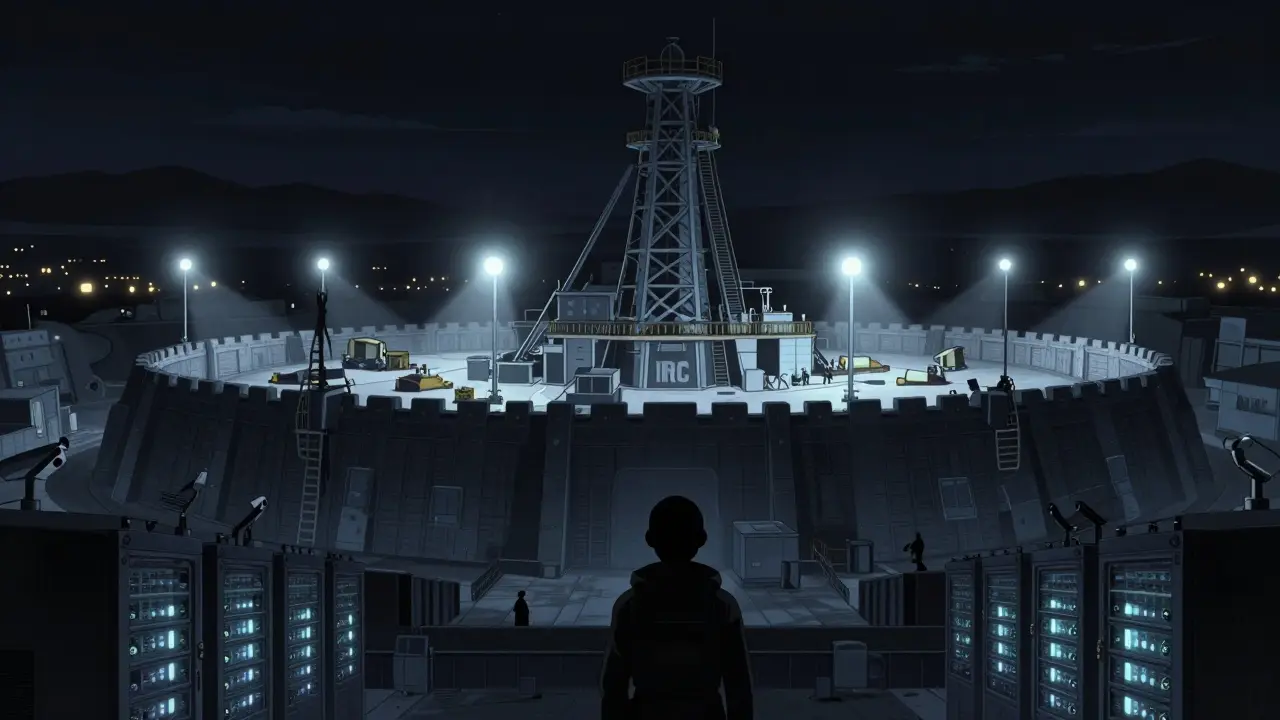
You can't talk about Iranian crypto mining without mentioning the Islamic Revolutionary Guard Corps (IRGC). Since around 2019, the IRGC has become a dominant player in the sector. They didn't just regulate; they entered the market. Partnering with Chinese tech firms, they built massive mining farms, like the 175-megawatt facility in Rafsanjan, Kerman province. These aren't small operations. They are industrial-scale complexes often located in special economic zones or on military bases. Why does this matter to you? Because these state-affiliated entities often receive dedicated power feeds and minimal scrutiny. They operate with a privilege that private miners rarely see. When the grid struggles, private miners are the first to be shut down. The IRGC farms? They keep humming. This creates a two-tier system. On one side, you have the state-backed giants earning billions in Bitcoin to offset lost dollar reserves. On the other, you have private operators trying to survive under strict caps and high surveillance. The government uses crypto mining as a tool for sanctions evasion, but only if it serves the state's interests first.

Energy Caps and the Grid Crisis
Crypto mining is hungry. It eats electricity. And Iran's electrical grid is already strained. In December 2024, rolling blackouts hit multiple regions. Authorities pointed fingers at unauthorized Bitcoin miners, blaming them for exacerbating the shortages. This led to a crackdown on illegal operations and stricter enforcement of consumption caps. Even if you are licensed, you are subject to limits. The government prioritizes residential and industrial needs over crypto extraction during peak hours. Miners must adjust their operations accordingly. Some facilities are forced to throttle down or shut off completely during summer peaks. This unpredictability makes long-term planning difficult. You might have the best hardware in the world, but if the lights go out, your hash rate drops to zero. The cost of electricity for miners is subsidized compared to global rates, which is why Iran remains attractive. But that subsidy comes with strings attached. You are essentially trading cheap power for total compliance. One misstep, one unreported transaction, and those privileges vanish.
The Ban on Domestic Payments
Here is where it gets tricky. Mining is legal. Holding crypto is legal (with a license). But using crypto for payments inside Iran is prohibited. The CBI blocked all crypto-to-rial transactions through internet websites in late 2024. They later unblocked some exchanges, but only those with full government API access. Why ban payments while encouraging mining? It’s about control. The government wants the foreign currency generated by mining to stay within the state-controlled ecosystem. They don't want citizens using Bitcoin to bypass inflation or buy goods locally. They want the value extracted abroad, not circulating domestically. This creates a paradox: you mine to earn, but you can't easily spend what you earn within the country without going through official, monitored channels. For everyday Iranians, this drives activity to unofficial markets. Despite the bans, an estimated one million people were locked out of buying crypto for payments in early 2025 due to restrictive measures. The demand is there, but the supply chain is tightly choked. Miners find themselves in a weird position: producing assets that are legally restricted from local circulation.
Data Transparency vs. Privacy
The most controversial aspect of the 2025 regulations is the data requirement. The CBI wants eyes on everything. Wallet balances, transaction timestamps, IP addresses-you name it. The argument from regulators is national security. They claim this prevents money laundering and terrorist financing. The argument from the industry is that it destroys trust. How can users trust an exchange if the government can freeze or track every move? This tension is palpable. The Iran Fintech Association’s refusal to comply highlights a growing divide. Progressive tech sectors in Iran are pushing for modernization and global integration. The state is pushing for isolation and control. For miners, this means operating in a gray zone where technical excellence isn't enough. You need political savvy. You need to navigate bureaucratic hurdles that change overnight. Furthermore, the February 2025 ban on all cryptocurrency advertising-online and offline-adds another layer of complexity. You can't promote your services. You can't attract new users easily. Growth is stifled by design. The goal isn't to build a vibrant crypto economy; it's to extract value quietly and efficiently.
Risks for Private Miners
If you are considering entering the Iranian mining market, understand the risks. First, regulatory risk. Rules can change with a presidential decree. Second, energy risk. Blackouts are common, and penalties for unauthorized usage are severe. Third, reputational risk. Operating in a sanctioned country carries baggage. International partners may hesitate to work with you. Also, consider the exit strategy. If you mine Bitcoin, how do you move it? Exchanges are monitored. Off-ramps are limited. The rial's freefall pushes people toward crypto, but the government blocks easy conversion. You might end up holding bags of digital assets with nowhere to sell them legally within Iran. Many turn to peer-to-peer networks, but those carry their own dangers, including scams and legal repercussions. The government also keeps an eye on large holders. There have been whispers of "voluntary" contributions or taxes levied on significant holdings. While not always codified in law, the pressure is real. The state views crypto wealth as a resource to be tapped, especially during economic downturns.
Looking Ahead: Digital Rial and Future Plans
The story isn't over. Iran is testing a digital rial on Kish Island. This central bank digital currency (CBDC) aims to reduce dependency on the dollar further. It represents the next phase of control. Instead of fighting crypto, the state wants to replace it with its own version. A CBDC allows for total traceability and programmable money. Imagine being able to restrict how, when, and where money can be spent. That’s the ultimate regulatory dream. For now, the focus remains on mining. The annual output approaches $1 billion, a significant chunk for a sanctioned economy. But the window for private profit is narrowing. The state is consolidating power, tightening controls, and squeezing out inefficiencies. If you are in the game, play smart. Stay compliant. Keep your data clean. And remember: in Iran, the house always wins.
| Aspect | Pre-2025 Framework | Post-2025 Framework |
|---|---|---|
| Regulatory Authority | Fragmented (Multiple Ministries) | Centralized (Central Bank of Iran) |
| Licensing Requirement | Loose / Unclear | Mandatory for All Participants |
| Data Access | Limited Oversight | Full Real-Time API Access Required |
| Domestic Payments | Tolerated in Gray Zones | Strictly Prohibited |
| Advertising | Allowed | Banned (Online & Offline) |
| Energy Policy | Subsidized Rates | Subsidized but with Strict Caps & Shutdowns |
Practical Steps for Compliance
If you are operating in Iran, here is your checklist for staying on the right side of the law:
- Apply for a License Early: Don't wait. The backlog is growing. Start the application process with the CBI immediately.
- Audit Your Data Systems: Ensure you have the infrastructure to share data via government APIs. Hire IT experts familiar with Iranian compliance standards.
- Monitor Energy Usage: Install smart meters and automated throttling systems to respond to grid demands instantly.
- Avoid Domestic Transactions: Do not use crypto for local payments. Stick to mining and external transfers through approved channels.
- Stay Updated: Regulations change fast. Subscribe to official CBI bulletins and join industry associations like the Iran Fintech Association for alerts.
Is cryptocurrency mining legal in Iran in 2026?
Yes, cryptocurrency mining is legal in Iran, but it is heavily regulated. Miners must obtain a license from the Central Bank of Iran (CBI) and comply with strict data transparency and energy consumption rules. Unlicensed mining is illegal and subject to shutdowns and penalties.
Does the Iranian government force miners to sell their crypto?
There is no explicit public mandate forcing immediate sales of all mined crypto. However, the government exerts significant control through licensing, data monitoring, and restrictions on domestic exchanges. Miners effectively operate within a state-controlled ecosystem where profits are closely tracked and potentially taxed or redirected for state use.
Who regulates cryptocurrency in Iran?
Since January 2025, the Central Bank of Iran (CBI) has been the sole authority responsible for regulating the cryptocurrency market. This includes issuing licenses, overseeing exchanges, and enforcing compliance for miners and traders.
Can I use Bitcoin to pay for goods in Iran?
No. The domestic use of cryptocurrency for payments is prohibited. The Central Bank of Iran has blocked crypto-to-rial transactions on most platforms to prevent capital flight and maintain control over the national currency. Using crypto for local purchases is illegal.
What happens if I mine crypto without a license?
Operating without a license is illegal. Consequences include confiscation of equipment, heavy fines, and potential criminal charges. Additionally, unlicensed miners are often blamed for energy shortages and face priority shutdowns during power crises.
How does the IRGC influence crypto mining?
The Islamic Revolutionary Guard Corps (IRGC) operates large-scale mining farms, often in partnership with foreign firms. These state-affiliated operations enjoy privileged access to electricity and less scrutiny compared to private miners, creating a competitive imbalance in the market.
Are there restrictions on advertising crypto in Iran?
Yes. As of February 2025, there is a global ban on cryptocurrency advertising in Iran, both online and in physical spaces. This restriction aims to limit public engagement with crypto markets and reduce speculative activity.