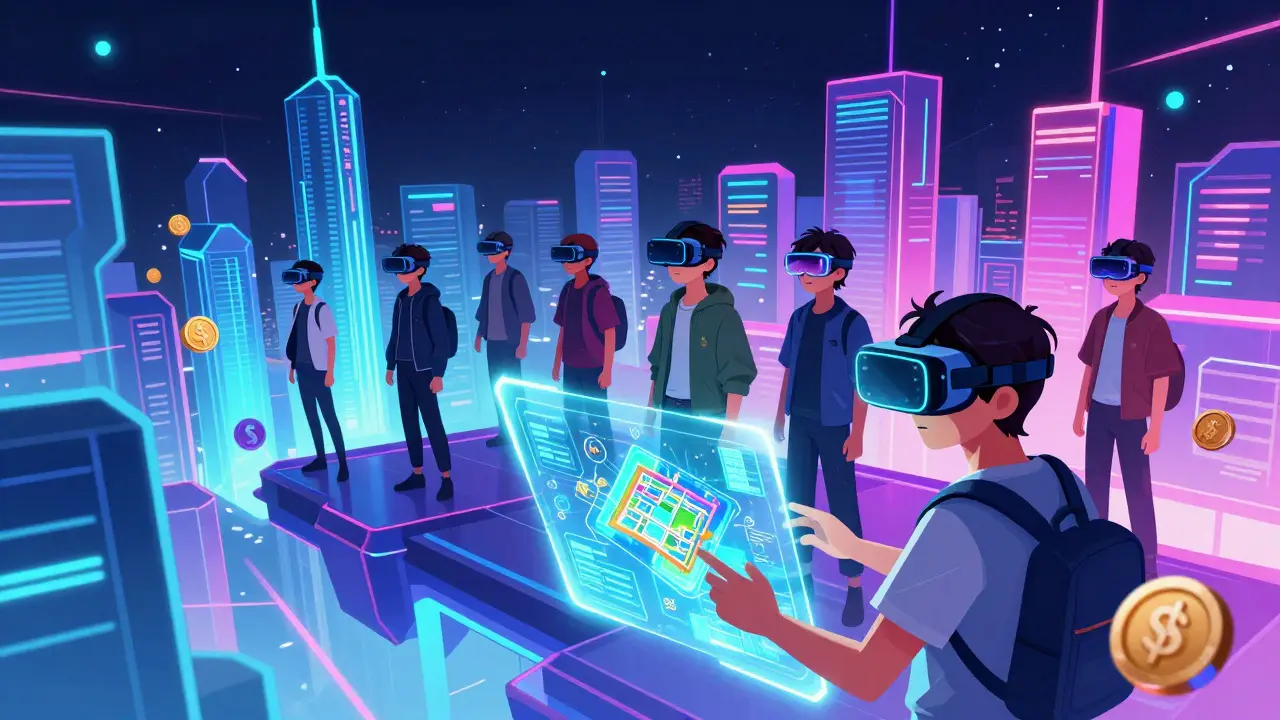
Imagine buying a plot of land in a digital city, renting it out to a virtual brand for advertising space, and getting paid in cryptocurrency. This isn't science fiction; it is the daily reality for users in the metaverse. But how does this economy actually work? It runs on metaverse cryptocurrency and tokens-digital assets that act as the financial backbone for virtual worlds.
As we move through 2026, the line between physical and digital value continues to blur. The metaverse crypto sector has grown into a multi-billion dollar market, with over 100 distinct assets powering everything from gaming experiences to decentralized computing networks. Whether you are a gamer looking to monetize your skills, an investor curious about the next big trend, or a creator wanting to build in VR, understanding these tokens is essential.
What Are Metaverse Cryptocurrencies?
At its core, a metaverse cryptocurrency is a digital currency designed specifically for use within virtual reality platforms and decentralized worlds. Unlike Bitcoin, which aims to be a store of value or medium of exchange in the real world, metaverse tokens are utility-focused. They have specific jobs inside their respective ecosystems.
These tokens generally fall into two categories:
- Currency Tokens: Used to buy goods, services, and land within the metaverse (e.g., MANA, SAND).
- Governance Tokens: Give holders voting rights on platform decisions and future development.
The technical architecture usually relies on the ERC-20 standard on the Ethereum blockchain. This ensures interoperability, meaning your token can interact with various smart contracts, wallets, and decentralized exchanges (DEXs) seamlessly. Without this underlying blockchain infrastructure, the concept of true digital ownership would not exist.
Key Players in the Metaverse Economy
The metaverse landscape is crowded, but a few projects stand out due to their utility, community size, and technological innovation. Let’s look at the entities that define this sector.
Decentraland (MANA)
Launched in 2017 after a successful $24 million ICO, Decentraland is often cited as the pioneer of blockchain-based virtual real estate. The native token, MANA, is used to purchase parcels of land, wearables, and other assets. These land plots are converted into Non-Fungible Tokens (NFTs), creating unique ownership structures. As of recent data, MANA trades around $0.28 with a market capitalization exceeding $550 million. Its primary value proposition lies in its established user base and the ability to host events, galleries, and games where users can earn cryptocurrency directly.
The Sandbox (SAND)
The Sandbox differentiates itself by focusing heavily on creation tools. Launched in 2018, it allows users to build, own, and monetize their gaming experiences using voxel-based assets. The SAND token powers the economy, facilitating payments for land, assets, and staking rewards. What sets The Sandbox apart is its comprehensive development environment, which doesn’t require coding knowledge for basic asset creation. This lowers the barrier to entry for artists and gamers who want to participate in the metaverse economy without being software engineers.
Render Network (RENDER)
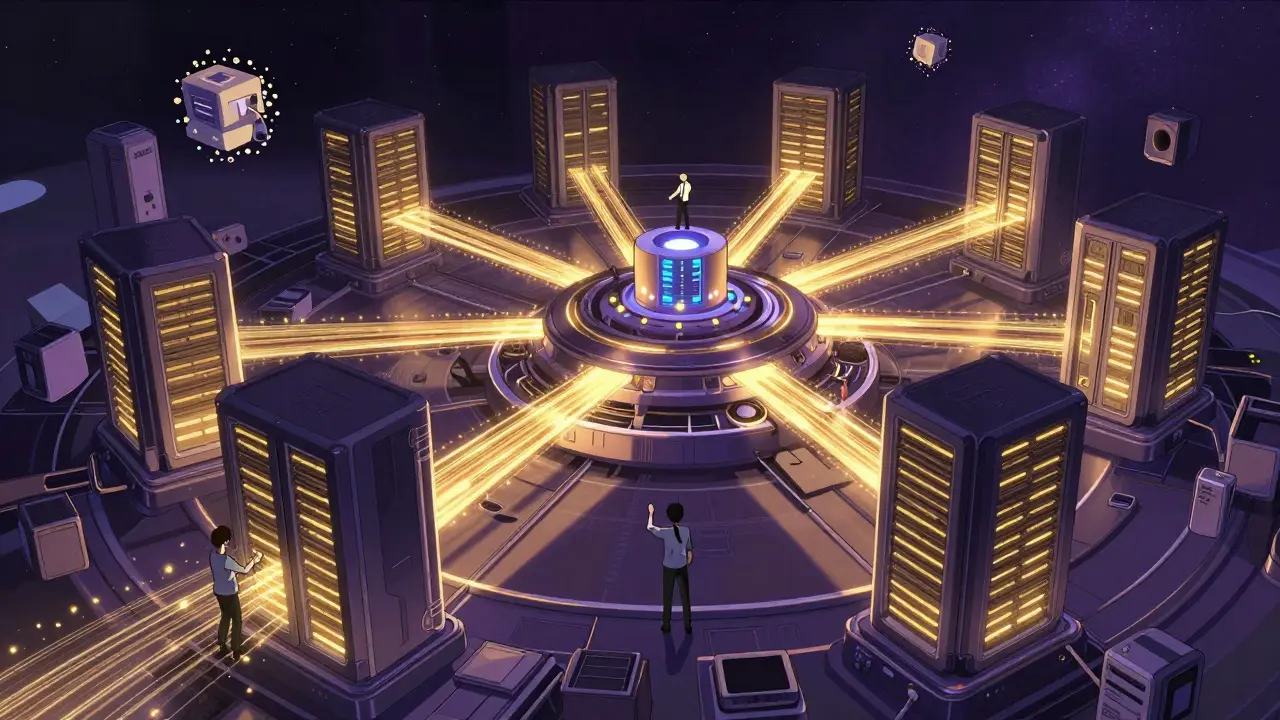
Not all metaverse tokens are tied to a specific virtual world. Render Network exemplifies a different approach: decentralized infrastructure. RENDER is the utility token for a distributed GPU rendering network. In simple terms, 3D artists contribute their unused computer processing power to render complex graphics for others, and they get paid in RENDER. With a market cap near $1.9 billion, it highlights how metaverse economies also rely on backend computational resources. As AI and high-fidelity graphics become more demanding, the need for distributed computing grows, making RENDER a critical component of the broader metaverse tech stack.
ApeCoin (APE)
ApeCoin serves as the transaction token for the Otherside virtual environment, associated with the Bored Ape Yacht Club ecosystem. It empowers holders to purchase land, invest in virtual real estate, and participate in in-game experiences. Interestingly, it bridges the gap between meme coins and serious utility, showing how strong brand communities can drive adoption in virtual spaces.
| Token | Primary Use Case | Blockchain | Key Feature |
|---|---|---|---|
| MANA | Virtual Real Estate & Goods | Ethereum | Pioneer status, large land map |
| SAND | Game Creation & Asset Trading | Ethereum | No-code building tools |
| RENDER | Distributed GPU Rendering | Ethereum/Solana | Infrastructure for 3D/AI content |
| APE | Otherside Ecosystem Access | Ethereum | Strong brand community backing |
How the Metaverse Economy Works
You might wonder how money moves in a place that doesn’t physically exist. The process relies on three main pillars: ownership, interaction, and liquidity.
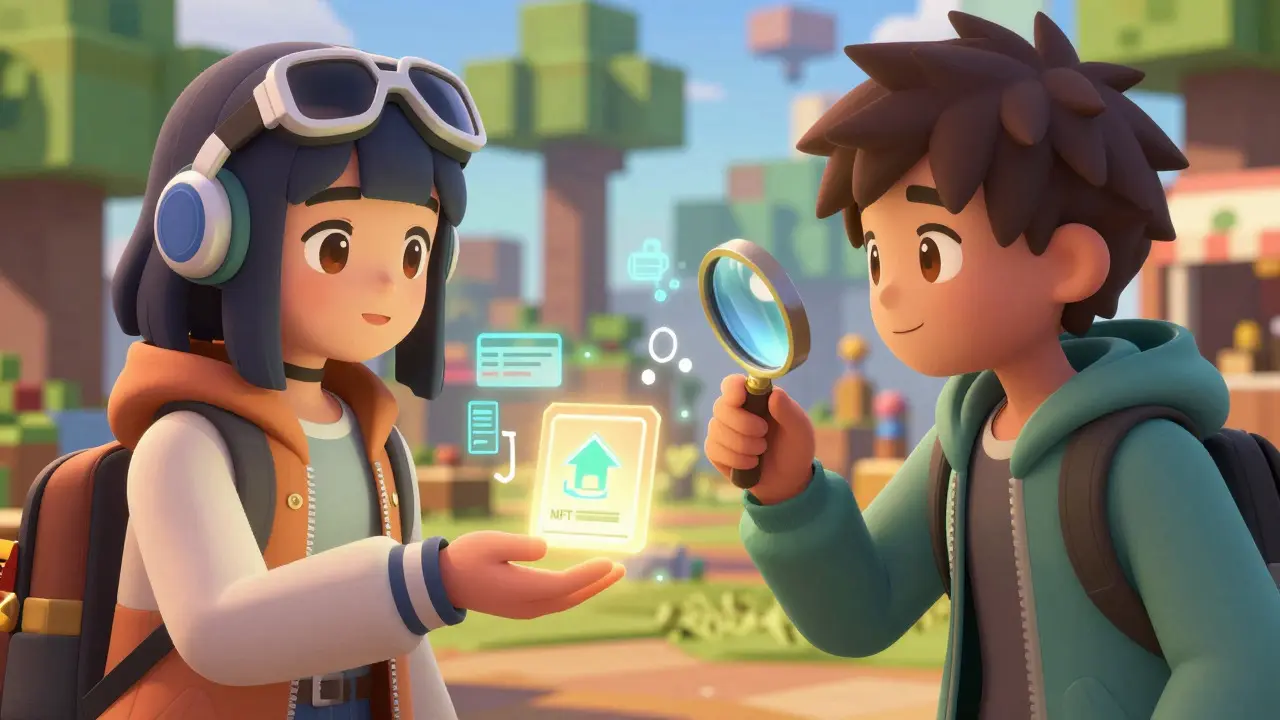
- Ownership via NFTs: When you buy land in Decentraland or an avatar skin in The Sandbox, you aren’t just receiving a file. You receive an NFT-a cryptographic proof of ownership stored on the blockchain. This means no one else can copy or take your asset without your permission.
- Transactions via Tokens: To buy that NFT, you need the native token (like MANA or SAND). You swap your fiat currency or major cryptocurrencies (like ETH or USDT) for these tokens on an exchange.
- Liquidity through Marketplaces: If you decide to sell your virtual land, you list it on the platform’s marketplace. Buyers pay with tokens, and the smart contract automatically transfers the NFT to them and the tokens to you. This creates a liquid market where assets can change hands globally, 24/7.
This system enables new economic models. For example, a user can lease their virtual land to a fashion brand for a pop-up store. The brand pays rent in tokens, which the landowner can then convert back to cash or reinvest. This "play-to-earn" or "create-to-earn" dynamic is what attracts millions of users beyond just gaming enthusiasts.
Getting Started: A Practical Guide
If you want to dip your toes into the metaverse economy, here is the step-by-step process most users follow. Keep in mind that while the technology is powerful, it comes with a learning curve.
Step 1: Set Up a Crypto Wallet
You cannot interact with most metaverse platforms using a traditional bank account. You need a non-custodial wallet like MetaMask. This browser extension acts as your gateway to the blockchain. It holds your private keys, which prove ownership of your assets. Pro tip: Write down your seed phrase on paper and keep it safe. If you lose it, you lose access to your funds forever.
Step 2: Acquire Base Currency
Create an account on a reputable cryptocurrency exchange like Coinbase, Binance, or KuCoin. Buy Ethereum (ETH) or a stablecoin like USDC. Most metaverse tokens are paired with ETH, so having ETH makes swapping easier.
Step 3: Swap for Metaverse Tokens
Connect your MetaMask wallet to a decentralized exchange (DEX) like Uniswap. Here, you can swap your ETH for MANA, SAND, or RENDER. Be aware of gas fees-the cost to process transactions on Ethereum. During peak times, these fees can be high, so timing matters.
Step 4: Connect to the Platform
Visit the website of the metaverse platform you wish to join (e.g., decentraland.org). Click "Connect Wallet." Once connected, you can browse the marketplace, view available lands, or start creating assets if the platform supports it.
Risks and Challenges to Consider
While the potential is exciting, the metaverse crypto space is not without risks. It is crucial to approach it with eyes wide open.
- Market Volatility: Token prices can swing wildly. A project might surge 20% in a day and drop 30% the next. Never invest more than you can afford to lose.
- Technical Complexity: Managing wallets, understanding gas fees, and avoiding phishing scams requires education. Newcomers often fall victim to fake websites or malicious smart contracts.
- Regulatory Uncertainty: Regulations vary by country. In some jurisdictions, virtual assets may be subject to strict taxation or trading restrictions. Stay informed about local laws.
- Adoption Hurdles: Not every virtual world becomes a hit. Many projects launch with hype but fail to retain users. Look for platforms with active communities and regular updates.
User feedback from forums like Reddit highlights common complaints: high transaction costs during congestion and steep learning curves for creation tools. However, advancements in Layer-2 scaling solutions are gradually reducing these costs, making the experience smoother for everyday users.
The Future Outlook: 2026 and Beyond
Industry analysts predict continued growth for the metaverse sector, driven by improvements in VR/AR hardware and AI integration. The market capitalization of metaverse assets has already reached nearly $20 billion, representing a small but growing slice of the broader $3 trillion crypto market.
Key trends to watch include:
- Interoperability: Efforts to allow assets (like avatars or skins) to move between different metaverse platforms. Imagine wearing a jacket bought in The Sandbox while visiting Decentraland.
- AI-Generated Content: Tools like those powered by Render Network will make creating high-quality 3D assets faster and cheaper, fueling the supply side of the economy.
- Institutional Adoption: More brands and enterprises are exploring virtual headquarters and marketing campaigns, bringing deeper pockets and stability to the ecosystem.
Long-term viability will depend on sustainable tokenomics-ensuring that tokens have real utility rather than relying solely on speculation. Projects that solve actual problems for creators and users will likely survive and thrive.
Is metaverse cryptocurrency a good investment?
It depends on your risk tolerance. Metaverse tokens are highly volatile and speculative. While projects like Decentraland and The Sandbox have established ecosystems, there is no guarantee of future price appreciation. Diversify your portfolio and only invest what you can afford to lose.
Do I need VR glasses to use metaverse tokens?
No. Most metaverse platforms are accessible via web browsers on computers and mobile devices. VR headsets enhance the immersion but are not required for buying, selling, or managing assets.
What is the difference between MANA and SAND?
Both are utility tokens for virtual worlds, but they serve different platforms. MANA is used in Decentraland, which focuses on social hubs and real estate. SAND is used in The Sandbox, which emphasizes game creation and user-generated content. Their values are influenced by the activity and popularity of their respective platforms.
How do I avoid scams in the metaverse?
Always verify URLs before connecting your wallet. Use reputable exchanges and official platform websites. Never share your seed phrase with anyone. Be cautious of unsolicited messages offering "free" NFTs or tokens, as these are often phishing attempts.
Can I earn passive income with metaverse tokens?
Yes, through mechanisms like staking or leasing. For example, you can stake SAND tokens to earn rewards or lease virtual land in Decentraland to advertisers. However, yields vary, and there is always a risk of token devaluation offsetting earnings.