
Is it legal to mine cryptocurrency in Nigeria? The short answer is yes, but the long answer is complicated. As of mid-2026, there is no specific law that explicitly bans Cryptocurrency mining is the process of using computational power to validate transactions and secure blockchain networks. However, operating a mining business without navigating a dense web of regulations can lead to frozen bank accounts, heavy fines, or even license revocation. The landscape shifted dramatically with the passage of major legislation in 2025, moving the country from a regulatory grey area into a structured, albeit strict, compliance environment.
The New Legal Framework: ISA 2025 and SEC Oversight
For years, miners operated in the shadows because the rules were unclear. That changed with the Investments and Securities Act (ISA) 2025 is legislation passed in 2025 that defines virtual assets as securities under Nigerian law.. This act brought much-needed clarity by placing digital assets under the direct oversight of the Securities and Exchange Commission (SEC) is the primary regulatory body for capital markets and virtual assets in Nigeria..
Under Section 357 of the ISA 2025, virtual assets are legally defined as securities. What does this mean for you? It means licensing is now mandatory. If your mining operation interfaces with exchange services, offers mining-as-a-service, or interacts directly with retail users, you are considered a Virtual Asset Service Provider (VASP). You must apply for an SEC license. This applies to both local companies and foreign entities targeting Nigerian users.
The SEC’s Digital Assets Rules 2022, reinforced by the ISA 2025, require VASPs to meet rigorous standards. These include maintaining paid-up capital, securing fidelity bonds, registering as a Nigerian corporation, and establishing a local office with resident management. The goal is investor protection and market stability. Early adopters like Quidax is a licensed cryptocurrency exchange platform in Nigeria. and Busha is another licensed crypto exchange that received provisional approval from the SEC. received provisional licenses in late 2024, setting a precedent for others to follow. However, the vetting process is thorough and slow. Expect delays if you plan to register soon.
Banking Restrictions and the CBN Factor
Even with an SEC license, accessing traditional banking remains a hurdle. In February 2021, the Central Bank of Nigeria (CBN) is the central monetary authority of Nigeria that regulates banks and currency. issued a directive prohibiting financial institutions from facilitating cryptocurrency transactions. While the CBN lifted this ban in late 2023, allowing banks to service *licensed* crypto businesses, the stigma and caution remain high.
Many banks still treat crypto-related accounts with suspicion. For miners, this means you cannot simply open a corporate account and expect smooth operations. You will likely need to prove your SEC licensing status repeatedly. To bypass these friction points, many Nigerian miners rely on peer-to-peer (P2P) exchanges and decentralized finance (DeFi) protocols. Between July 2024 and June 2025, Nigerians moved an estimated $92.1 billion in digital assets via P2P channels, nearly double South Africa's activity. This surge highlights how critical non-banking channels are for the ecosystem.
Taxation Changes: NTAA 2025 and Heavy Penalties
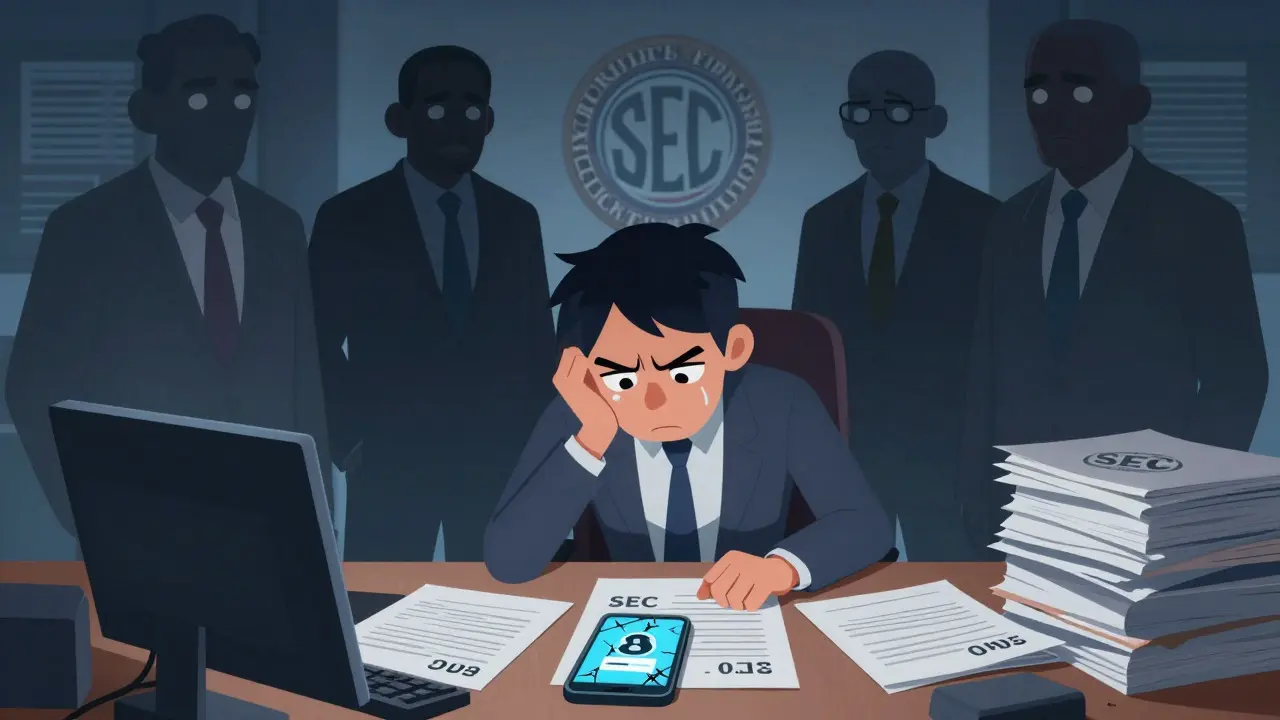
If you thought regulation was just about licenses, think again. The Nigeria Tax Administration Act (NTAA) 2025 is tax legislation signed in June 2025 that imposes strict reporting and penalty structures on virtual asset service providers., effective in 2026, introduces severe financial consequences for non-compliance. This law puts VASPs directly in the regulators' crosshairs.
Here is what you need to know about the penalties:
- Initial Fine: ₦10 million ($6,693) for the first month of non-compliance.
- Monthly Penalty: An additional ₦1 million ($669) for every subsequent month of default.
- License Revocation: The SEC has the power to suspend or revoke licenses, effectively shutting down your operation.
This marks a shift from inconsistent enforcement to aggressive compliance. The government is signaling that unauthorized mining operations face significant risks. You must track your revenues, report accurately, and pay taxes on time. Ignorance of the law is no longer a valid defense when the penalties are this steep.
Infrastructure Challenges: Power and Profitability
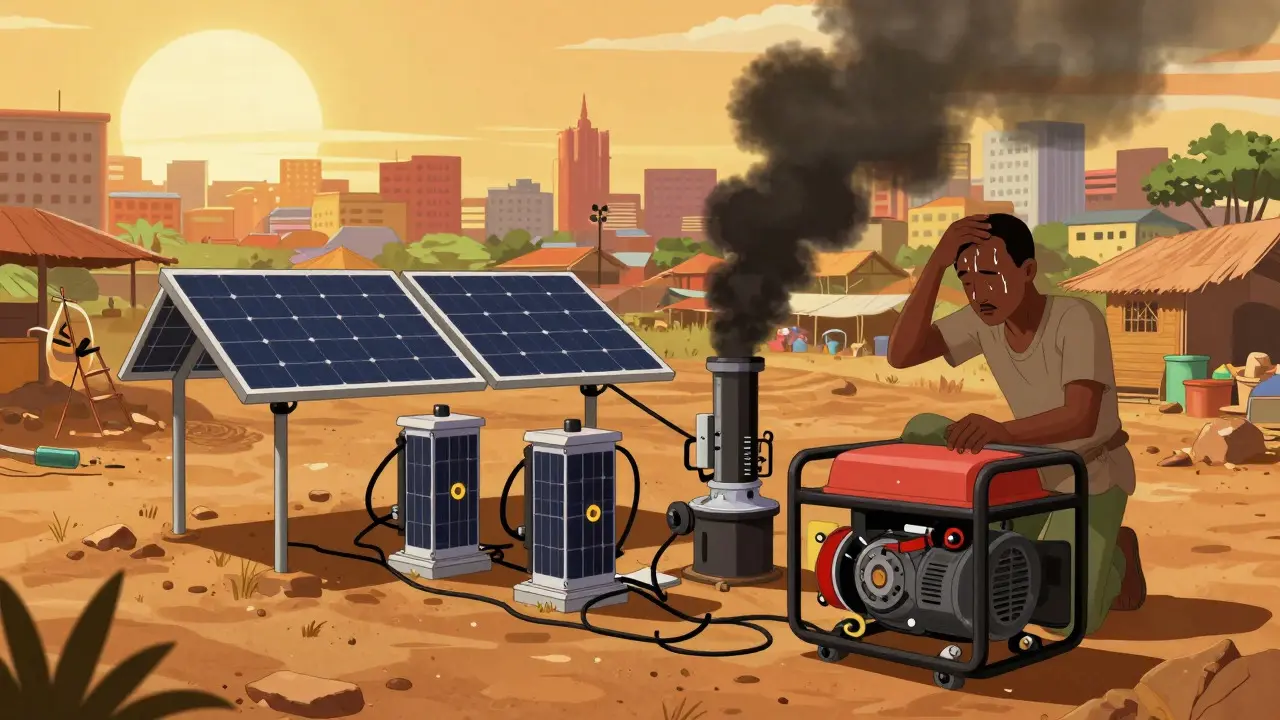
Laws aside, the physical reality of mining in Nigeria is harsh. The high cost of electricity and sporadic power supply pose existential threats to profitability. Most large-scale miners have relocated to countries like Canada or Kazakhstan, where energy is abundant and cheap, and regulations are clear. In Nigeria, you often need multiple diesel generators to keep rigs running during grid outages. This drastically increases operational costs (OpEx).
However, some smaller, decentralized mining farms persist by leveraging renewable energy sources or participating in community solar projects. The key is efficiency. Using outdated ASIC miners is a recipe for disaster. You need the latest hardware with the best hash-per-watt ratio to survive the high energy costs. Without access to subsidized industrial power, scaling up is difficult.
| Factor | Nigeria (2026) | Canada / Kazakhstan |
|---|---|---|
| Legal Status | Legal but heavily regulated (SEC License required) | Clear legal frameworks, often incentivized |
| Banking Access | Restricted; requires proof of licensing; high friction | Full integration with traditional banking |
| Energy Cost | High; reliance on expensive diesel/generators | Low; access to hydroelectric or natural gas |
| Tax Penalties | Severe (₦10M+ initial fine under NTAA 2025) | Standard corporate tax rates |
| Market Activity | Very High P2P volume ($92.1B in 2024/25) | High institutional adoption |
Anti-Money Laundering (AML) and KYC Compliance
Beyond the SEC and CBN, you must comply with the National Anti-Money Laundering Act, which has been amended to cover virtual assets. This adds another layer of bureaucracy. Your mining operation must implement robust Know Your Customer (KYC) procedures if you interact with end-users. The Economic and Financial Crimes Commission (EFCC) and the Nigerian Financial Intelligence Unit (NFIU) work closely with the SEC to monitor suspicious activities.
The ISA 2025 also gives regulators enhanced tools to combat fraud, including access to telecom records for investigations. Ponzi schemes are explicitly banned. If your mining pool or service resembles a high-yield investment program, you are at risk of being shut down. Transparency is not optional; it is a survival requirement.
Future Outlook and Strategic Advice
Nigeria’s approach is shifting from rigid caution to measured acceptance. The National Blockchain Policy 2023 encourages technology adoption for economic prosperity, though it doesn’t specifically regulate crypto markets. The focus is on talent development and innovation. For miners, this suggests a future where legitimate, compliant operations thrive, while rogue actors are squeezed out.
To succeed in 2026 and beyond, consider these steps:
- Secure Licensing: Apply for your SEC VASP license early. The process is slow, so start now.
- Bank Relationships: Build strong relationships with banks that understand fintech. Be prepared to show your license and audit trails.
- Energy Efficiency: Invest in top-tier ASIC hardware and explore renewable energy partnerships to lower OpEx.
- Tax Compliance: Hire a tax advisor familiar with the NTAA 2025. Do not cut corners here.
- Monitor Regulations: The landscape is still evolving. Stay updated on SEC announcements and CBN directives.
Mining crypto in Nigeria is no longer a wild west scenario. It is a regulated industry with high barriers to entry. But for those who can navigate the legal maze and manage infrastructure costs, the massive local demand for digital assets presents a unique opportunity.
Is crypto mining illegal in Nigeria in 2026?
No, crypto mining is not explicitly illegal. However, it is heavily regulated. You must obtain a license from the Securities and Exchange Commission (SEC) if you operate as a Virtual Asset Service Provider (VASP). Operating without a license can lead to fines and shutdowns.
What are the penalties for non-compliant crypto businesses?
Under the Nigeria Tax Administration Act (NTAA) 2025, non-compliant VASPs face an initial fine of ₦10 million ($6,693) for the first month of default, plus ₦1 million ($669) for each subsequent month. The SEC can also revoke your license.
Can I use traditional banks for my mining business?
Yes, but only if you are licensed by the SEC. The Central Bank of Nigeria (CBN) lifted its ban on banking services for licensed crypto firms in late 2023. However, many banks remain cautious, so you may need to provide extensive documentation.
Which exchanges are currently licensed in Nigeria?
As of late 2024, Quidax and Busha received provisional licenses from the SEC. More companies are expected to be approved as the vetting process continues under the ISA 2025 framework.
How does the ISA 2025 affect individual miners?
If you are a solo miner selling coins on P2P platforms, the impact is minimal unless you scale up to a business level. However, if you offer mining services to others or run a pool, you fall under VASP regulations and need an SEC license.
Marcia Albert
August 13, 2026 AT 02:10Man, reading this feels like watching a soap opera where the plot twists are just more red tape and fines. It’s wild how they went from 'we don’t know what crypto is' to 'pay us ten million naira or else.' I guess that’s the Nigerian experience in a nutshell. You try to do something new, and suddenly you’re navigating a minefield of bureaucracy that changes faster than the weather.
Ed Mitchell
August 13, 2026 AT 08:31The entire premise of this regulatory shift is nothing more than a sophisticated wealth extraction mechanism designed by globalist elites who despise financial sovereignty. They claim it is for investor protection, but look at the numbers. The SEC needs revenue, and the CBN needs control. It is a coordinated effort to strangle decentralized finance before it can truly challenge the fiat monopoly. Do not be fooled by the language of compliance. It is a trap for the unwary citizen.
Michael Mostyn
August 14, 2026 AT 05:39One must consider the philosophical implications of state-sanctioned mining versus individual enterprise. If the state mandates licensing, does the act of mining cease to be a technological endeavor and become merely a bureaucratic exercise? The ISA 2025 seems to prioritize order over innovation, which is a classic tension in political theory. We are witnessing the institutionalization of chaos, which is paradoxically stable yet stifling.
Ken G
August 15, 2026 AT 15:28typical government move. they see people making money outside their system so they jump in with heavy hands. its not about safety its about control. if you have to pay millions just to exist legally then its not a business its a tax farm. simple as that. most small guys will just go underground anyway because the cost is too high. lets see how long these laws last when the power goes out again
Erica Johnson
August 16, 2026 AT 19:47You guys are missing the obvious point here. The banking restrictions are still the real killer. Having an SEC license is useless if your bank manager freezes your account because he had a bad day. I’ve seen it happen. You need to be smart about P2P. Also, don’t ignore the tax penalties. ₦10 million is no joke. Stay compliant or stay home. :)
Lorraine Surringer
August 18, 2026 AT 02:27Honestly, the energy situation is what breaks my heart every time. How can you expect profitability when you are burning diesel just to keep the lights on? It’s tragic. The article mentions renewable energy but that’s such a drop in the ocean right now. We need infrastructure first, regulation second. But sure, let’s fine people for existing while the grid collapses. Typical.
Matthew Smith
August 19, 2026 AT 08:58Morally speaking the state has a duty to protect citizens from fraud hence the KYC requirements. However practically it becomes a tool for oppression. The line between protection and persecution is thin. One must ask if the end justifies the means. In this case the means seem overly aggressive. The moral high ground is lost when the penalty exceeds the crime. Justice should be blind but here it seems to favor those with deep pockets.
Prudence Flemming
August 20, 2026 AT 05:20the jargon around VASP and ASIC miners is getting out of hand but the core issue is decentralization vs centralization. the sec wants to centralize control over a decentralized network. its a fundamental clash of ideologies. hash rate doesn't care about licenses. the market will find a way regardless of the ntta 2025. adaptation is key for survival in this ecosystem.
Matt Kay
August 20, 2026 AT 17:44boring read. too much legal stuff. just tell me if i can make money or not. seems like its hard now.
Dave Kjendal
August 22, 2026 AT 02:23Everyone talks about the laws but nobody talks about the hardware depreciation. You buy an ASIC today and in two years it's e-waste unless you're super efficient. Combine that with the high electricity costs in Nigeria and you're basically donating money to the grid operator. The only winners are the ones with subsidized power or foreign investors who don't mind the hassle. For the local guy it's a tough grind.
Kat Bennett
August 22, 2026 AT 06:26I actually think this is a positive step in the long run even if it feels painful right now. Clarity is better than ambiguity. At least now we know the rules of the game. If you can get licensed and secure good energy sources there is definitely room for growth. The demand for crypto in Nigeria is huge so the market is there. We just need to navigate the initial hurdles carefully and build sustainable operations rather than quick fixes. It’s exciting to see the industry maturing despite the challenges.
Candice Cornett
August 22, 2026 AT 18:37Oh please. The idea that this is 'structured' is laughable. It’s just another layer of corruption waiting to happen. Who gets the licenses? Those with connections. The rest of us are left guessing. And don’t get me started on the tax penalties. It’s punitive by design. They want to scare small players out so big fish can dominate. It’s not fair it’s not just and it certainly isn’t helpful for innovation. Just another reason to leave.