
Most traders face a frustrating choice in the crypto world. You can use a centralized exchange like Binance or Coinbase for speed and liquidity, but you have to hand over your private keys and trust a corporation with your funds. Or, you can use a fully decentralized exchange (DEX) to keep control of your assets, but you often deal with slow transactions, high slippage, and confusing interfaces. RubyDex claims to solve this problem by offering a hybrid model that gives you the speed of a centralized exchange while keeping your funds in your own wallet.
But does it actually work? And is it safe to use? This review breaks down RubyDex’s unique approach to trading perpetual futures, including its controversial expansion into traditional stocks and NFTs. We’ll look at the technology, the risks, and whether this platform has the traction needed to be a serious player in the DeFi space.
What Is RubyDex?
RubyDex is a Layer-2 derivatives decentralized exchange designed to bridge the gap between centralized exchanges (CEXs) and decentralized finance (DeFi). It allows users to trade linear contract perpetual futures across multiple blockchains without giving up custody of their assets. Unlike typical DEXs that rely on automated market makers (AMMs) which can suffer from high slippage during volatile markets, RubyDex uses an order book model similar to what you see on traditional stock exchanges.
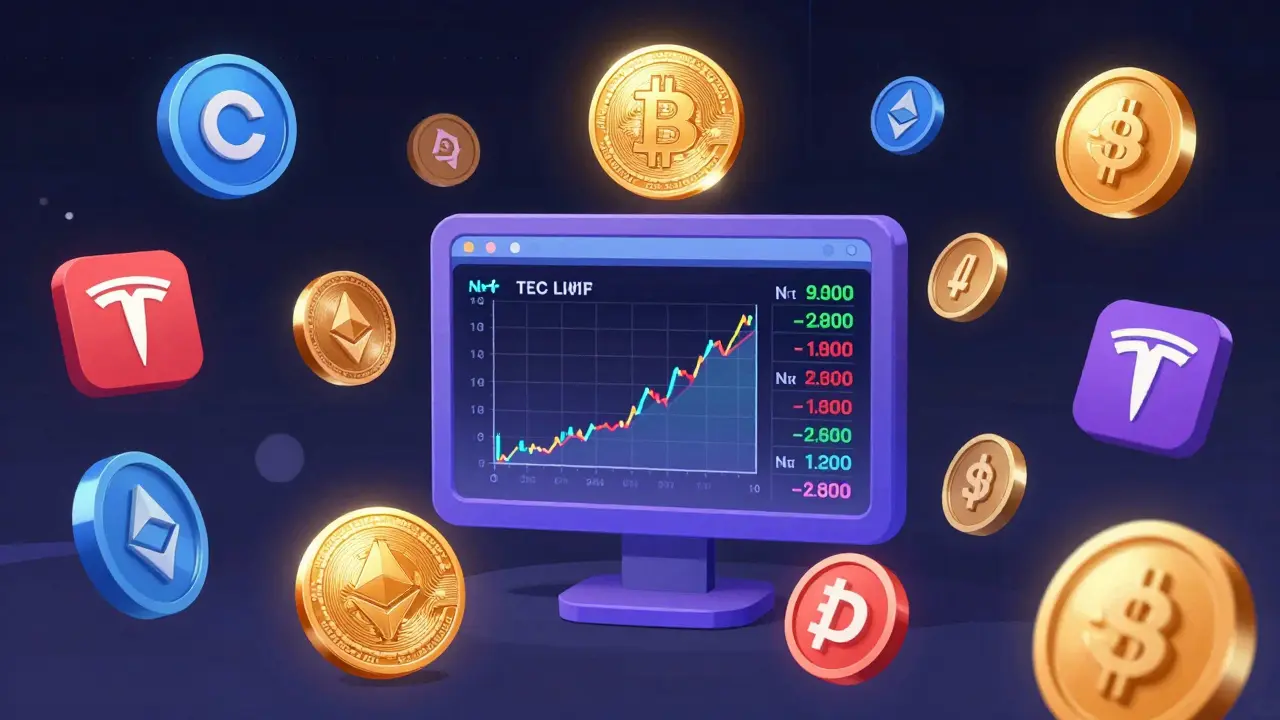
The platform distinguishes itself by not just offering crypto pairs. It also lists perpetual contracts for traditional financial assets like stocks, forex, and commodities. Additionally, it positions itself as a leader in NFT perpetuals, allowing traders to speculate on the floor price of NFT collections using data from major marketplaces like Blur, OpenSea, and LooksRare. This broad asset range is ambitious, aiming to tap into the trillions of dollars traded daily in traditional markets.
How the Hybrid Architecture Works
The core innovation of RubyDex is its hybrid architecture. Pure decentralized exchanges run entirely on-chain, which means every trade requires a blockchain transaction. This can be slow and expensive due to gas fees. Centralized exchanges run off-chain on fast servers, which is why trades execute instantly, but they hold your money.
RubyDex splits the difference:
- Centralized Zones: Cloud servers host the core trading engine. This handles order matching, limit orders, and market orders with the speed of a CEX. This ensures low latency and minimal slippage.
- Decentralized Zones: Your wallet interacts exclusively with these zones. Your funds never leave your custody until you explicitly approve a withdrawal or deposit. Smart contracts manage the settlement layer, ensuring that even if the central server goes down, your assets are secured on-chain.
This setup requires users to connect their Web3 wallets (like MetaMask or WalletConnect) to start trading. There is no Know Your Customer (KYC) process required for basic access, maintaining the privacy and self-custody benefits of DeFi.
Trading Features and Asset Classes
RubyDex supports a wide variety of instruments, which is rare for a single DEX interface. Here is what you can trade:
| Asset Type | Description | Key Feature |
|---|---|---|
| Cryptocurrencies | BTC, ETH, and other major altcoins | Linear perpetual futures with leverage |
| Traditional Assets | Stocks (e.g., Tesla, Apple), Forex, Commodities | Synthetic exposure to TradFi markets via smart contracts |
| NFTs | Floor price indices of top NFT collections | Trade NFT value trends without owning the actual art |
The platform uses an innovative liquidity pool system where Liquidity Providers (LPs) lend assets to professional market makers. These LPs earn flexible Annual Percentage Yields (APYs) based on interest rates paid by the market makers. This helps enrich the order books, providing better prices for traders. For withdrawals, you select your wallet, network, and amount, then pay the standard gas fee for the chosen blockchain. Transactions can be verified via public block explorers.
Liquidity and Market Adoption Risks
While the technology sounds promising, the current state of adoption raises significant red flags. As of mid-2025, data from HittinCorners.com indicates that RubyDex reports $0.0M in Total Value Locked (TVL). In the world of DeFi, TVL is a crucial metric that shows how much capital users trust in the platform. A zero or near-zero TVL suggests very limited market penetration.
Compare this to established derivatives DEXs:
- GMX: Reported approximately $336M TVL in late 2024.
- Kwenta: Held around $108M TVL.
- ApeX Protocol: Maintained roughly $84M TVL.
RubyDex is listed as an "Untracked Listing" on CoinMarketCap due to unverified volume data. This lack of transparent, verifiable trading volume makes it difficult to assess true performance. If there is no liquidity, you may face issues executing large orders or could experience extreme slippage despite the order book design. The absence of user reviews on platforms like Trustpilot or Reddit’s r/DeFi community further indicates that the platform has not yet achieved meaningful user base validation.
Regulatory Challenges with Traditional Assets
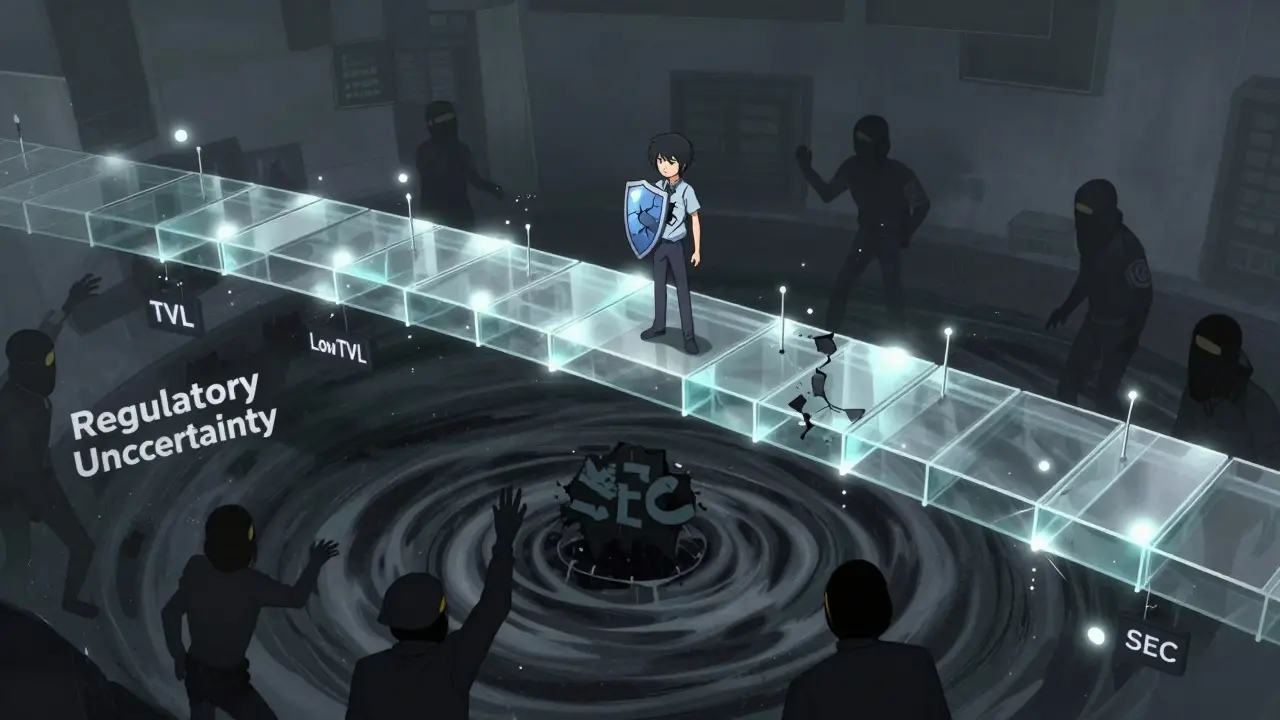
One of RubyDex’s biggest selling points-trading stocks and commodities-is also its biggest risk. Trading synthetic versions of real-world assets like Tesla stock or Gold on a decentralized platform operates in a legal gray area. In the United States, the Securities and Exchange Commission (SEC) has taken aggressive enforcement actions against platforms facilitating unregistered securities trading. For example, in July 2024, the SEC filed cases against various DAOs and protocols offering tokenized equities.
If regulators decide that RubyDex’s stock perpetuals constitute unregistered securities, the platform could face bans in certain jurisdictions or legal action. This regulatory uncertainty is a factor that pure crypto DEXs do not face to the same extent. Users should be aware that trading these traditional assets on a DeFi platform carries higher counterparty and legal risks than trading Bitcoin or Ethereum.
Who Should Use RubyDex?
RubyDex is likely best suited for experienced DeFi users who want exposure to non-crypto assets without leaving the blockchain ecosystem. It appeals to traders who:
- Want to trade stock or commodity indices using crypto collateral.
- Are interested in speculating on NFT floor prices without buying individual NFTs.
- Prefer an order-book interface over AMM pools.
However, it is not recommended for beginners or those prioritizing maximum security and liquidity. Given the low TVL and untracked status, new users might find more stability and depth on established platforms like GMX or dYdX for crypto derivatives, and regulated brokers for traditional assets.
Alternatives to Consider
If RubyDex’s liquidity concerns you, consider these alternatives:
- GMX: Best for deep liquidity and simple UI in crypto perpetuals.
- dYdX: Offers a robust order-book experience for crypto derivatives with strong decentralization credentials.
- Perpetual Protocol: A composable protocol focused specifically on crypto perpetual futures.
Each of these has significantly higher TVL and community verification, reducing the risk of illiquidity.
Is RubyDex safe to use?
Safety depends on your definition. Technically, RubyDex keeps funds in your wallet, which reduces custodial risk. However, the smart contracts are relatively new, and the platform has low liquidity ($0.0M TVL reported in 2025). Low liquidity increases the risk of slippage and potential exploitation by bad actors. Always audit the contract addresses yourself and never invest more than you can afford to lose.
Does RubyDex require KYC?
No, RubyDex does not require Know Your Customer (KYC) verification for basic trading. You simply connect your Web3 wallet. However, because it offers traditional asset derivatives, future regulatory changes could force them to implement restrictions in certain countries.
Why is RubyDex listed as 'Untracked' on CoinMarketCap?
CoinMarketCap classifies projects as 'Untracked' when they cannot verify sufficient trading volume or liquidity data. This suggests that RubyDex’s reported metrics may not meet the threshold for reliable tracking, indicating lower market activity compared to top-tier exchanges.
Can I trade real stocks on RubyDex?
You trade synthetic perpetual contracts that mirror the price movement of stocks, not the actual shares. You do not receive dividends or voting rights. These are derivative products settled in crypto, which carry different risks than holding actual equity.
What are the fees on RubyDex?
Fees typically include trading fees (maker/taker fees) and gas fees for blockchain transactions. Because it is a Layer-2 solution, gas fees should be lower than mainnet Ethereum transactions, but specific fee schedules vary by pair and volatility. Check the platform interface for current rates before trading.
Nick G
July 9, 2026 AT 15:13It is truly fascinating to observe the evolution of financial instruments in this digital age, where the boundaries between traditional finance and decentralized protocols become increasingly blurred. The concept of a hybrid exchange that attempts to marry the liquidity of centralized entities with the sovereignty of self-custody is not merely a technological aspiration but a philosophical statement about trust in modern markets. One must consider that while the allure of trading synthetic stocks without KYC is potent for those seeking anonymity, it simultaneously invites a regulatory storm that could reshape the entire landscape of decentralized derivatives. We are witnessing a pivotal moment where innovation outpaces legislation, creating a gray area that both empowers and endangers the participants involved. It is essential to approach such platforms with a deep understanding of the underlying smart contract risks, as the absence of custodial risk does not equate to the absence of systemic vulnerability. The integration of NFT perpetuals is particularly intriguing, offering a novel way to speculate on cultural assets without the burden of ownership, yet it raises questions about the intrinsic value of these indices. As we navigate this complex terrain, let us remember that transparency remains the cornerstone of sustainable growth in any financial ecosystem, regardless of its decentralization level.
KEITH WONG
July 10, 2026 AT 07:36lol zero tvl 😂 u guys really believe this hype? 📉🤡
Natalie Lucas
July 11, 2026 AT 08:07honestly i feel like everyone is just ignoring the red flags here because they want to believe in the next big thing 💅✨ but like... if there's no money in the pool, how do you even trade? it feels kinda sketchy to me tbh
Ruth Williams
July 13, 2026 AT 07:49The notion that one can trade unregistered securities via a decentralized protocol without facing severe legal repercussions is fundamentally flawed and demonstrates a profound ignorance of international financial regulations. The SEC has made it unequivocally clear that tokenized equities are subject to strict compliance frameworks, and any platform facilitating such trades operates under the shadow of imminent enforcement action. To suggest otherwise is not only misleading but potentially dangerous for unsuspecting retail investors who may find themselves holding worthless contracts should the platform be shut down. Furthermore, the lack of verified volume data is not merely an oversight; it is a glaring indicator of market irrelevance and potential fraud. Prudent investors would do well to steer clear of such unvetted entities and instead focus on established, compliant exchanges that offer genuine security and transparency.
Michelle Walker
July 13, 2026 AT 21:53stop pretending its safe. its a rug waiting to happen. 🚩
John Harman
July 14, 2026 AT 01:23Look, I've been in crypto since 2013 and I've seen every 'hybrid' model come and go. This is just another attempt to copy dYdX but with worse tech and zero users. The order book is fake because there's no real liquidity. You're trading against the house, and the house always wins. Don't fall for the marketing buzzwords. Stick to GMX or dYdX if you want actual perps. RubyDex is a ghost town.
Hamza k
July 14, 2026 AT 01:47Oh my god, the audacity! 🎭 To think anyone would put their life savings into a platform with $0 TVL is absolutely mind-boggling! It’s like walking into a casino that has no chips and expecting to win the jackpot! The sheer drama of it all is enough to make one faint! 😱
Brad Semp
July 15, 2026 AT 15:18One might argue that the architectural merit of a hybrid DEX is theoretically sound, yet the practical execution appears woefully inadequate. The discrepancy between the promised low-latency trading experience and the reality of non-existent liquidity is stark. Moreover, the inclusion of traditional asset derivatives introduces a layer of regulatory complexity that most DeFi protocols simply cannot manage. It is incumbent upon the developers to provide verifiable proof of reserves and audit trails before considering this platform viable. Until then, it remains a speculative curiosity rather than a functional financial instrument.
Kristy Morrow
July 17, 2026 AT 11:16you say its risky but isn't all crypto risky? why is this different? maybe the masses just dont get it yet. typical contrarian view ignored by the herd 🙄
Korn Arrieta
July 19, 2026 AT 00:54The analysis provided in the article is superficial at best. It fails to address the core issue: counterparty risk in a hybrid model is not eliminated, merely obscured. When you trade on a centralized engine, you are trusting that entity to not manipulate prices or freeze withdrawals during high volatility. The 'decentralized zones' are a marketing gimmick. Smart contracts can be paused or upgraded by admins. Do your own research and look at the governance structure. It is likely centralized. Avoid.
Steven Briggs
July 20, 2026 AT 19:04i see what you mean. seems too good to be true.
Sophie Nakasako
July 22, 2026 AT 18:34I wonder if the lack of TVL is due to a lack of awareness or a lack of trust? Perhaps if they focused on community building first, the liquidity would follow. But trading stocks on-chain is such a unique proposition. What do you think drives people to use these synthetic assets instead of just buying the stock?
Jackie D
July 24, 2026 AT 13:52i guess ppl wanna bet on tesla crashing without needing a brokerage account? kinda wild tho. also the spelling on their site was meh 🤷♀️
Kat Barr
July 25, 2026 AT 04:29Hey everyone!! 👋 Just wanted to chime in and say that while the risks are real, innovation is important! 🌟 Maybe give them a chance? They seem to be trying hard! ✨💖
DJ Maleko
July 25, 2026 AT 18:01nah, tryhard much? 🤡 zero liquidity means zero chance. stay away fam! 📉🔥
Curtis Johnson
July 26, 2026 AT 04:30look, i get the appeal of no kyc but come on... $0 tvl is a massive red flag 🚩. you cant trade if there's no one to trade with. it's just empty promises. please be careful out there folks. don't lose your shirt over a dream.
Kim Kay
July 26, 2026 AT 23:28i agree with curtis. it feels unsafe. why would anyone trust a new platform with no track record? especially with stocks involved. the sec will crush them eventually. better to stick to known dexas like gmx.
Shay Thomson
July 27, 2026 AT 21:32The tragedy of this situation is palpable! 🎭 Here we have a technology that could bridge worlds, yet it stands alone in the desert of liquidity! It is a lonely existence for a protocol! Will it ever find its soulmate in the form of user adoption? Or will it fade into obscurity like so many others? The dramatic irony is not lost on me!
Logan Edmison
July 28, 2026 AT 22:10philosophically speaking, is a tree falling in a forest making a sound if no one is there to hear it? similarly, is a dex real if no one is trading on it? 🤔 prob not. lol.
Russ Fincham
July 30, 2026 AT 08:18From a technical standpoint, the hybrid architecture is interesting but the implementation is lacking. The claim of 'instant execution' is meaningless without depth. If you try to pull more than $1k, you'll slip so hard you'll hit the moon. Not recommended for serious traders. Stick to regulated venues for stocks and established DEXs for crypto.
Linda Hilliard
August 1, 2026 AT 03:49Exactly! 📈 The jargon-heavy marketing hides the simple truth: it's illiquid. Smart money stays away from untracked listings. If you're not seeing volume on CoinMarketCap, you're not seeing real activity. It's a vanity project. 🧐
Antony Lopez
August 3, 2026 AT 02:31This is exactly why we need American regulation. These foreign-coded platforms are a mess. They bypass our laws and leave users unprotected. Shameful. Support domestic, regulated exchanges. Keep our money safe and within borders. 🇺🇸
Winston Lacewing
August 4, 2026 AT 03:31Oh, the humanity! 😱 How dare they ignore the rules! 🚫 It is morally bankrupt to operate in such a gray area! The SEC must step in and save the innocent traders from themselves! 🛑📜 #JusticeForCrypto
Erika Pozzetto
August 4, 2026 AT 09:08It is imperative to note that the absence of Know Your Customer procedures, while appealing to proponents of privacy, significantly exacerbates the potential for illicit activities and regulatory backlash. Furthermore, the reliance on cloud-based order matching engines introduces a single point of failure that contradicts the fundamental ethos of decentralization. Users must exercise extreme caution and conduct thorough due diligence before engaging with such platforms. The long-term viability of this model depends heavily on achieving critical mass in terms of liquidity and user adoption, which currently appears elusive. Therefore, a cautious and measured approach is advisable for all stakeholders involved in this emerging sector.
Nick Wengel
August 5, 2026 AT 19:05just looks like another scam to me. keep your keys, keep your cash elsewhere.