
Remember the early days of Decentralized Finance (DeFi) when every new project promised to revolutionize how we handle money? What is Hakka.Finance (HAKKA) crypto coin is a question that takes you back to that era. Launched in April 2020, Hakka Finance was designed as a Decentralized Autonomous Organization (DAO) aiming for 'financial sovereignty' through an integrated suite of DeFi applications on the Ethereum blockchain. Its native token, HAKKA, was supposed to be the key to this ecosystem. But fast forward to mid-2026, and the landscape looks very different. The price has dropped from its initial $0.2101 to roughly $0.0025, and user activity has dwindled significantly. So, is it dead? Is it a hidden gem waiting for a comeback? Or is it just another relic of the 2021 bull run? Let’s look at the hard facts without the hype.
The Core Concept: An Integrated DeFi Ecosystem
At its heart, Hakka Finance wasn't just a single tool; it was meant to be a platform. The team wanted to bundle various financial services under one roof, governed by HAKKA token holders. This approach was ambitious. Instead of jumping between different apps for swapping tokens, lending money, or trading options, users could theoretically do it all within the Hakka ecosystem.
The governance model is central here. When you hold HAKKA tokens, you aren't just holding a speculative asset; you’re holding a vote. Token holders decide on protocol parameters, treasury allocations, and future development directions. This aligns with the broader DAO trend where community ownership replaces centralized corporate control. However, for a DAO to work, you need active participation. Recent data suggests that governance engagement has been low, which raises questions about who is actually steering the ship.
Key Products: What Actually Works?
Hakka Finance planned six major products. As of late 2025 and into 2026, only four are operational. Let’s break down what they are and how they functioned.
- BlackHoleSwap: This is an Automated Market Maker (AMM) focused primarily on stablecoins. Unlike Curve Finance, which dominates this space, BlackHoleSwap tried to differentiate itself by sending liquidity reserves to lending protocols like Compound. The idea was simple: earn yield on the idle funds while providing swap functionality. It’s a clever concept called "yield-enhanced AMM," but in practice, it struggled to attract enough volume to compete with giants.
- iGain: This was Hakka’s attempt at tokenized options trading. Users could buy Call and Put options, which were tokenized into Long and Short tokens. Liquidity providers earned 3% trading fees but faced a strict 3% withdrawal penalty if they exited before expiration. For experienced traders, options offer powerful hedging tools. For beginners, the complexity and high slippage reported by users made it risky.
- Third Floor Mutual: Designed to provide insurance-like coverage against smart contract failures. In DeFi, code bugs can lead to massive losses. This product aimed to pool funds to compensate victims. However, without significant capital reserves, its effectiveness was limited.
- Hakka Intelligence: A data analytics dashboard intended to help users track performance across the ecosystem. Transparency is crucial in DeFi, and this tool was meant to provide that visibility.
Two other projects, Tokenized Collateralized Debt and Crypto Structured Fund, remain in development limbo. Their absence highlights a common issue in crypto: roadmaps often outpace execution.
| Feature | Hakka Finance (HAKKA) | Curve Finance (CRV) | Uniswap (UNI) |
|---|---|---|---|
| Primary Focus | Integrated DeFi Suite | Stablecoin Swapping | General DEX |
| Market Cap (Late 2025) | ~$641,000 | ~$1.8 Billion | ~$5.2 Billion |
| Daily Volume | ~$27,000 | ~$1.2 Billion | ~$1.5 Billion |
| Governance Activity | Low | High | High |
| Risk Level | High (Illiquidity) | Medium | Low-Medium |
Tokenomics: Supply, Demand, and Decline
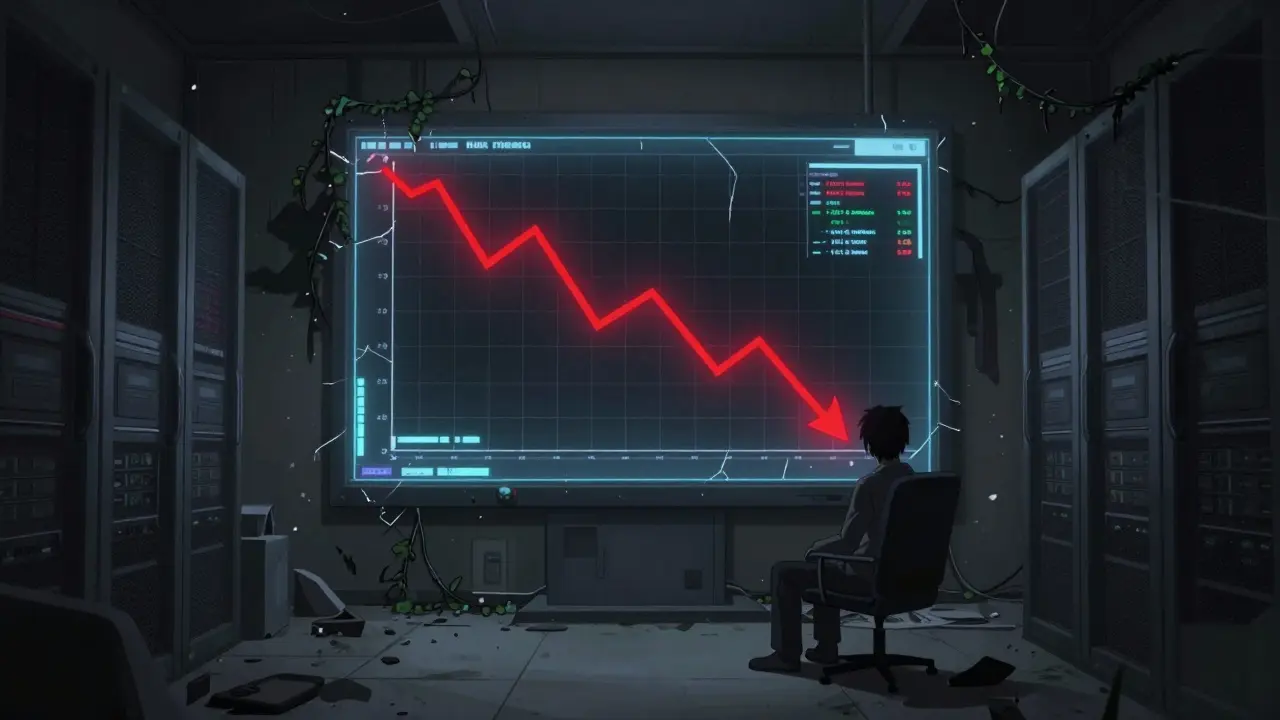
To understand HAKKA’s value, you have to look at its supply dynamics. The total supply is fixed at 470 million tokens. However, the circulating supply is dynamic, hovering around 275 million tokens. With a market cap of roughly $641,000, the math tells a stark story. Each token is worth fractions of a cent.
Why did the price drop so much? Several factors contributed:
- Lack of Utility: While the token governs the protocol, if people aren’t using the protocol, the governance right has little perceived value.
- Concentrated Ownership: Data shows the top 10 wallets control over 47% of the circulating supply. This concentration creates a risk of manipulation, where large holders can move the price significantly.
- Competitive Pressure: Newer, more efficient DeFi protocols emerged, draining liquidity from older projects like Hakka.
Security and Trust: Is Your Money Safe?
In DeFi, security isn't just about firewalls; it's about code audits and transparency. Hakka Finance underwent multiple third-party audits, which is a good sign. However, audits are snapshots in time. They don't guarantee future safety, especially if the development team becomes inactive.
Etherscan’s security assessment flagged HAKKA with a "neutral" reputation but warned about concentrated ownership risks. More concerning is the developer activity. GitHub repositories show minimal commits in recent months. For a software-based financial system, silence from developers is alarming. It suggests that bug fixes and updates might not happen promptly if vulnerabilities arise.
User reviews paint a mixed picture. Some long-term holders praise the "guild bank" feature for helping them hedge during market crashes. Others report severe slippage on iGain trades, making it unusable for anything beyond micro-transactions. A 2.8/5 rating on MetaMask and complaints about poor customer support response times (averaging 72 hours) indicate friction in the user experience.
Current Status and Future Outlook
As we move through 2026, Hakka Finance sits in a precarious position. It’s not technically "dead"-the contracts still run, and the site is up-but it’s certainly dormant. The Total Value Locked (TVL) peaked at $15 million in 2021 but has since fallen to under $40,000. That’s a 99.7% decline in locked assets.
Industry analysts are cautious. DefiLlama categorizes it as "low risk" simply because its market impact is now negligible. If it fails, it won’t shake the broader crypto market. However, for individual investors, the risk is personal and total. Messari reports suggest that without significant liquidity improvements or a major pivot, the protocol faces near-complete market exit within 18 months.
There is a slim hope for acquisition. Larger DeFi protocols sometimes buy out smaller ones for their modular components or intellectual property. Hakka’s unique options model in iGain could theoretically appeal to a bigger player looking to expand into derivatives. But until that happens, HAKKA remains a speculative asset with limited utility.
Should You Invest in HAKKA in 2026?
If you’re asking whether to buy HAKKA, consider your goals. Are you looking for steady yield? No. Are you seeking exposure to cutting-edge technology? Probably not, given the lack of recent updates. Are you a collector of early DeFi artifacts with a high tolerance for risk? Maybe.
For most users, established alternatives like Uniswap, Aave, or Curve offer better liquidity, stronger security records, and active development teams. Hakka Finance serves as a reminder of the volatility in the crypto space. Innovation is vital, but sustainability requires continuous adaptation and community engagement.
Before interacting with any DeFi protocol, always check the current TVL, read recent audit reports, and verify developer activity on GitHub. Don’t rely solely on historical promises. Look at present actions.
Is Hakka Finance still active in 2026?
Technically yes, the protocols are still running on Ethereum, but development activity is minimal. Most major features haven't been updated since mid-2025, and user engagement has dropped significantly compared to its 2021 peak.
What happened to the HAKKA token price?
The HAKKA token has declined over 98% from its launch price of $0.2101 to approximately $0.0025. This drop is due to decreased usage, competition from larger DeFi platforms, and a lack of new liquidity entering the ecosystem.
Can I still use BlackHoleSwap for stablecoin trading?
Yes, BlackHoleSwap is still operational. However, due to low liquidity, you may experience high slippage on larger trades. It is best suited for very small transactions rather than significant portfolio moves.
Is HAKKA considered a safe investment?
No, HAKKA is considered a high-risk asset. With low trading volume, concentrated ownership, and stagnant development, there is a significant risk of further depreciation or total loss of value.
How does Hakka Finance compare to Curve Finance?
Curve Finance is a dominant leader in stablecoin swapping with billions in daily volume. Hakka's BlackHoleSwap attempted a similar niche but failed to gain traction. Curve offers far better liquidity, lower fees, and a more robust ecosystem.
Matthew Malone
June 4, 2026 AT 19:38Typical crypto failure story. The whole ecosystem is built on sand and these guys are just the latest to get washed out. I told you all back in 2021 that anything not backed by real utility or government adoption was going to zero. Hakka Finance is proof that decentralized governance without actual power is a joke. The devs ghosted, the liquidity dried up, and now we have a bunch of bagholders crying about 'hidden gems'. There are no hidden gems, just traps for the unwary. Move on.
Karthikeyan S
June 6, 2026 AT 14:47i feel like this article is trying to sell me something but also telling me its trash 🤔 why do i keep checking my wallet if it is dead?? 😭 the pain is real when you see 98% drop 💀
Dinesh Pattigilli
June 6, 2026 AT 21:15You people really need to educate yourselves before diving into DeFi. It's not rocket science, it's basic economics. Supply and demand. If nobody uses the product, the token is worthless. Hakka tried to be everything to everyone-swap, lend, options, insurance-and ended up being nothing to anyone. Curve did swaps better. Aave did lending better. Hakka did... mediocrely at best. It’s pathetic how many retail investors fall for the 'integrated ecosystem' buzzword without looking at the TVL. Pathetic.
Narendra Kulkarni
June 7, 2026 AT 11:40hey thanks for sharing this info. i was wondering what happened to hakka since i had some tokens left over from 2021. looks like its better to just cut losses and move on to more active projects like uniswap or curve as mentioned. appreciate the detailed breakdown of why it failed.
verna kennedy
June 9, 2026 AT 09:41Let us be clear: this is not an investment; it is a donation to a defunct project. The metrics provided in the table are damning. A market cap of $641,000 against daily volume of $27,000 indicates extreme illiquidity and manipulation risk. Anyone holding HAKKA in 2026 is not an investor; they are a mark waiting for a pump-and-dump that will never come because there is no one left to dump onto. Stop romanticizing failure.
Kelly Tenney
June 10, 2026 AT 00:08I understand the frustration, especially for those who believed in the vision back in 2020. It’s tough when a project you supported fades away. However, learning from these experiences is crucial. Look at where your capital can grow instead of staying stuck in the past. There are so many vibrant communities in DeFi right now that actually value their users. Don’t let this drag you down.
Caralee Robertson
June 10, 2026 AT 02:03its sad to see how fast things die in crypto. i remember when blackholeswap was actually interesting with the yield enhancement idea. but yeah, without constant updates and marketing, even good ideas fade. hope someone picks up the tech maybe? otherwise its just dust.
Greg Lewis
June 11, 2026 AT 08:09you think this is just bad code? nah. look at the top 10 wallets controlling 47% of supply. that is insider trading plain and simple. the dev team knew it was sinking and dumped their bags while retail held the line. typical corporate greed disguised as decentralization. i bet the founders are living large somewhere in the bahamas right now laughing at us. dont trust any DAO until you see fully transparent vesting schedules enforced by smart contracts not promises.
JEVON HALL
June 12, 2026 AT 01:46Hey folks 👋 Just wanted to add a bit of technical context here. BlackHoleSwap’s mechanism of sending reserves to Compound was actually pretty innovative for its time. The issue wasn't the tech, it was the liquidity bootstrap problem. You need volume to attract LPs, and LPs to attract volume. Hakka couldn't break that cycle. Also, check out GitHub commits-if they stopped updating in mid-2025, the smart contracts are likely still secure but won't adapt to new Ethereum upgrades. So your funds aren't 'stolen', they're just stranded in a legacy system. Be careful interacting with old contracts ⚠️
Dr Lynea LaVoy
June 12, 2026 AT 06:27It is important to distinguish between a project that has been hacked and one that has simply lost relevance. Hakka falls into the latter category. While the lack of developer activity is concerning from a security maintenance perspective, the immediate risk isn't a exploit-it's opportunity cost. Your capital is tied up in an asset with near-zero utility. I recommend reviewing current audit reports for any protocol you consider moving to, as security standards evolve rapidly. Do not rush; verify first.
Alexis Abster
June 12, 2026 AT 14:00OH MY GOD! Can you believe the audacity of this project?! They promised financial sovereignty and delivered financial obscurity! I am literally shaking reading this. From $0.21 to $0.0025?! That is not a dip, that is a crater! But hey, maybe... JUST MAYBE... it's the ultimate diamond hand test? Who knows? The drama is insane! I’m keeping mine just to spite the bears! 🎭📉
Brad Ranks
June 14, 2026 AT 04:27The irony is palpable. They called themselves 'Hakka' implying community and strength, yet the community abandoned ship faster than the Titanic crew. I watched the TVL drop from $15M to $40k and didn't blink. It’s entertainment, really. Watching these projects die is the only free show left in crypto. Next up: which other 2021 relic will we eulogize?
Lee Paige
June 15, 2026 AT 04:15This is exactly why centralized finance exists. Decentralized protocols are chaotic, unregulated messes where insiders manipulate prices and vanish when things go south. The concentration of ownership in the top 10 wallets proves that 'decentralization' is a lie sold to retail investors. We need strict oversight, not wild west experiments that collapse under their own weight. This is a systemic failure of the entire crypto narrative.
Caitlin Donahue
June 17, 2026 AT 03:51honestly this is just sad. i liked the idea of having one app for everything. but yeah, looks like they got outcompeted. curve and uniswap are just too big now. its hard to compete with giants. imma just hold my haka for nostalgia points lol. no regrets though, learned a lot.
Sylvia Mossman
June 17, 2026 AT 16:12Everyone here is acting like Hakka is unique. It’s NOT. It’s just another copy-paste DeFi project that failed to innovate. The 'yield-enhanced AMM' concept was stolen from Curve anyway. Stop pretending this is a tragedy. It’s natural selection. Weak projects die. Strong ones survive. If you’re crying over HAKKA, you don’t deserve to be in crypto. Wake up.
Madhu Menon
June 19, 2026 AT 11:17In the grand tapestry of digital currency, Hakka Finance represents a fleeting moment of ambition. Like all human endeavors, it rose with promise and fell with reality. The question is not whether it failed, but what we learn from its silence. Perhaps true sovereignty lies not in tokens, but in our ability to detach from the outcome. 🌿