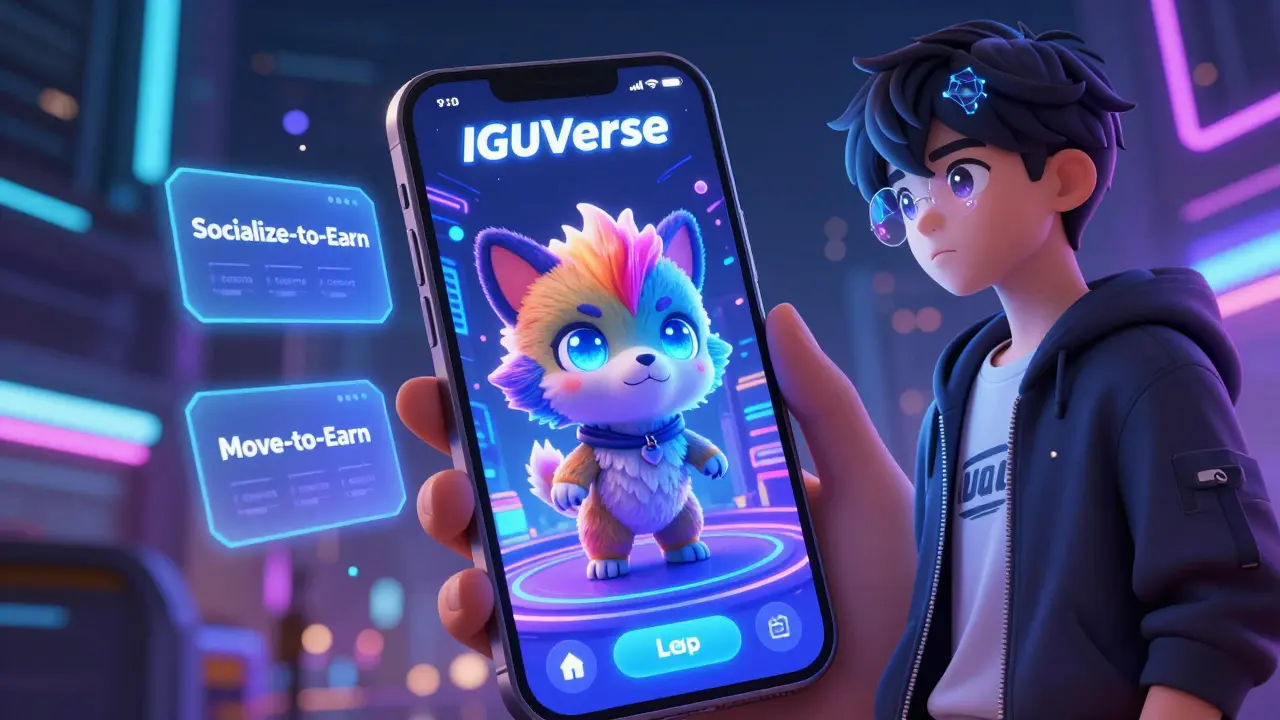
You’ve probably seen a flood of "Play-to-Earn" games promising you can get rich just by tapping your phone or walking around the block. It sounds too good to be true, right? Well, IGUP is one of those tokens sitting in that crowded, risky corner of the crypto world. It’s the reward coin for IguVerse, a Web3 game launched in 2021 that mixes AI-generated pets with social media tasks. Here is the honest truth: IGUP is not Bitcoin. It is not even close to Ethereum. It is a micro-cap token with extremely low liquidity and conflicting data across exchanges. If you are looking for a safe place to park your savings, look elsewhere. But if you are curious about how these experimental GameFi economies work-or if you want to know exactly what you are getting into before you spend a dime-this guide breaks it down without the hype.
The Core Concept: What Actually Is IguVerse?
To understand IGUP, you first have to understand the ecosystem it lives in. IguVerse positions itself as an "NFT 2.0" platform. That marketing term usually means they are trying to fix the biggest problem with early NFTs: they were static images that did nothing but sit in a wallet. IguVerse uses artificial intelligence and machine learning to create dynamic, user-generated pet NFTs. The app relies on three main mechanics:
- Socialize-to-Earn: You share photos of your virtual pet on social media to earn points.
- Move-to-Earn: You walk or move in real life to generate energy for your pet.
- Play-to-Earn: You feed and level up your pet within the app.
IGUP vs. IGU: Why There Are Two Tokens
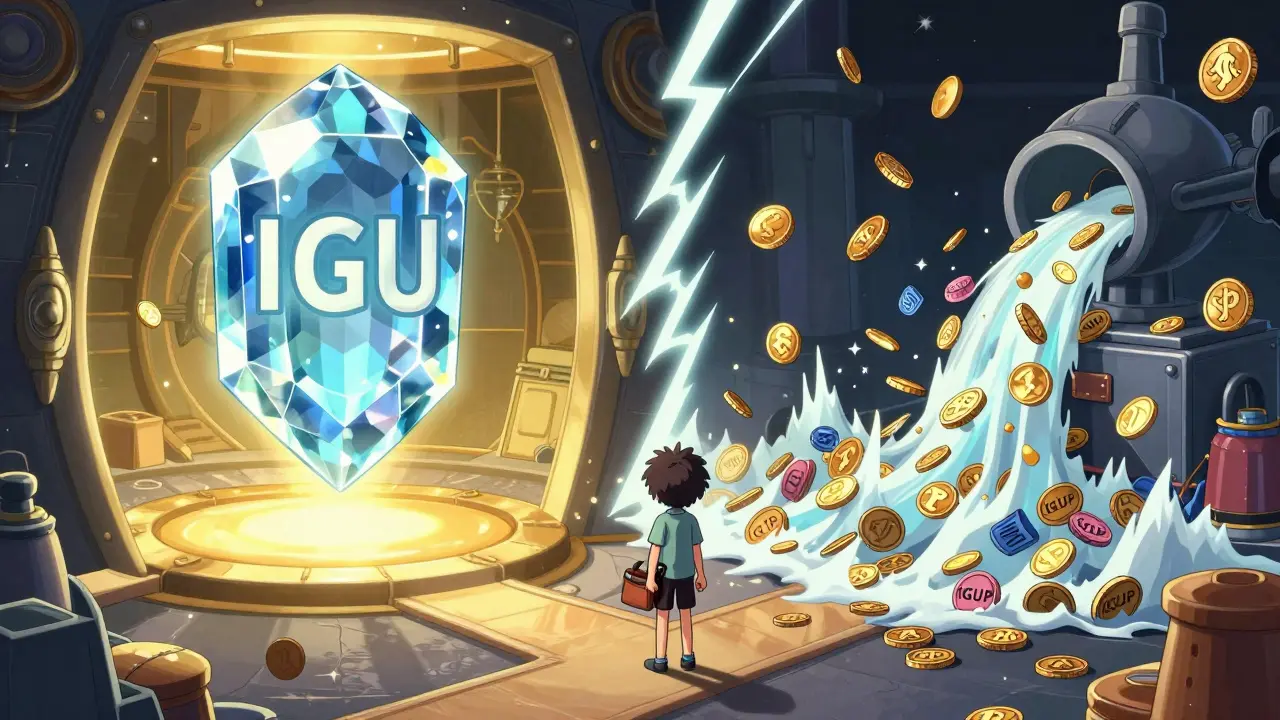
This is where most new players get confused. IguVerse uses a dual-token system, which is common in GameFi but often misunderstood. Think of it like a casino: one currency is used for high-stakes bets and ownership (IGU), and the other is the loose change you win from slot machines (IGUP).
| Feature | IGU (Governance) | IGUP (Reward) |
|---|---|---|
| Primary Use | Minting NFTs, Rank upgrades, Governance | Daily feeding, Level ups, Task rewards |
| Supply Cap | 400,000,000 (Fixed) | Unlimited (Minted on demand) |
| Scarcity | High (Deflationary pressure via burns) | Low (Inflationary unless burned) |
| Risk Profile | Medium-High | Very High |
The Supply Problem: Conflicting Data
If you try to find out how many IGUP tokens exist, you will hit a wall of contradictory information. This is a red flag for any investor. Different data providers give wildly different numbers:
- CoinGecko & CryptoRank: State that IGUP has an unlimited supply, minted as needed to reward users.
- Bitget & Crypto.com: List a maximum supply of roughly 54.36 million tokens.
- Other Aggregators: Sometimes show zero circulating supply or inconsistent market caps.
How Do You Actually Earn and Spend IGUP?
The gameplay loop is designed to keep you active every single day. Here is how the economy works in practice:
- Earn Energy: You perform tasks like sharing a pet photo or walking. This gives you "energy points."
- Convert to IGUP: If you accumulate more than 60 energy points, they convert into IGUP. If you have fewer, only a partial conversion happens. This threshold encourages you to keep playing longer.
- Feed Your Pet: Your virtual pet needs food to stay alive and active. You pay for this food using IGUP.
- Level Up: To unlock higher rewards, you must level up your pet. This costs IGUP.
- Burn Mechanics: Some upgrades trigger a "burn," meaning those IGUP tokens are destroyed forever. This is supposed to reduce inflation, but given the unlimited minting, it’s a balancing act that rarely favors the holder.
Where Can You Buy or Trade IGUP?
Because IGUP is not listed on major tier-1 exchanges like Coinbase or Kraken, buying it requires some technical know-how. You generally have two paths: 1. Centralized Exchanges (CEX)"> Platforms like Bitget, LBank, and LCX list IGUP. LCX is notable because it is regulated in Europe, offering EUR trading pairs. However, volumes are incredibly low. On Bitget, you might see a "Buy Now" button, but expect significant slippage (the difference between the expected price and the executed price) due to low liquidity. 2. Decentralized Exchanges (DEX)"> For those comfortable with self-custody, you can use wallets like Binance Web3 Wallet to connect to DEXs like Biswap. The IGUP/BUSD pair on Biswap showed a 24-hour trading volume of just $3.12 in recent snapshots. Yes, you read that right. Three dollars. This indicates that finding a buyer when you want to exit can be nearly impossible without moving the needle significantly.
Is IGUP a Good Investment in 2026?
Let’s cut through the noise. Bitget’s own analysis notes that "the value of IGUP is not widely recognized by the market" but speculates it could grow in a bull market. That is classic micro-cap talk. It means the price is driven by hype, not fundamentals. Here are the hard realities:
- Extreme Volatility: With such low market cap, a small buy or sell order causes massive price swings.
- Inflation Risk: Since IGUP is minted on demand, if player growth slows down but rewards continue, the value per token drops to near zero.
- Data Inconsistency: When major data aggregators cannot agree on the total supply, it signals poor transparency or outdated documentation from the project team.
- No Institutional Interest: There are no major research reports, analyst ratings, or institutional holdings for IGUP. It remains a niche experiment.
Key Takeaways Before You Start
Before you download the app or connect your wallet, keep these points in mind:
- IGUP is a utility token, not a store of value. Its purpose is to facilitate gameplay, not to appreciate in price.
- The dual-token system protects IGU more than IGUP. IGU has scarcity; IGUP does not.
- Liquidity is dangerously low. Assume you may not be able to sell your tokens easily.
- Verify current contract addresses yourself. Scammers often create fake IGUP tokens on decentralized exchanges.
What is the current price of IGUP?
The price of IGUP fluctuates wildly and varies significantly between exchanges due to low liquidity. As of mid-2026, prices have been reported ranging from fractions of a cent ($0.0002) to slightly higher figures ($0.014) on different platforms like CoinGecko, Bitget, and Yahoo Finance. Always check multiple sources before trading, as spreads can be huge.
Is IguVerse a scam?
There is no definitive evidence labeling IguVerse as a outright scam, as it has a functioning app, public beta, and listings on regulated exchanges like LCX. However, it exhibits many characteristics of high-risk projects: confusing tokenomics, low liquidity, and inconsistent data. Proceed with caution and never invest more than you can afford to lose.
How do I earn IGUP tokens?
You earn IGUP by participating in the IguVerse app's daily activities. This includes Socialize-to-Earn (sharing pet photos), Move-to-Earn (walking), and Play-to-Earn (feeding and leveling up pets). Once you accumulate enough energy points (typically over 60), they convert into IGUP tokens.
What is the difference between IGU and IGUP?
IGU is the governance token with a fixed supply of 400 million, used for high-value actions like minting NFTs and voting. IGUP is the reward token with an unlimited supply, used for daily in-game expenses like feeding pets and leveling up. IGU is scarcer; IGUP is inflationary.
Can I trade IGUP on Binance?
IGUP is not listed on the main Binance spot exchange. However, you can trade it using the Binance Web3 Wallet by connecting to decentralized exchanges (DEXs) that support the token, such as Biswap. This requires technical knowledge of DeFi interfaces.