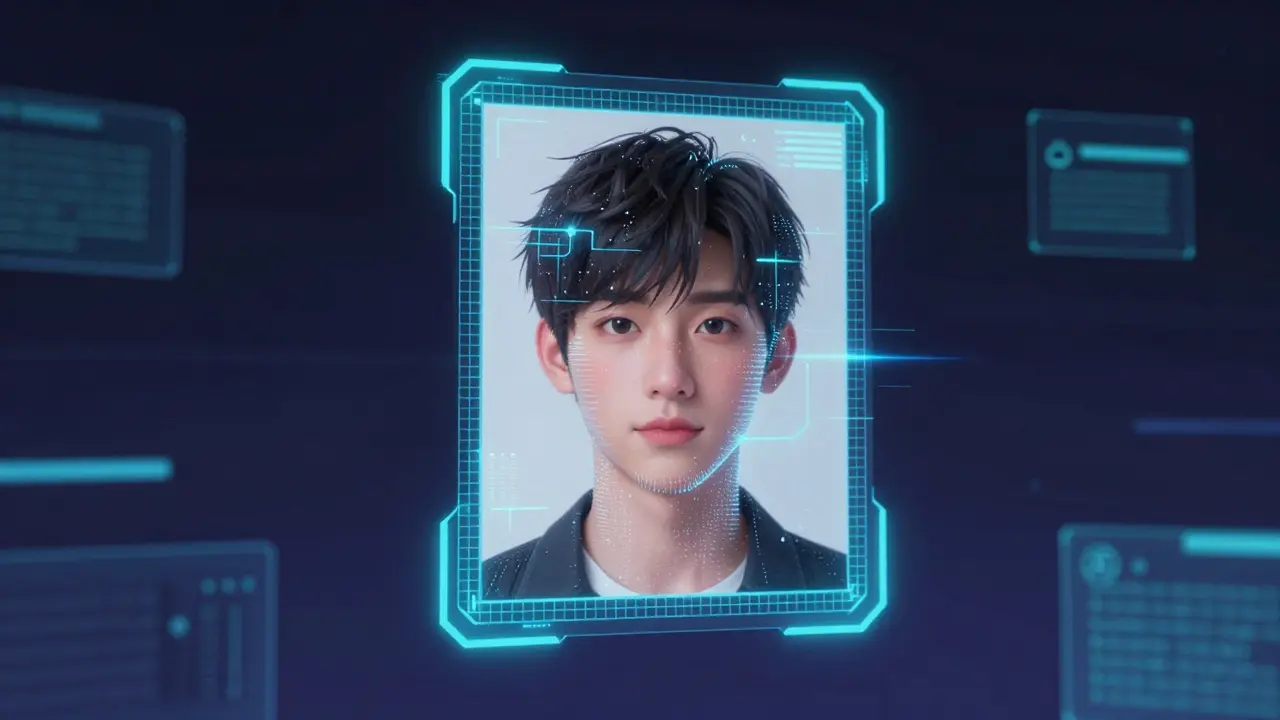
Imagine walking into a virtual boardroom or a digital gaming world, but instead of a generic, cartoonish avatar, you have a 3D face that actually looks like you. This is the core promise of Metaverse Face is a decentralized blockchain platform dedicated to creating high-fidelity Face NFTs for the virtual reality ecosystem. Commonly referred to by its token ticker MEFA, the project aims to fix a boring trend in the NFT world: the habit of creating "unique" characters by simply swapping a hat or changing a background color. Instead, MEFA focuses on the complexity of human facial features, treating them with the same uniqueness as a fingerprint.
The Core Tech: How Facemaker AI Works
The real engine behind this project is the Facemaker app. Most NFT generators just mix and match pre-drawn traits. Facemaker does something different: it uses artificial intelligence to process a standard 2D passport photo and turn it into a 3D NFT in about sixty seconds. One of the smartest parts of this AI is how it handles the "blind spots." Since a passport photo only shows your face from the front, the AI models the back and sides of the head to ensure the character is a complete 3D object. This allows the avatar to be viewed from any angle in a virtual environment, which is a necessity for any serious Metaverse application.
Understanding the MEFA Token and Ecosystem
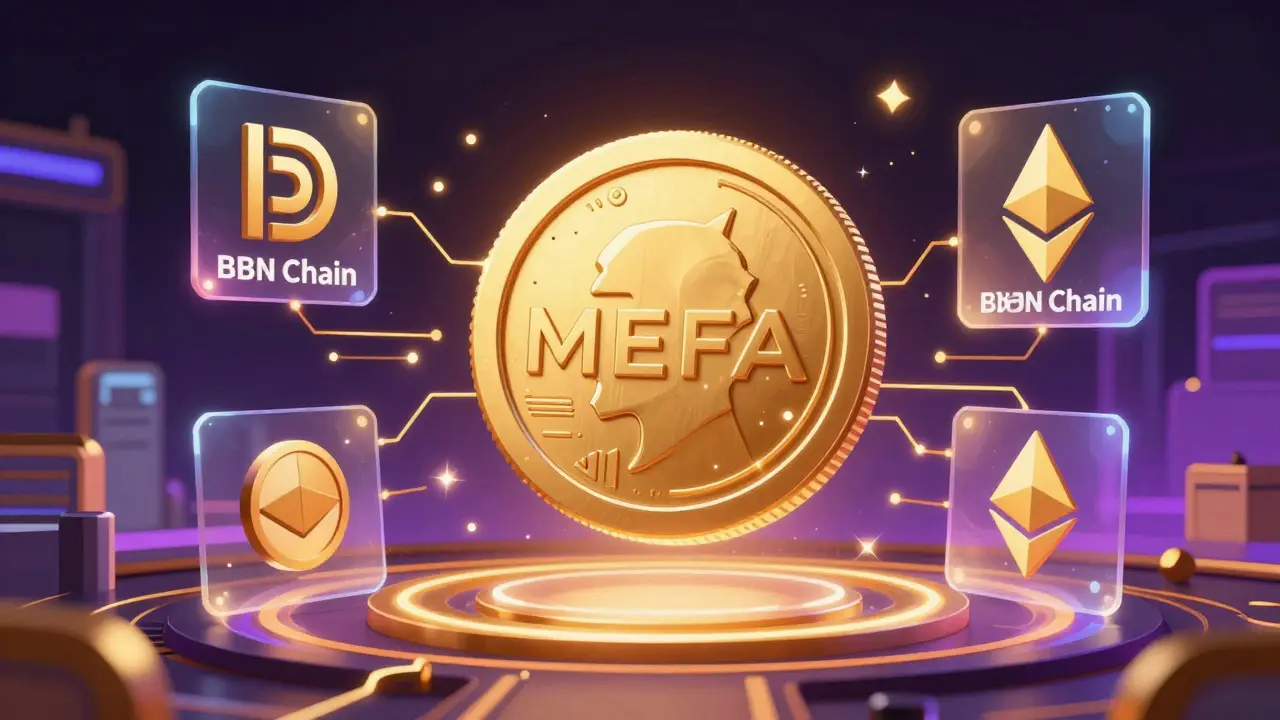
To participate in this ecosystem, you'll encounter the Metaverse Face token. This native cryptocurrency powers the platform and handles the economic side of these facial assets. It primarily operates on the BNB Chain, but the project is flexible, supporting Ethereum (ETH) and Binance Smart Chain (BSC) for minting the actual NFTs. Because it's a micro-cap coin, the price and liquidity can be quite volatile. For instance, the token has traded around the $0.000035 mark, but it's important to remember that small movements in price can represent huge percentage shifts in value. This makes it a high-risk, high-reward asset typical of early-stage blockchain projects.
| Attribute | Value |
|---|---|
| Circulating Supply | 9.5 Billion Tokens |
| Market Cap | ~$267,454 USD |
| Primary Network | BNB Chain |
| NFT Minting Networks | ETH, BSC |
Practical Use: VR Meetings and Beyond
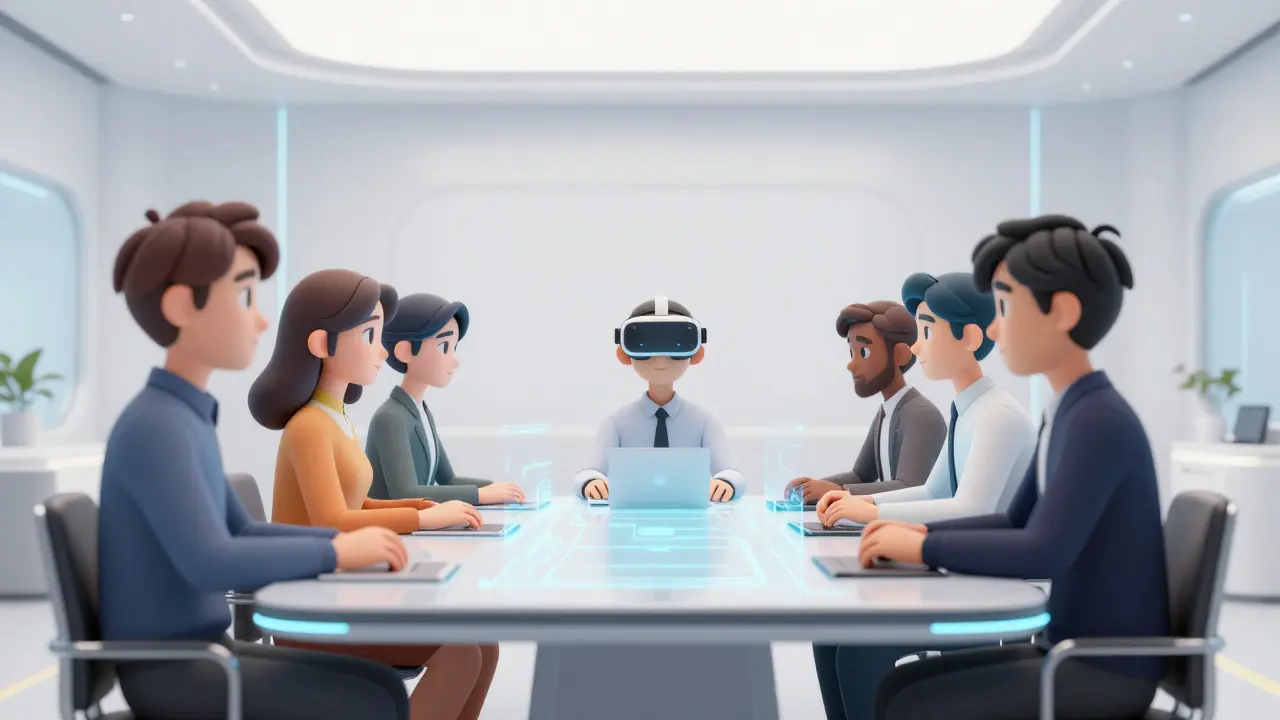
A token is only as good as what it actually does. MEFA has attempted to move past the "speculation phase" with a project called VR Meeting. This application lives within the Oculus platform. The idea is simple: you use your Face NFT as your identity to enter a virtual meeting space. This became particularly relevant as the world shifted toward remote work. However, there's a catch. To actually use this, you can't just have the token; you need the physical hardware (Oculus glasses) and a verified Face NFT. This creates a high barrier to entry, as the utility is locked behind both a blockchain asset and a piece of expensive hardware.
The Investment Outlook: Bull vs. Bear
If you're looking at MEFA from a trading perspective, the data is a bit of a mixed bag. Some technical analysis tools, like CoinCodex, have shown bullish signals, suggesting the token could see a significant jump if the metaverse trend regains momentum. They've noted a "Greed" reading on the Fear & Greed Index, which often means investors are feeling optimistic. On the flip side, the actual price history shows some struggles. The token has seen declines over 30-day and 60-day windows, often underperforming compared to the broader crypto market. For example, while the general market might be up slightly, MEFA has occasionally dipped. This suggests that while the tech is interesting, the market is still undecided on whether "face-only" NFTs are the right path compared to full-body avatars.
How to Get Started with MEFA
If you want to try the Facemaker platform, you'll need to follow a few specific steps. It's not as simple as signing up for a social media account; you're dealing with blockchain tech here.
- Set up a Wallet: You'll need a compatible cryptocurrency wallet that supports the BNB Chain, Ethereum, or BSC.
- Visit the Portal: Go to the official Facemaker web platform (app.metaversefacemaker.com).
- Upload Your Photo: Provide a 2D passport-style photo for the AI to process.
- Mint Your NFT: Use your ETH or BSC tokens to mint the resulting 3D face onto the blockchain.
- Integrate with VR: If you own an Oculus headset, you can then link your NFT to the VR Meeting application.
Potential Pitfalls and Risks
Before jumping into any micro-cap project, you have to be aware of the risks. First, the liquidity is relatively low. With a 24-hour volume around $53,000, large trades can cause significant price swings. Second, the reliance on third-party hardware like Oculus means MEFA's success is partially tied to Meta's hardware success. Lastly, there is the regulatory risk. Cryptocurrency laws are shifting in over 75 countries. A change in how NFTs or tokens are taxed or regulated could instantly change the accessibility of the MEFA ecosystem.
Is Metaverse Face a safe investment?
MEFA is a micro-cap cryptocurrency, which means it carries a very high level of risk. While it has innovative AI technology for 3D face generation, its low market cap and price volatility mean you could lose your investment quickly. It should be treated as a speculative asset rather than a safe store of value.
How is a Face NFT different from a regular NFT?
Most NFTs are 2D images or simple 3D models made by combining pre-set traits (like a specific hat or eye color). MEFA NFTs are generated from actual human photos using AI to create a unique 3D representation of a real person's face, making them more like a digital biometric identity than a piece of art.
Do I need a VR headset to use MEFA?
You do not need a headset just to create, collect, or sell Face NFTs through the Facemaker app. However, if you want to use the VR Meeting functionality to interact with others in a virtual space, you will need Oculus glasses and a verified Face NFT.
Which blockchain does MEFA use?
The native MEFA token primarily operates on the BNB Chain. However, the platform is designed to be cross-compatible, allowing users to mint their Face NFTs using both Ethereum (ETH) and Binance Smart Chain (BSC) networks.
How long does it take to create a 3D face?
Using the Facemaker AI application, the process of converting a 2D passport photo into a 3D NFT typically takes about one minute.
nikki krinkin
April 16, 2026 AT 19:36It's an interesting concept, but the requirement for an Oculus headset really limits who can actually use the identity part of this.
Michelle Stanish
April 18, 2026 AT 19:04Nah, I don't think people actually want their real faces in VR.
Michael Harms
April 20, 2026 AT 00:30I totally see the vision here! Imagine the networking possibilities when you can actually see the person you're talking to in a digital space. This is just the start of something huge!
Abhinav Chaubey
April 21, 2026 AT 04:35Typical Western hype. You guys act like 3D face mapping is new. We have better tech integration in Asian hubs already. This project is just a micro-cap pump and dump disguised as innovation.
Sean Mitchell
April 22, 2026 AT 02:57Absolute tragedy. The sheer audacity to call this an innovation when it's basically just a glorified filter that costs a fortune in gas fees. I am utterly devastated by the state of NFTs.
Adedamola Oyebo
April 23, 2026 AT 23:44Low liquidity is a major red flag... be careful with the slippage!!
Luke George
April 24, 2026 AT 04:25Think about it. They want your passport photo. Now they have your biometric data on a public ledger. It's a honey pot for the globalists to track your digital twin across every metaverse platform. They'll use this to link your physical identity to your virtual spending habits and then boom, social credit score for the whole world. Don't fall for the "convenience" of a 3D face.
Kim Smith
April 25, 2026 AT 14:25its kinda wild to think how we're just reducin our whole human essence down to a bunch of polygons and a token on the bnb chain, like is that all we are now just a set of coordinates in a virtual void that we pay for with crypto... i feel like the irony of wanting to be "unique" by using an AI that just guesses what the back of your head looks like is just peak 21st century absurdity lol.
Anna Grealis
April 26, 2026 AT 00:21Exactly what I suspected. Total surveillance trap. They dont even hide it. Its a digital leash.
Mark Pfeifer
April 26, 2026 AT 09:45I disagree with the extreme take here. While privacy is a concern, the utility for professional VR meetings is legitimate. If you can prove your identity without a 2D Zoom call, that's a win for efficiency.
Yuhan Mo
April 26, 2026 AT 19:20The integration of the BNB Chain for the utility token while allowing ETH for the NFT minting is a strategic play to capture liquidity from both ecosystems. However, the current market cap suggests a high volatility coefficient which might deter institutional entry.
nathan jones
April 27, 2026 AT 19:08Cool tech, but too niche.
Karen Mogollon Gutierrez
April 28, 2026 AT 23:14It is absolutely preposterous that one must possess such expensive hardware simply to experience the fruition of this technology! The exclusivity is utterly grating!
Kaitlyn Wu
April 29, 2026 AT 06:20We need to make sure these platforms are inclusive. If you need a top-of-the-line Oculus just to exist in these meetings, you're excluding a huge portion of the global workforce who can't afford a 500 dollar headset.
Thomas Jewett
April 30, 2026 AT 13:21This is what happens when you let these tech bros run the world without any moral compass!! they want to turn our very faces into tradable assets and it's an insult to the american way of life and basic human dignity to treat your identity like a poker chip on some sketchy chain with typos in the whitepaper probably!!
Ankit Sindhu
May 1, 2026 AT 17:28Let's try to look at the positive side of this. It's a great way for people to explore digital identity in a safe space. Maybe the barriers to entry will come down as hardware gets cheaper!
Shannon Kelly Smith
May 3, 2026 AT 14:14Keep pushing the boundaries! 🚀 This is how the future starts! Just gotta get that hardware in everyone's hands! 🌟🙌
Tracy Sperandio
May 4, 2026 AT 06:54Listen up, everyone! This is a dazzling opportunity to redefine our digital presence with sheer artistic precision! While some are clutching their pearls over privacy, others can embrace this vibrant evolution of the self! It is high time we stopped settling for those drab, generic avatars and started showcasing the magnificent complexity of our actual human features in the metaverse! This isn't just about a token; it's a cultural shift toward authentic digital representation! Let's get this momentum swinging and turn these virtual boardrooms into actual galleries of human diversity! It is an absolute thrill to see AI bridge the gap between a flat passport photo and a living, breathing 3D entity! Stop playing it safe and dive into the volatility because that is where the real magic happens! We are talking about a fingerprint for the face, people! The synergy between the BNB chain and the Oculus ecosystem is a bold move that requires guts to execute! If you're too scared of a micro-cap, you're missing the boat on the next big wave of tech! Get your wallets ready and let's paint the metaverse with our real faces! It's time for a digital revolution that actually looks like us!