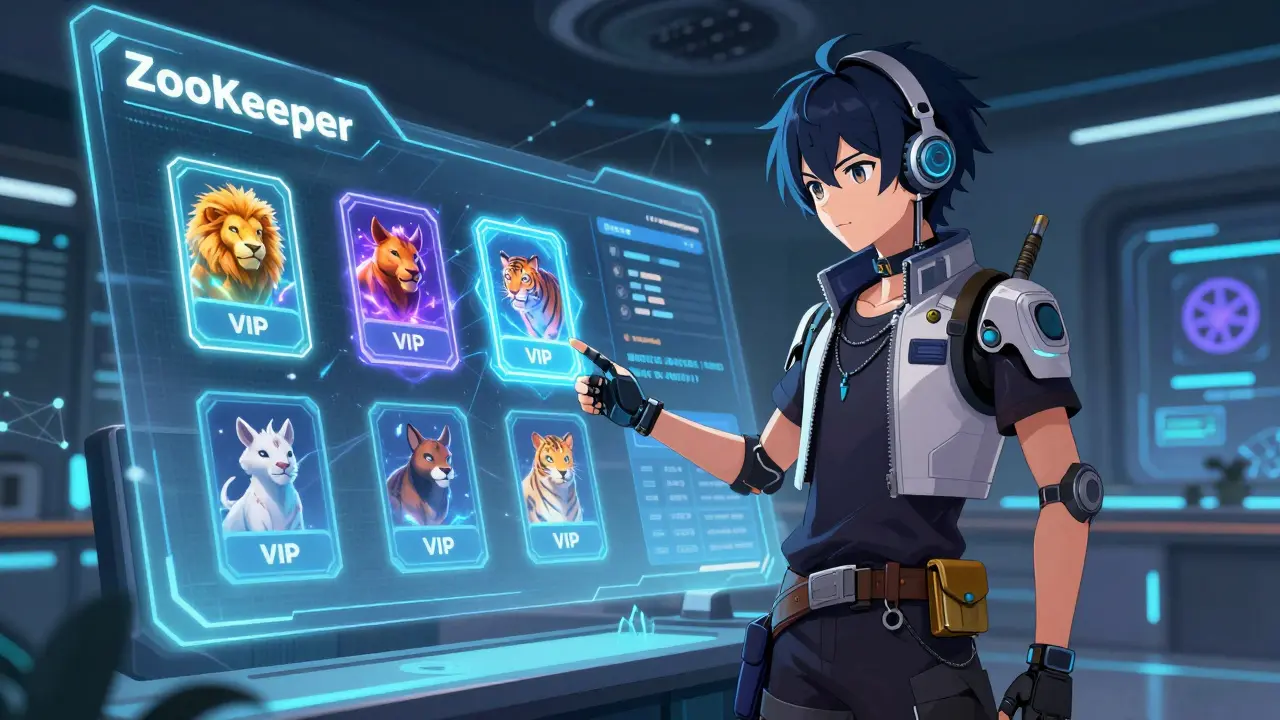
You’ve probably heard of Bitcoin or Ethereum. You might even know about Solana or Cardano. But what is ZooKeeper? It’s not a zoo for animals. It’s a decentralized application (dApp) in the crypto world that mixes yield farming with non-fungible tokens (NFTs). The native currency of this ecosystem is the ZOO token. If you are seeing "ZOO" on your watchlist or hearing it in niche crypto circles, you need to understand exactly what it does before you put any money into it. Unlike major coins like Uniswap or Aave, ZooKeeper operates in a smaller, more specific corner of the market. It focuses on boosting rewards for liquidity providers using NFTs. This guide breaks down how it works, where you can buy it, and why you should be cautious.
How ZooKeeper Works: NFT-Boosted Yield Farming
To understand ZOO, you first have to understand the problem it tries to solve. In Decentralized Finance (DeFi), liquidity providers (LPs) deposit pairs of tokens into a pool so others can trade. In return, they earn fees. To attract more capital, protocols often offer extra rewards in their native tokens. This is called yield farming.
ZooKeeper adds a twist to this standard model. It uses special NFTs, called ZooNFTs, which act as multipliers for your farming rewards. Think of them like VIP passes. If you hold a ZooNFT while staking your LP tokens in the ZooKeeper protocol, you get a higher percentage of ZOO rewards compared to someone without an NFT.
The platform is built around four main areas:
- The Zoo: This is where you stake your assets to farm ZOO tokens.
- The Expedition: Here, you stake ZOO tokens to earn new ZooNFTs.
- Crafting: You can combine or upgrade your NFTs to make them more powerful (higher boost percentages).
- The Market: A place to buy and sell these NFTs if you don’t want to farm them yourself.
This creates a loop: you farm tokens to get NFTs, use NFTs to farm more tokens, and trade NFTs for profit. It’s designed to feel like a game, which is why it’s often categorized under GameFi.
Tokenomics: The Supply Discrepancy
When evaluating any crypto project, the tokenomics-the rules governing the supply and distribution-are critical. ZooKeeper has a unique, and somewhat confusing, structure here.
According to official project descriptions found on major trackers like CoinMarketCap, ZOO tokens are emitted at a rate of 10 ZOO per block. There was no pre-mine and no private sale for investors. Instead, the project claims to use a "dynamic market-cap strategy." Under this model, the total supply was supposed to float between a minimum of 155 million and a maximum of 393 million ZOO tokens. The final number would depend on user behavior, specifically how many NFT boosts were active and how long users locked up their tokens.
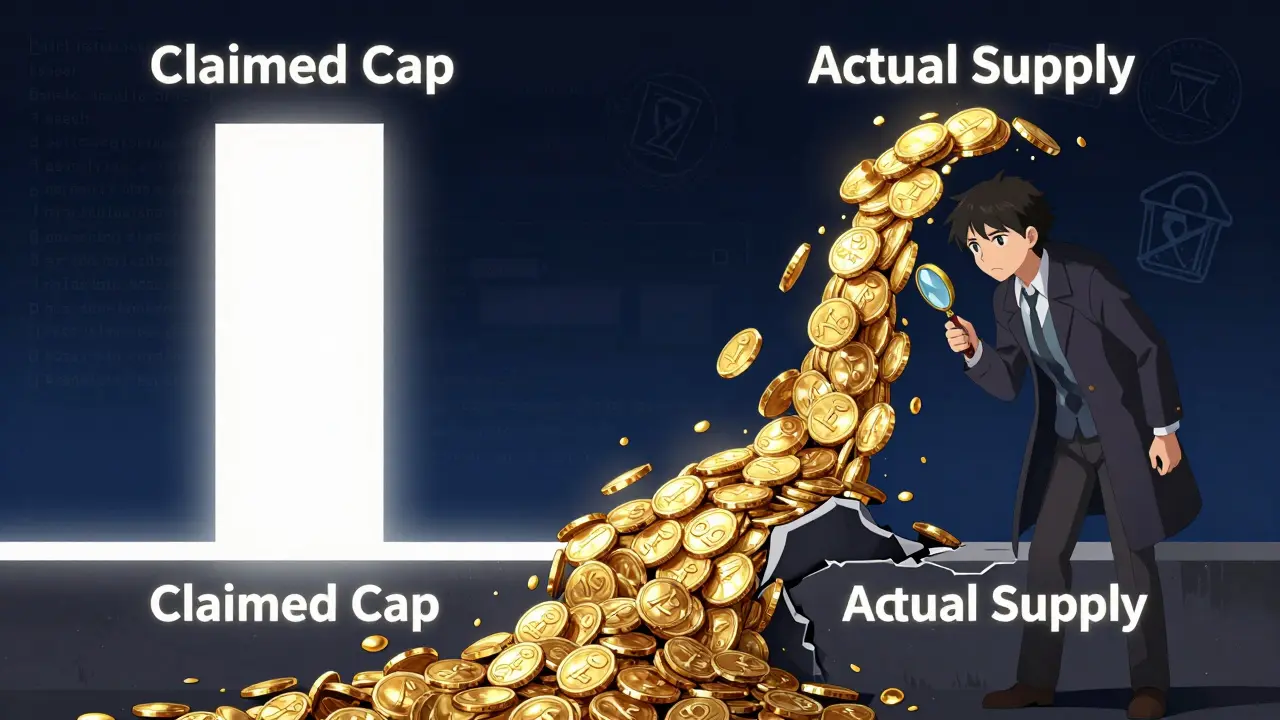
However, current data tells a different story. As of mid-2026, tracking platforms show a circulating supply of approximately 470 million ZOO and a total supply nearing 485 million. This exceeds the stated maximum of 393 million significantly.
| Metric | Claimed/Original Plan | Current Reality (Approx.) |
|---|---|---|
| Total Supply Cap | Max 393,000,000 ZOO | ~485,770,000 ZOO |
| Circulating Supply | Variable based on locks | ~470,690,000 ZOO |
| Emission Rate | 10 ZOO per block | 10 ZOO per block |
| Farming Allocation | 77% of total | High inflation pressure |
Why does this matter? With 77% of the token allocation dedicated to farming rewards, there is constant inflation. New tokens are created every block to pay farmers. If demand for ZOO doesn’t outpace this creation rate, the price tends to drop over time. The discrepancy between the promised cap and the actual supply suggests either the rules changed after launch or the initial documentation was inaccurate. Always check the latest on-chain data, not just the whitepaper.
Where Can You Buy ZOO?
One of the biggest red flags for beginners is trying to buy ZOO on major exchanges like Binance, Coinbase, or Crypto.com. While these platforms may list ZOO on their price-tracking pages, they do not support active trading for it.
If you look at Binance, you might see a price of $0.00 and volume of $0. This means there is no order book; it’s just informational. Same for Crypto.com, which explicitly states ZOO is not tradable yet. This forces users to go deeper into the crypto rabbit hole.
To actually buy or sell ZOO, you need to use decentralized exchanges (DEXs) or mid-tier centralized exchanges. The primary venues include:
- Bitrue: A centralized exchange that lists ZOO.
- Wanswap: The native DEX of the Wanchain network.
- Trader Joe & Pangolin: Popular DEXs on the Avalanche network.
Because ZOO is a multi-chain token, it exists on both Wanchain and Avalanche. On Avalanche, you will often see a wrapped version called vZOO to facilitate cross-chain compatibility. This adds complexity. You can’t just click "buy" on a simple app; you need a Web3 wallet (like MetaMask), configured for the correct network, and enough native gas tokens (WANCH or AVAX) to pay for transaction fees.
Price and Liquidity: What to Expect
Let’s talk numbers. As of May 2026, ZOO trades at a very low price point, typically hovering around $0.0006 to $0.0007. Don’t let the low price trick you into thinking it’s "cheap" with huge upside potential. Value isn’t determined by the price per coin, but by the market capitalization and liquidity.
The daily trading volume for ZOO is extremely thin. Data from aggregators like CoinGecko shows 24-hour volumes sometimes dipping below $60. Compare this to top DeFi tokens that move millions of dollars daily. Low volume means two things:
- High Slippage: If you try to sell a large amount of ZOO, you will likely crash the price because there aren’t enough buyers waiting.
- Volatility: Small trades can cause wild price swings.
This lack of liquidity is a significant risk. It indicates that ZOO is not widely held by institutional investors or large whales who provide stability. It is primarily traded by retail users within the specific Wanchain and Avalanche communities.
Risks and Considerations
Before you connect your wallet to ZooKeeper, consider these risks:
Smart Contract Risk: Like all DeFi projects, ZooKeeper relies on code. If there is a bug in the contract handling your NFTs or staked tokens, funds could be lost. There are no widely publicized, recent third-party security audits cited in major listings, which is a warning sign for conservative investors.
Impermanent Loss: Since ZooKeeper incentivizes providing liquidity on DEXs, you are exposed to impermanent loss. This happens when the price of the tokens you deposited changes relative to each other. You might end up with less value than if you had just held the tokens in your wallet.
NFT Dependency: Your earnings are tied to the value and utility of ZooNFTs. If the community loses interest in the "gaming" aspect, the NFTs become worthless, and the reward boost disappears. This makes the entire yield model fragile.
Liquidity Exit: Given the low volume on DEXs, getting your money out quickly during a market downturn can be difficult. You might find yourself stuck holding bags of ZOO with no buyer nearby.
Is ZooKeeper Worth It?
ZooKeeper is not a mainstream investment. It is a niche tool for experienced DeFi users who are already active on Wanchain or Avalanche and understand the mechanics of NFT-based yield farming. It offers a creative way to boost returns if you believe in the longevity of the ZooEcosystem and the underlying networks.
However, for the average investor looking for stable growth or easy access, ZOO presents too many hurdles. The low liquidity, complex multi-chain setup, and discrepancies in token supply data suggest high risk. If you decide to participate, start with a small amount you can afford to lose, ensure you are using the correct wallet settings for the specific chain, and always verify the current contract addresses from official sources to avoid scams.
Is ZOO a good investment in 2026?
ZOO is a high-risk asset due to its low liquidity, thin trading volume, and niche focus on NFT yield farming. It lacks listing on major exchanges like Binance or Coinbase for active trading. It may suit experienced DeFi users familiar with Wanchain and Avalanche, but it is generally not recommended for beginners or those seeking stable returns.
Can I buy ZOO on Coinbase or Binance?
No. While Coinbase and Binance may track the price of ZOO for informational purposes, they do not offer active trading pairs for it. You must use decentralized exchanges like Trader Joe, Pangolin, or Wanswap, or mid-tier centralized exchanges like Bitrue to buy ZOO.
What is the purpose of ZooNFTs?
ZooNFTs are used to boost the yield farming rewards you receive when providing liquidity. Holding a ZooNFT acts as a multiplier, allowing you to earn more ZOO tokens compared to users who do not hold an NFT. They can also be traded on the integrated marketplace.
Which blockchain is ZOO on?
ZooKeeper is a multi-chain dApp deployed on both Wanchain and Avalanche. On Avalanche, a wrapped version called vZOO is often used to facilitate transactions. You need to configure your wallet for the specific network you intend to use.
Why is the ZOO supply higher than the claimed maximum?
The project originally claimed a dynamic supply cap between 155 million and 393 million ZOO. However, current data shows a circulating supply of over 470 million. This discrepancy suggests that the token emission rules may have changed post-launch, or the initial documentation did not account for all variables. Always rely on live on-chain data for accurate supply figures.