You might think that because dYdX runs on blockchain technology, you can trade from anywhere. But if you live in the United States or Canada, you’re likely seeing a red banner telling you to leave. It’s confusing. How can something be "decentralized" and still block your IP address? The answer lies in the messy middle ground between pure code and real-world laws. dYdX is a hybrid beast: it uses decentralized tech for trading but keeps centralized control over who gets to use its website.
dYdX is a decentralized derivatives exchange that allows users to trade perpetual futures contracts using blockchain technology while maintaining centralized frontends for regulatory compliance. Founded by Antonio Juliano in 2017, it aims to offer the speed of centralized exchanges with the security of self-custody. However, its operational model reveals that true decentralization often takes a backseat to legal survival.
The List of Restricted Regions
If you try to access dydx.trade from certain places, you’ll get blocked. This isn’t random. The list includes major financial hubs like the United States, the United Kingdom, and here in my home country, Canada. It also covers nations under heavy international sanctions, such as Iran, Cuba, North Korea, Syria, and Myanmar. Specific regions within larger countries are also off-limits, including Crimea, Donetsk, and Luhansk.
What’s interesting is what *isn’t* on the list. China, Russia, South Korea, Japan, and Vietnam remain accessible. This suggests dYdX isn’t just playing it safe across the board; they are selectively complying with specific jurisdictions that pose the highest legal risk to their operations, particularly those with strict securities laws or aggressive enforcement agencies.
How They Enforce the Ban
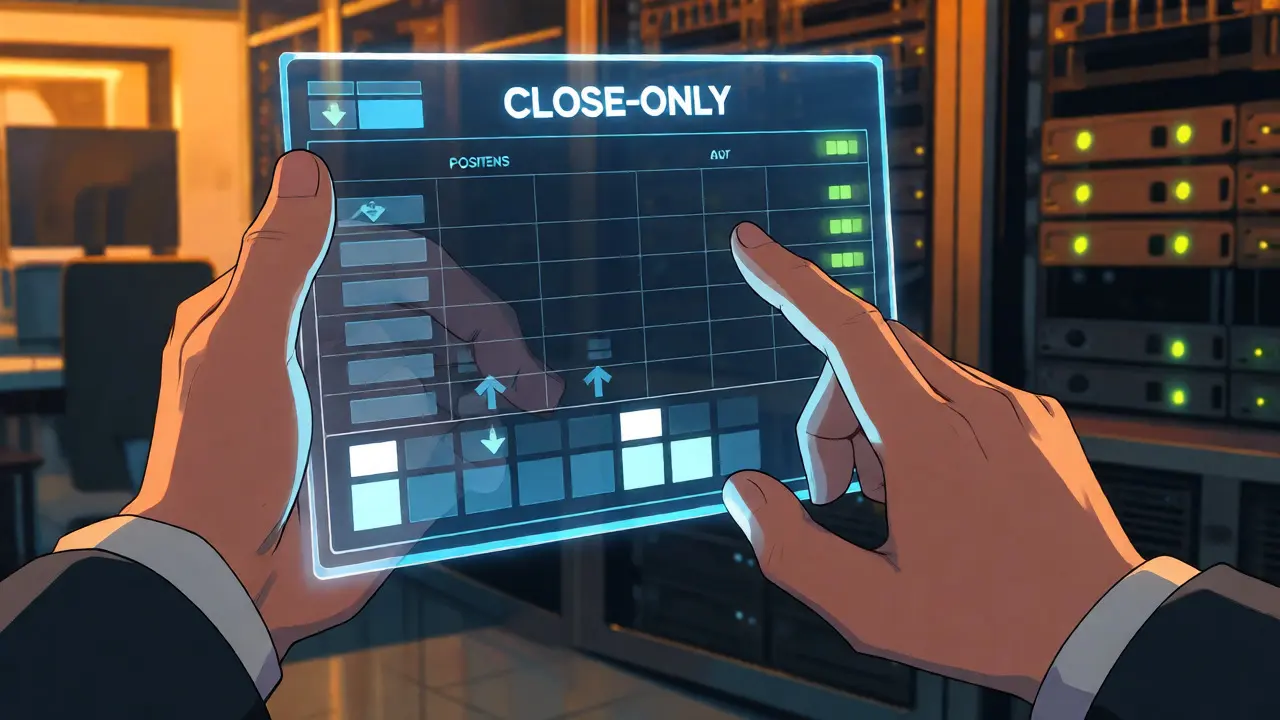
Since dYdX doesn’t ask for your passport, how do they know where you are? They use a combination of IP geolocation and wallet analysis. When you connect your wallet (like MetaMask) to the frontend, the system checks your location. If you’re in a restricted zone, you don’t get kicked out immediately. Instead, you enter "close-only mode."
In this mode, you can’t open new positions. You can’t deposit more funds. All your orders automatically become "reduce-only," meaning you can only shrink your existing bets, not grow them. If you ignore the warnings and stay connected for seven days, your wallet gets fully blocked. At that point, you can’t even see your trading history on the site. Your only option is to withdraw your funds directly via the blockchain explorer or by exporting your secret recovery phrase. It’s a harsh but effective way to force compliance without banning the underlying blockchain activity.
The Centralized Core Behind the Decentralized Brand
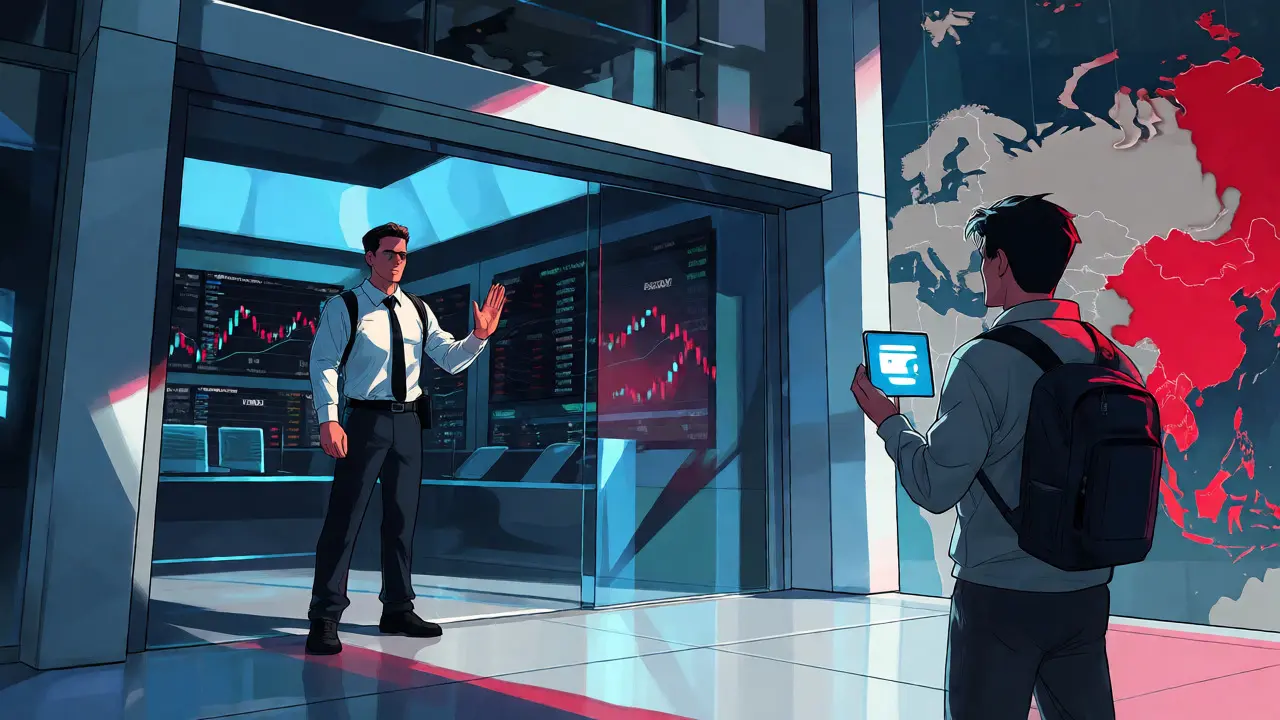
To understand why these blocks exist, you have to look at the company structure. dYdX isn’t just a protocol; it has corporate entities behind it. There is dYdX Trading Inc., based in New York, and the dYdX Foundation in Zug, Switzerland. These entities manage the frontend interfaces-the websites you actually click on. Because these are legal companies subject to US and Swiss law, they must follow Anti-Money Laundering (AML) and Counter-Terrorism Financing (CTF) rules.
The US Department of Treasury’s Office of Foreign Assets Control (OFAC) is the big player here. If dYdX serves a user in a sanctioned country, they could face massive fines. So, even though the smart contracts on the chain might technically allow anyone to trade, the gateway (the website) acts as a bouncer. This creates a paradox: the blockchain is permissionless, but the interface is permissioned.
Regulatory Pressure vs. Crypto Ideals
This situation highlights a broader trend in crypto. Early proponents argued that decentralized finance (DeFi) would make regulators obsolete. In reality, regulators have adapted. They target the entry points. By forcing exchanges to implement Know Your Customer (KYC) or geographic restrictions, governments maintain oversight without needing to change every line of code on the Ethereum or Cosmos networks.
For traders, this means you need to be careful. Using a VPN to bypass these restrictions is risky. While it might let you load the page, if the platform detects suspicious activity linked to a restricted jurisdiction, they can freeze your frontend access. And since dYdX controls the UI, losing access makes managing your portfolio incredibly difficult, even if your assets are technically still on-chain.
Comparison: dYdX vs. Truly Decentralized Protocols
It helps to compare dYdX with protocols that have no central frontend owner. Let’s look at the differences in practice.
| Feature | dYdX | Pure DeFi Protocol (e.g., Uniswap) |
|---|---|---|
| Frontend Control | Centralized Company (DOS Ltd.) | Community/Open Source |
| IP Blocking | Yes, enforced strictly | No, usually optional |
| US Access | Banned | Generally Allowed |
| Compliance Risk | High (Corporate entity) | Low (No central entity) |
What Should You Do If You’re Blocked?
If you’re reading this from Toronto or New York, don’t panic. Your funds aren’t gone. The blockchain doesn’t care about your zip code. Here is the practical path forward:
- Withdraw Immediately: If you are in close-only mode, move your assets to a personal wallet like Ledger or Trezor.
- Avoid New Deposits: Don’t try to top up your account. It will likely fail or get flagged.
- Check Alternative Interfaces: Some third-party interfaces might interact with the same smart contracts, though dYdX may discourage this to maintain brand consistency.
- Stay Updated: Regulations change. What is banned today might be allowed tomorrow if the legal landscape shifts, especially regarding stablecoin regulations in the US.
Can I use a VPN to trade on dYdX from the US?
Technically, yes, you can mask your IP address. However, dYdX’s terms of service prohibit circumventing geographic restrictions. If they detect a mismatch between your IP and your transaction patterns, or if they update their compliance algorithms, you risk being placed in close-only mode or having your frontend access revoked entirely. It is a gamble rather than a guaranteed solution.
Is dYdX truly decentralized?
It is partially decentralized. The core trading logic exists on-chain, allowing for non-custodial trading. However, the frontend services and governance structures involve centralized entities like dYdX Operations Services Ltd. This hybrid model allows them to comply with laws but means they retain control over user access, unlike purely decentralized protocols.
Which countries are banned from dYdX?
The primary restricted jurisdictions include the United States, Canada, the United Kingdom, and several nations under US sanctions such as Iran, Cuba, North Korea, Syria, and Myanmar. Certain regions like Crimea and parts of Eastern Ukraine are also excluded due to geopolitical sanctions.
What happens if I violate the geographic restrictions?
You will enter "close-only mode." In this state, you cannot open new positions or deposit funds. You can only reduce or close existing positions. If you remain in this mode for seven consecutive days, your wallet is blocked from the frontend, preventing any further interaction until you withdraw your assets.
Why does dYdX block the US specifically?
The US has some of the strictest securities and commodities regulations in the world, overseen by bodies like the SEC and CFTC. To avoid litigation and fines, dYdX excludes US residents. This allows the platform to operate globally without being tied down by complex US-specific licensing requirements for derivatives.