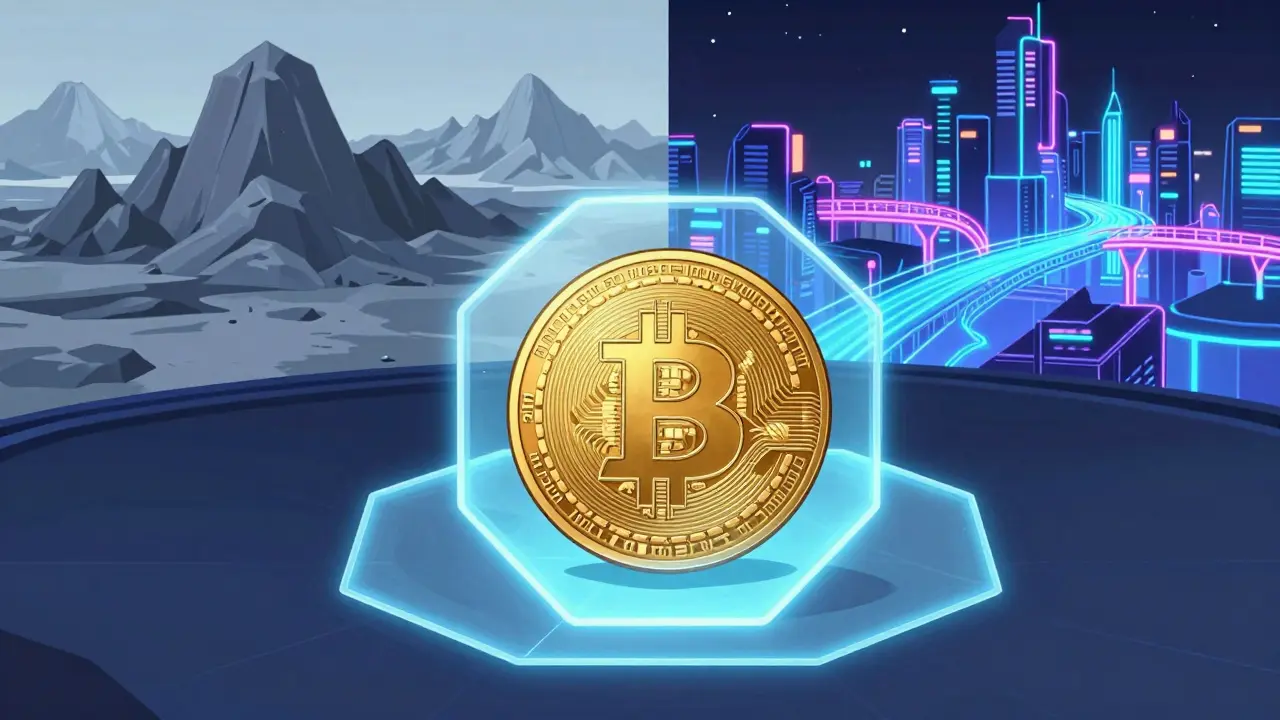
Imagine holding Bitcoin, the world's most recognized cryptocurrency, but being unable to use it as collateral for a loan on Ethereum. It sounds like a paradox, but this is the reality of blockchain fragmentation. Different networks operate in silos, speaking different technical languages. This isolation limits what you can do with your digital assets. Enter wrapped assets. These are tokenized versions of original cryptocurrencies that bridge these gaps, allowing Bitcoin to function seamlessly within Ethereum-based applications. They are the plumbing behind much of today’s decentralized finance (DeFi) activity.
Without wrapped tokens, your Bitcoin would sit idle in its native wallet, earning nothing while you explore yield farming or lending protocols elsewhere. Wrapped assets solve this by creating a mirror image of your asset on a compatible chain. This article breaks down how they work, why they matter for your portfolio, and the risks you need to watch out for in 2026.
What Are Wrapped Assets?
To understand wrapped assets, think of them as casino chips. When you enter a casino, you hand over your cash (native Bitcoin) and receive chips (wrapped Bitcoin) that you can use at specific tables (DeFi protocols). The chips represent the same value as your cash, but they only work within that ecosystem. When you leave, you exchange the chips back for cash.
Technically, a wrapped token is a smart contract representation of an underlying asset on a blockchain that doesn't natively support it. For example, Wrapped Bitcoin (WBTC) is an ERC-20 token on the Ethereum network that tracks the price of Bitcoin one-to-one. If Bitcoin trades at $100,000, WBTC should also trade at $100,000. This mechanism allows assets from one blockchain to interact with dApps (decentralized applications) on another.
| Feature | Native Token (e.g., BTC) | Wrapped Token (e.g., WBTC) |
|---|---|---|
| Network | Bitcoin Blockchain | Ethereum (or other EVM chains) |
| Smart Contract Capability | Limited (Script-only) | Full (ERC-20 standard) |
| Transaction Speed | ~10 minutes per block | ~12 seconds per block |
| Use in DeFi | No direct interaction | Direct lending, staking, swapping |
| Custody Model | Self-custody (private keys) | Third-party custodians/multisig |
The Core Benefits for DeFi Users
Why go through the trouble of wrapping? The primary benefit is interoperability. In 2026, the blockchain landscape is multi-chain. You might have Solana coins, Ethereum ETH, and Bitcoin. Without wrapping, moving value between these ecosystems requires selling one asset for stablecoins, bridging the stablecoins, and buying the new asset-a process fraught with slippage and time delays. Wrapped assets streamline this.
Access to Yield and Liquidity
Bitcoin holders often face a dilemma: HODL (hold on to long-term) their BTC for appreciation, or sell to participate in DeFi yields? Wrapped Bitcoin allows you to do both. By converting BTC to WBTC, you can deposit it into lending protocols like Aave or Compound to earn interest. Alternatively, you can provide liquidity on decentralized exchanges (DEXs) like Uniswap or Curve. This unlocks capital efficiency that was previously impossible for non-Ethereum assets.
Lower Transaction Costs and Faster Settlement
While Ethereum gas fees can be high, they are generally lower than the opportunity cost of waiting for Bitcoin confirmations during peak times. More importantly, transactions on Ethereum settle in seconds, not minutes. For traders executing complex arbitrage strategies or interacting with flash loans, speed is money. Wrapped assets leverage the host chain’s infrastructure, offering faster finality and better integration with trading bots and automated market makers (AMMs).
Enhanced Privacy and Simplicity
Using wrapped tokens can simplify wallet management. Instead of managing separate wallets for Bitcoin, Ethereum, and Polygon, you can manage multiple wrapped assets within a single Ethereum-compatible wallet like MetaMask. This reduces the cognitive load and potential security risks associated with managing multiple private keys across different networks.
How Wrapping Works: The Mechanics
The creation of a wrapped asset involves a few key steps. Understanding this process is crucial because it highlights where the risks lie.
- Locking: You send your native asset (e.g., BTC) to a custodian or a locking contract. This removes the asset from circulation on the native chain.
- Minting: Once the transaction is confirmed, the custodian mints an equivalent amount of wrapped tokens (e.g., WBTC) on the target blockchain (e.g., Ethereum). These tokens are issued to your address.
- Usage: You now hold WBTC. You can trade, lend, or stake it just like any other ERC-20 token.
- Burning: When you want your original asset back, you send the WBTC to a burn address. The custodian verifies the burn and releases the locked BTC back to your Bitcoin wallet.
This process relies heavily on custodians. In the case of WBTC, a consortium of companies manages the vaults. This introduces a centralized element into an otherwise decentralized ecosystem. While efficient, it means you are trusting third parties to safeguard your underlying assets.

Risks and Challenges
No financial tool is without risk. Wrapped assets introduce several vulnerabilities that users must understand before deploying significant capital.
Custodial Risk
Because most wrapped assets rely on centralized custodians, there is a risk of mismanagement, hacking, or insolvency. If the custodian loses the private keys to the vault holding the underlying Bitcoin, the wrapped tokens become worthless pieces of code. High-profile hacks of bridging services in previous years have resulted in hundreds of millions of dollars in losses. Always research the reputation and audit history of the wrapping protocol.
Smart Contract Risk
The wrapped token itself exists as a smart contract on the target blockchain. If there is a bug or vulnerability in the code governing the WBTC token, attackers could exploit it to drain funds. Regular audits by firms like OpenZeppelin or Trail of Bits are essential, but they do not guarantee immunity.
Depegging Events
In theory, 1 WBTC should always equal 1 BTC. However, market panic or liquidity crises can cause temporary depegging. If confidence in the wrapper shakes, the price of WBTC might drop below the price of BTC. While arbitrageurs usually correct this quickly, it can lead to liquidations for users who have borrowed against their wrapped collateral.
Alternatives to Centralized Wrapping
Recognizing the risks of custodial models, the industry is evolving toward trustless solutions. Here are some alternatives gaining traction in 2026:
- Native Cross-Chain Messaging: Protocols like LayerZero and Wormhole enable direct communication between blockchains without needing a wrapped intermediary token in the traditional sense. They verify proofs of transactions on one chain and execute actions on another.
- Atomic Swaps: A peer-to-peer method that allows two parties to exchange different cryptocurrencies directly without a trusted third party. While technically challenging and less user-friendly, it eliminates custodial risk entirely.
- Decentralized Oracles: Services like Chainlink are developing CCIP (Cross-Chain Interoperability Protocol) to facilitate secure data and value transfer across chains, reducing reliance on single custodians.
Practical Guide: Getting Started with Wrapped Assets
If you decide to use wrapped assets, follow these steps to minimize risk:
- Choose Reputable Projects: Stick to established wrapped tokens with high market caps and transparent custody structures. WBTC is the gold standard for Bitcoin, but similar standards exist for other assets (e.g., wETH for Ethereum on other chains).
- Verify Contracts: Always double-check the contract address of the wrapped token. Scammers often create fake tokens with similar names. Use official sources or verified lists on platforms like CoinGecko or CoinMarketCap.
- Diversify Exposure: Do not wrap all your assets. Keep a portion in native form to mitigate custodial risk. Treat wrapped assets as a tool for specific DeFi activities, not as a long-term storage solution.
- Monitor Gas Fees: Wrapping and unwrapping involve transactions on both the source and destination chains. Factor in these costs when calculating potential yields. Small amounts may not be economically viable to wrap.
The Future of Wrapped Assets
As blockchain technology matures, the need for seamless interoperability will only grow. We are seeing a shift from "wrapped" to "bridged" and eventually to fully composable multi-chain environments. Standards like ERC-7579 (Modular Accounts) aim to abstract away the complexity of cross-chain interactions, making wrapped assets invisible to the end-user.
Additionally, the rise of Real World Assets (RWA) in DeFi means we will see more wrapped versions of traditional securities, commodities, and fiat currencies. Imagine holding a tokenized version of US Treasury bonds on Ethereum, backed by actual reserves. Wrapped assets are the foundational layer for this next wave of financial innovation.
Is WBTC safe to use?
WBTC is considered one of the safer wrapped assets due to its long track record, regular audits, and transparent custody structure managed by a consortium of reputable firms. However, it still carries custodial risk. You are trusting third parties to hold your underlying Bitcoin. For maximum security, keep only the amount needed for active DeFi participation in WBTC, and store the rest as native Bitcoin in a hardware wallet.
Can I lose money if WBTC depegs?
Yes. If you use WBTC as collateral for a loan and its price drops significantly below Bitcoin's price (depegging), your position may be liquidated even if Bitcoin's price hasn't changed. Additionally, if you hold WBTC during a prolonged depegging event, you will suffer a loss in value until the peg is restored or you sell at a discount.
What is the difference between wrapped and native tokens?
Native tokens exist on their original blockchain (e.g., BTC on Bitcoin). Wrapped tokens are copies created on a different blockchain (e.g., WBTC on Ethereum) that track the value of the native token. Native tokens offer self-custody and no smart contract risk, while wrapped tokens offer interoperability and access to DeFi protocols on other chains.
Are there fees for wrapping and unwrapping?
Yes. There are typically two types of fees: network gas fees for the transactions on both blockchains, and service fees charged by the wrapping provider. For WBTC, there is a small minting/burning fee (usually around 0.2%) paid to the operators. Always check the current fee structure before initiating large transfers.
Which DeFi protocols accept wrapped assets?
Most major Ethereum-based DeFi protocols accept wrapped assets. This includes lending platforms like Aave, Compound, and MakerDAO; decentralized exchanges like Uniswap, SushiSwap, and Curve; and yield aggregators like Yearn Finance. Always verify that the specific pool or market supports the wrapped token you intend to use.